Elden Ring Nightreign Explained: Gameplay, Classes, Bosses, and Launch Tips#
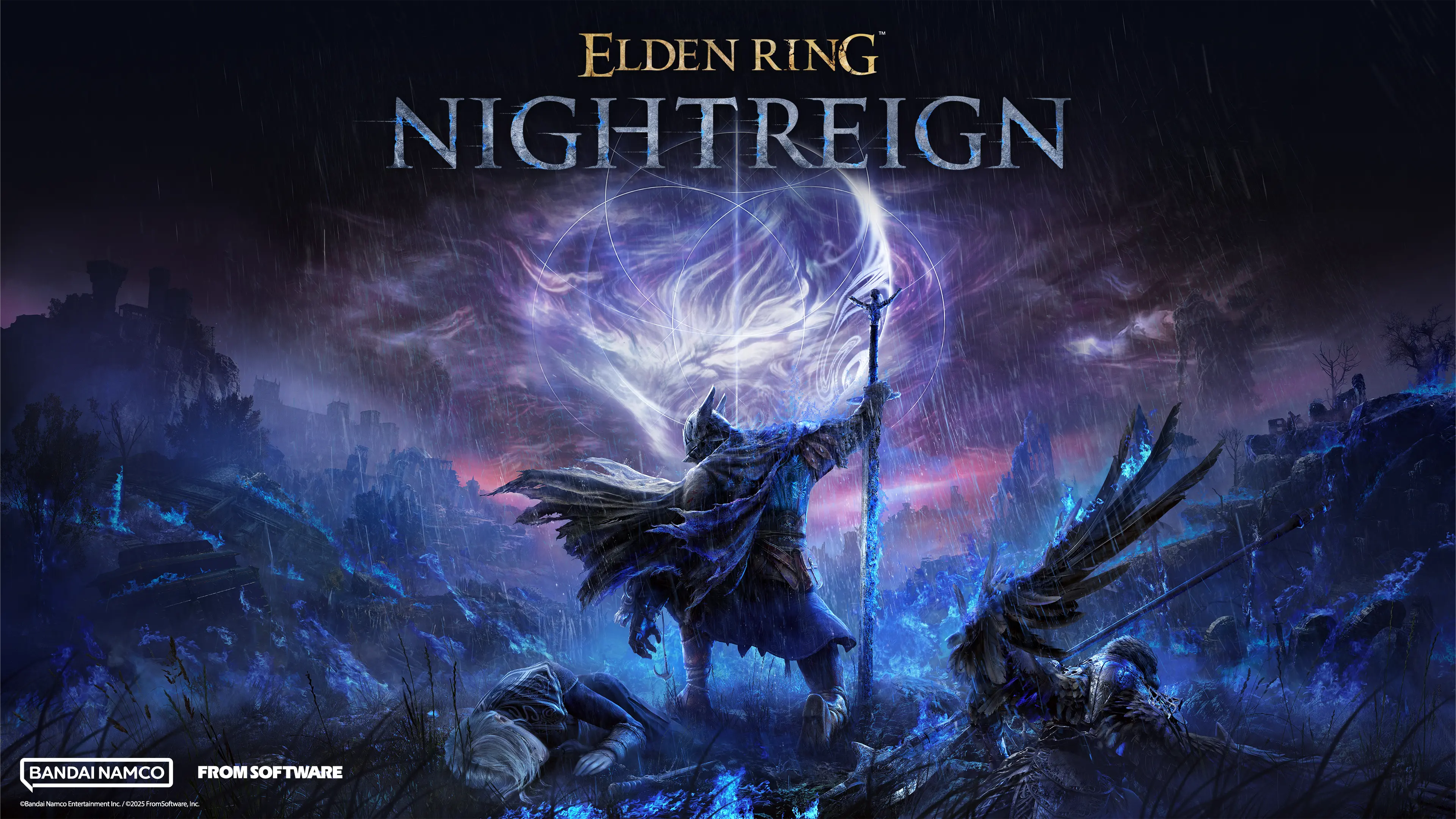
Elden Ring Nightreign officially launched on May 30, 2025, with the standard edition priced at $39.99.
Elden Ring Nightreign is a standalone spin-off from FromSoftware. It shares Elden Ring’s universe but plays entirely differently: instead of an open wilderness, it compresses a run into thirty to ninety minutes of three-player co-op roguelite looping. This piece covers what happened at launch, the official setup, and what it actually means for players.
Bottom line first: this is a work built for the “fixed three-player squad.” Maps are randomly generated, bosses appear at random, gear drops at random — every run starts from zero, and you level your characters through teamwork before night falls. You don’t need to own the original Elden Ring; this is a fully standalone experience.
Core Gameplay Mechanics#
The Three-Day Day-Night Cycle#
A run is split into three “day plus night” loops: daytime handles exploring, looting, and strengthening, while the nights demand a boss fight. The pace tightens with each cycle until the third night decides the outcome.
| Stage | Length | Notes |
|---|---|---|
| Day 1 (daytime) | ~12 minutes | Low-intensity enemies, rich resources, ideal for map exploration |
| Night 1 | ~5 minutes | Elite enemies appear, the map shrinks, first boss fight |
| Day 2 (daytime) | ~10 minutes | Mid-tier enemies, new zones unlock, shops and smithing available |
| Night 2 | ~7 minutes | Night Tide event, difficulty rises sharply |
| Day 3 (daytime) | ~8 minutes | Final preparation window, strongest enemies |
| Night 3 | No time limit | Final boss fight — win or wipe |
Night Tide Events#
The Night Tide is a zone event unique to the second night, similar to the “world events” or public quests of other games. When a Night Tide triggers, a specific map area fills with high-level enemies and an elite commander; clearing it successfully rewards high-quality gear and bonus runes. Night Tides come in three tiers:
| Tier | Enemy count | Elite commanders | Recommended rewards |
|---|---|---|---|
| Tier 1 | 15-20 | None (only buffed mobs) | Rare weapons |
| Tier 2 | 25-35 | 1 elite commander | Epic weapons + skill tablet fragments |
| Tier 3 | 40+ | 2 elite commanders + 1 Night Tide lord | Legendary weapons + complete skill tablets |
Tier 3 is the textbook high-risk, high-reward play: if your squad’s gear is good enough, strongly recommended; if not, use that window to sweep the remaining chests at the map’s edge instead.
Map and Exploration#
The map is dotted with several landmark types, each offering different payoffs and risks:
| Landmark | Icon | Rewards | Risk |
|---|---|---|---|
| Ruined churches | Cross marker | Flask upgrades + healing | Low (only scattered enemies) |
| Dungeon entrances | Downward arrow | Skill tablets + rare gear | Medium (enclosed spaces limit combat) |
| Smithing camps | Anvil marker | Gear upgrades + forging | None (safe zone) |
| Merchant camps | Coin purse marker | Buy items and gear | None (safe zone, but stock is random) |
| Golden saplings | Golden light pillar | Resource restoration | Low |
The Eight Classes, Explained#
The game offers several classes for squad division of labor, each with its own focus in weapons, active skills, and battlefield role:
| Class | Starting kit | Active skill | Role |
|---|---|---|---|
| Knight | Longsword + shield, medium armor set, Crimson Amber Medallion | Iron Wall Defense | Tank/frontline |
| Wanderer | Two-handed greatsword, heavy armor, damage-reduction talisman | War Cry | High-output melee |
| Assassin | Dual daggers, light armor, stealth talisman | Shadowstep | Burst damage |
| Archer | Longbow + short sword, light armor, quiver belt | Piercing Arrow | Ranged damage |
| Sorcerer | Staff + dagger, cloth armor, 5 Cerulean Flasks | Meteor | Magic damage |
| Cleric | Flail + sacred seal, medium armor, healing incantations | Group Healing | Healer/support |
| Scout | Rapier + small shield, medium armor, map fragments | Detect Weakness | Recon/control |
| Berserker | Twin battle axes, light armor, fury talisman | Blood Frenzy | High-risk, high-output |
Recommended Class Combinations#
For new squads, the recommended “iron triangle” is Knight (tank) + Cleric (healer) + Sorcerer or Archer (damage). This combo has the highest fault tolerance: the Knight draws aggro, the Cleric secures sustain, and the damage class focuses on output. Once your coordination is smooth, trying a high-pressure all-damage lineup is still on the table.
Known Boss List#
Each run faces you with several bosses in sequence; the mechanics grow more complex and the teamwork demands rise as you go:
| Boss | Stage | Difficulty rating | Key mechanics |
|---|---|---|---|
| Nightwalker King | Night 1 | Low | Summons clones; the team must clear adds quickly |
| Shadow Behemoth | Night 2 | Medium | Wide-range AOE; spread positioning plus well-timed focus fire |
| Twin Moon Knight | Night 2 (hidden) | High | Two-phase form switching; moon phase alters attack patterns |
| Eternal Dragon | Night 3 | High | Flying unit; needs ranged interrupts plus melee leap attacks |
| Abyss Envoy | Final boss | Extreme | Three-phase fight, full-screen attacks, demands flawless teamwork |
Boss Guide Notes#
Eternal Dragon — this dragon hovers in the air for long stretches, leaving melee classes unable to deal damage effectively. The squad needs at least one ranged class (Sorcerer or Archer) to keep damage ticking while the dragon flies. When it lands on the ground, that’s your damage window. During Day 3 preparation, gather enough arrow ammunition and magic blue flasks.
Progression Systems#
Within a Run (In-Run)#
| Growth method | Source | Effect |
|---|---|---|
| Level-ups | Killing enemies, collecting runes | Raises base stats |
| Gear drops | Chests, boss drops, merchants | Random-quality weapons/armor |
| Skill tablets | Dungeon rewards, hidden areas | Unlock or upgrade active skills |
| Flask upgrades | Ruined churches, merchants | More healing/mana charges |
Across Runs (Meta)#
| Unlock | Requirement | Effect |
|---|---|---|
| New classes | Complete specific boss challenges | Additional starting classes |
| Weapon codex | Collect specified smithing stones | Allows forging specific weapons in-run |
| Talisman slots | Account level increases | More equipable talismans |
| Global perks | Complete achievement tasks | Permanent stat boosts |
| Cosmetic rewards | High scores in challenge mode | Character skins, weapon transmog |
New Game+ Content#
After clearing the first cycle, New Game+ offers higher difficulty and richer rewards. As cycles climb, enemy damage and health rise, and new talismans, weapons, even hidden bosses unlock — built for repeated challenges and fresh builds.
Online and Matchmaking#
Nightreign’s online system improves markedly over the base Elden Ring. It no longer relies on traditional summon signs and white-phantom mechanics; instead, three-player squads are formed as whole units for the entire run, and both matchmaking and entering a session are smoother. To be clear, this is a purely cooperative game with no player-versus-player PvP content — all online play revolves around beating bosses together.
Gear Quality System#
Gear in the game comes in several quality tiers; higher quality means better base stats and possible extra affixes — a major source of in-run power growth.
| Quality | Color | Extra affixes |
|---|---|---|
| Common | White | None |
| Rare | Blue | 1-2 |
| Epic | Purple | 2-3 |
| Legendary | Gold | 3-4 |
Higher-quality gear generally only drops from tougher events, elite commanders, and bosses, so concentrating good pieces on your main damage dealer usually beats spreading them evenly.
Differences From the Base Elden Ring#
| Item | This game | Original |
|---|---|---|
| Genre | Co-op roguelite | Open-world action RPG |
| Player count | 1-3 (co-op) | Solo (optional online) |
| Map | Randomly generated, different every run | Fixed open world |
| Character growth | In-run leveling plus permanent meta upgrades | Global levels and gear |
| Session length | Thirty to ninety minutes per run | Dozens of hours minimum |
| Death penalty | Lose in-run progress, keep meta upgrades | Drop runes, recoverable |
Launch Tips#
For players heading into Elden Ring Nightreign, here are some practical launch pointers:
-
Class choice: if you’re new to soulslikes, pick the Knight or Cleric. The Knight’s shield blocks most routine attacks with high fault tolerance; the Cleric’s group healing is always welcome in any team.
-
Explore first: Day 1 daytime is the safest window — try to cover every corner of the map. Prioritize ruined churches (flask upgrades) and smithing camps (weapon upgrades).
-
Use the environment: the map is scattered with interactive objects — exploding barrels, poison flowers, falling-rock traps and more. Using them can drastically lower the difficulty of elite fights.
-
Gear before levels: a high-quality weapon found in-run often delivers a bigger combat boost than several level-ups. If you pass a smith, upgrade your best found weapon to the current cap first.
-
Try different classes: don’t play only one class. The swap items earned each cycle can be traded at merchants to experience other classes; knowing every class’s skills leads to much better team play.
Editions and Pricing#
| Edition | Price | Contents |
|---|---|---|
| Standard Edition | $39.99 | Base game |
The Standard Edition is priced at $39.99 and includes the complete game. As a standalone spin-off aimed at three-player squads, it is priced clearly below traditional full-price blockbusters, letting more players jump in with fixed friends at a lower barrier. As for whether higher-tier editions exist, no verifiable public information was available at the time of writing, so we won’t speculate.
What It Means for Players#
For soulslike veterans, the biggest change is that “free exploration” is replaced by “timed progression”: you can no longer stat-crush and grind everything down with positioning — the clock pushes every decision across day and night, forcing the squad to make trade-offs in every run. For players who struggle with soulslike combat, three-player cooperation plus permanent meta progression offers a gentler growth curve — even after a team wipe, you come back stronger through meta upgrades.
At the same time, it targets the player group that “can assemble fixed teammates.” If you’re a lifelong solo player, you can rely on AI teammates, but the most complete experience still wants three people in defined roles. If this launch is your excuse to pull friends in, start with class synergy and the day-night cycle rhythm, then gradually move on to polishing boss mechanics.