ROG Xbox Ally X20 Anniversary Edition October 15 Launch Preview: $1,299.99 and the Race to Premium Handhelds#
Zixing | October 13, 2026
Hi everyone, I’m Zixing.
Two months ago, in my handheld price roundup, I mentioned in passing that the ROG Xbox Ally X20 would push anniversary-edition handheld pricing up to the $1,299 tier. Now both the launch window and the price are officially confirmed — an official release on October 15, with preorders open since August 25 at the ASUS official store and Best Buy, at $1,299.99 standalone plus a $2,499 AR glasses collector’s bundle.
First, let me set the boundaries of this article: as of publication I have not touched the actual device, and the entire text contains no hands-on conclusions about performance, battery life, or noise. What I will do is two things. First, lay out the official spec sheet item by item and work out what the extra $300 over the $999.99 Ally X actually buys. Second, place this machine back into the 2026 handheld price landscape and see where it stands between the Steam Deck OLED and the MSI Claw. Anything that is my own inference will be flagged as “analyst judgment” and kept strictly separate from official specs.
Table of Contents#
- Official Spec Overview: Laying Out the Spec Sheet
- Display: The Family’s First OLED, Read Parameter by Parameter
- Performance: Same Chip as the Ally X Means No Generational Gap
- Controls and Design: TMR Sticks, Transforming D-Pad, and the Translucent Gold Shell
- Price Breakdown: What the $300 Premium Buys
- Competitive Landscape: Between the Steam Deck OLED and the MSI Claw
- The Memory Price Cycle: Handheld Pricing Reshaped by DRAM
- The $2,499 Bundle: A Pricey AR Glasses Combo
- Buy/Wait/Switch: A Pre-Launch Decision Framework (Analyst Judgment)
- Pre-Launch Verification Checklist
1. Official Spec Overview: Laying Out the Spec Sheet#
The table below shows the X20’s official specifications, all taken from ASUS’s official announcement and not verified by hands-on testing:
| Item | Official Specification |
|---|---|
| Display | 7.4-inch ROG Nebula HDR OLED, 1920×1080, 120Hz |
| Sync and response | FreeSync Premium Pro, VRR 30–120Hz, 0.2ms response |
| Brightness and HDR | HDR peak brightness up to 1,400 nits, Dolby Vision supported |
| Processor | AMD Ryzen AI Z2 Extreme: 8 cores / 16 threads, up to 5.0GHz, 24MB cache |
| AI compute | XDNA NPU, up to 50 TOPS |
| Memory | 24GB LPDDR5X-8000 |
| Storage | 1TB PCIe 4.0 NVMe SSD |
| Battery | 80Wh |
| Expansion | USB4 port, MicroSD Express card slot |
| System | Windows 11, Xbox full-screen experience |
| Sticks | TMR (tunneling magnetoresistance) sticks, officially described as anti-drift by design |
| D-pad | Rotatable switching “transforming” d-pad: concave disc style and 8-way cross style |
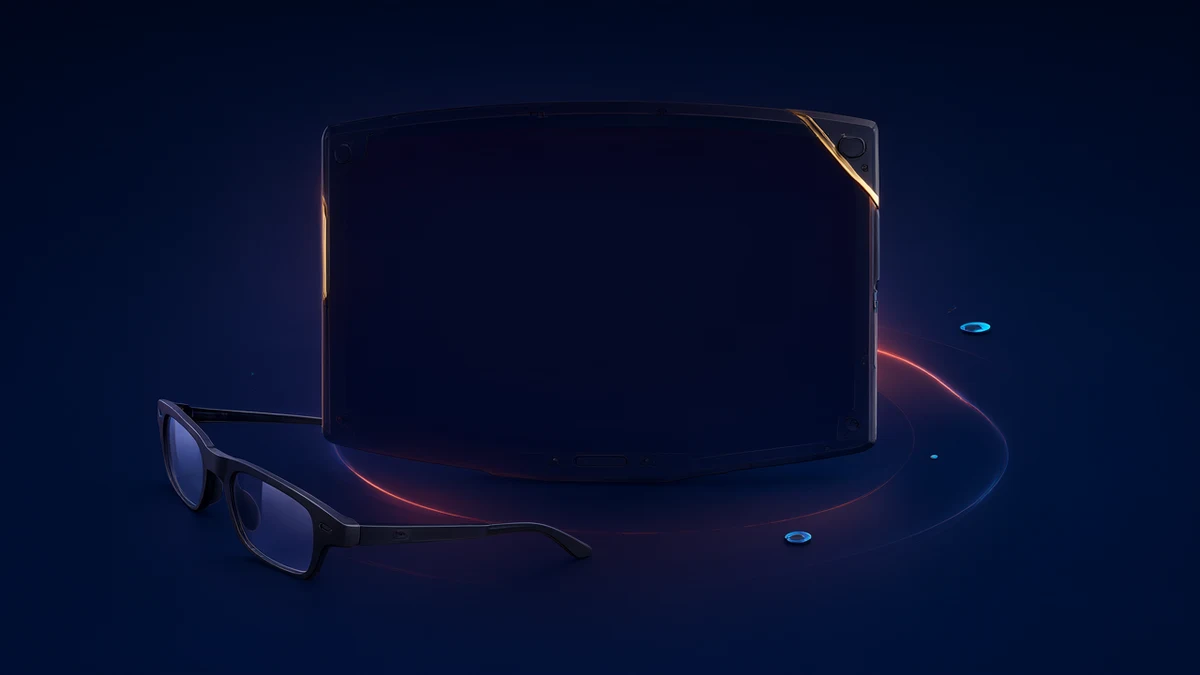
| Chassis | Translucent black shell exposing gold internal structure, with Edition 20 branding |
| Price | $1,299.99 standalone; $2,499 collector’s bundle |
| Schedule | Preorders from August 25, 2026; official launch October 15, 2026 |
Against this table, three structural facts need to be pulled out first:
- This is the first OLED panel in the Ally family. The previous ROG Xbox Ally and Ally X both used 7-inch 120Hz IPS panels; the X20 swaps out the entire panel spec;
- The chip is exactly the same as the Ally X’s. The Ryzen AI Z2 Extreme is not new silicon — there is no generational performance gap;
- Memory and storage are identical to the $999.99 Ally X: 24GB plus 1TB, not a single byte more.
Put these three together, and the X20’s product logic comes into view — it is not a “performance-boosted Ally X,” but a machine that doubles down on display, controls, and identity. Let’s go through each item.
2. Display: The Family’s First OLED, Read Parameter by Parameter#
The X20’s 7.4-inch OLED is the single biggest variable on this machine, and four sets of official parameters deserve to be unpacked one by one.
120Hz refresh rate and VRR 30–120Hz. The 120Hz carries over from the previous generation’s 7-inch IPS panel (also 120Hz); the real increment is VRR 30–120Hz: when frame rates float between 30 and 120, the panel refresh follows the picture, which should suppress much of the tearing and stutter from dropped or fluctuating frame rates that handhelds commonly suffer. FreeSync Premium Pro is the certification name for this variable-refresh scheme. Comparison coverage retrieved for this piece has also placed this panel alongside the Steam Deck OLED’s 90Hz — on paper refresh rate alone, 120Hz versus 90Hz favors the X20.
0.2ms response. This is a typical OLED strength: self-emissive pixels do not need liquid crystal rotation to light up and shut off, so grayscale response is naturally faster than IPS. Placed in the context of 120Hz (about 8.3ms per frame), an official 0.2ms figure sits in the “theoretical ghosting negligible” tier — but this is extrapolation from panel specs; actual perception must wait for testing.
1,400-nit HDR peak brightness and Dolby Vision. Peak brightness is the most sensitive parameter for an OLED panel: 1,400 nits is the official peak figure, usually achieved only briefly in small areas of HDR highlights, with full-screen brightness considerably lower (this is a general rule of the panel industry, not X20 test data). The addition of Dolby Vision puts it in the front row of HDR format support among Windows handhelds. Measured brightness, color gamut, and uniformity are all listed in the Section 10 verification checklist.
1080p resolution. 1920×1080 spread across 7.4 inches works out to roughly 298 PPI (analyst calculation: a 16:9 diagonal yields a screen width of about 6.45 inches) — squarely in the sharp tier for handhelds. 1080p also means lower driving pressure than higher-resolution options, which helps hold 120Hz — though whether real games can actually saturate 120fps depends on the game itself and the power budget, and again only testing will tell.
3. Performance: Same Chip as the Ally X Means No Generational Gap#
The AMD Ryzen AI Z2 Extreme in the X20 is specified at 8 cores / 16 threads, up to 5.0GHz, 24MB cache, with an XDNA NPU at up to 50 TOPS. There is only one key piece of information in this spec: it is the same chip used in the $999.99 standard Xbox Ally X.
That determines two things:
- The X20 and the Ally X start from the same gaming performance baseline. Same chip, same 24GB of memory, same 1TB of storage — in theory frame rates will not improve just because the panel changed. ASUS has released no data on any difference in power delivery between the two, and this article will not speculate;
- The 50-TOPS NPU is headroom reserved for AI features on the Windows 11 side. Which specific features will use those 50 TOPS, and how efficiently, is not covered in official materials — a post-launch verification item.
Analyst judgment: on the “compute” dimension, the X20 offers zero increment over the Ally X. If you buy a handheld purely for frame rates, not one cent of the $300 price difference goes into performance — the official spec sheet has already done that math for us.
4. Controls and Design: TMR Sticks, Transforming D-Pad, and the Translucent Gold Shell#
The control layer is the X20’s second increment over the Ally X, and all three changes deserve unpacking.
TMR (tunneling magnetoresistance) sticks. TMR uses magnetically sensitive elements to sense stick position, replacing the physical contacts of traditional potentiometers; there is no carbon-film wear path, which is the technical background behind the vendor daring to advertise “anti-drift.” It belongs to the same magnetic-sensing family as the Hall-effect sticks handheld players know well. But “anti-drift” is a design goal, not a longevity promise: the X20 sticks’ actual feel, dead zones, and durability still need long-term use to verify.
The rotatable “transforming” d-pad. One component, two forms: a concave disc style and an 8-way cross style, switched by rotating, inspired by the Xbox Elite Controller series. Reasoning from usage logic, the disc style suits inputs dense with diagonals, while the cross style suits scenarios demanding precise single-direction input — how it performs in genres that live and die by d-pad feel, like fighting games and platformers, is a question only hands-on time can answer.
Detail revisions. Textured grips added to the back, optimized cooling, and minor tweaks to the button layout. ASUS has given no quantified cooling data (airflow, heat pipe specs, and the like), so this can only be treated as a qualitative “more attention to grip thermal than last generation.”
On the design side, “a translucent black body exposing gold internal structure” is this anniversary machine’s most direct identity symbol, paired with Edition 20 branding — marking ROG’s twentieth anniversary (official framing). One clarification: ASUS positions it as an anniversary-limited model, but has not announced a production limit; whether it is globally limited, and by how many units, there is currently no reliable information.
5. Price Breakdown: What the $300 Premium Buys#
First, the family price ladder, laid flat (Microsoft’s official handheld page, side by side):
| Model | Price (USD) | Memory / Storage | Schedule |
|---|---|---|---|
| ROG Xbox Ally | 599.99 | 16GB/512GB | On sale |
| ROG Xbox Ally X | 999.99 | 24GB/1TB | Launched October 2025 |
| ROG Xbox Ally X20 | 1299.99 | 24GB/1TB | Launches October 15, 2026 |
The X20 costs $300 more than the Ally X and $700 more than the base Ally. The components of that $300 premium, listed item by item per official materials:
- The Ally family’s first OLED panel: 7.4-inch, 120Hz, VRR 30–120Hz, 1,400-nit peak, Dolby Vision;
- TMR anti-drift sticks;
- The rotatable “transforming” d-pad;
- Limited-edition design with translucent black body, gold internal structure, and Edition 20 branding;
- Rear textured grips and cooling optimization.
Meanwhile, four items — the chip (Ryzen AI Z2 Extreme), memory (24GB), storage (1TB), and battery (80Wh) — are completely identical to the Ally X. Not one cent of the $300 went into compute or capacity.
Analyst judgment: this is the classic “selling design, not performance” path. In a memory price-hike cycle, ASUS’s answer was not a hard price increase but building a machine where “spending $300 more gets you differences you can see,” pushing premiumization through display, controls, and collectibility. Whether this path holds depends on whether the OLED and limited-edition design are worth $300 to you personally — that is a valuation question, and I cannot give a standard answer.
6. Competitive Landscape: Between the Steam Deck OLED and the MSI Claw#
Here is the autumn 2026 handheld price landscape (public reporting; handheld prices fluctuate frequently — go by the sticker at purchase time):
| Model | Price (USD) | Notes |
|---|---|---|
| Steam Deck OLED 1TB | 949 | Valve raised the price in May 2026 citing rising memory and storage costs |
| MSI Claw 8 AI+ (previous flagship) | ~1,119–1,299 | Tracker sites differ; B&H flash price of $1,079.99 on September 21 |
| MSI Claw A8 | 1,299 | B&H limited-time $1,159 in the same period |
| ROG Xbox Ally X20 | 1299.99 | This article’s subject, launching October 15 |
| MSI Claw 8 EX AI+ | 1799.99 | MSI’s new flagship |
Three observations:
- The X20’s price sits exactly between “Valve’s price anchor” and “MSI’s new flagship.” Looking down, the Steam Deck OLED 1TB guards the value mindset at $949 with the SteamOS ecosystem; looking up, MSI is probing the Windows handheld ceiling with the $1,799.99 Claw 8 EX AI+. $1,299.99 lands at “about $350 more than the ecosystem camp, $500 less than the most expensive Windows handheld” (analyst calculation);
- The Windows camp is collectively pushing into the four-digit dollar tier. Ally X at 999.99, Claw A8 at 1,299, and the previous-gen Claw 8 AI+ once listed at 1,299 — the Windows handheld “flagship experience” has fully crossed the $1,000 line;
- A caveat on MSI’s current prices: the previous-gen Claw 8 AI+ was sampled by trackers at $1,119 in late June but listed at $1,299 on the official site in late July — two conflicting figures, which I treat as a range and flag as “frequently fluctuating prices.” Spot prices like these have limited reference value; go by the sticker at checkout.
7. The Memory Price Cycle: Handheld Pricing Reshaped by DRAM#
Add a time dimension to the competitive-landscape table and a clear transmission line emerges:
| Model | Launch Price (USD) | Recent Price Reference | Change |
|---|---|---|---|
| MSI Claw 8 AI+ | 899.99 | ~1,119–1,299 (sampled June–July 2026) | Up roughly 24%–44% in a bit over a year (tracker figures vary) |
| Steam Deck OLED 1TB | — | 949 (after the May 2026 hike) | Official reason for the hike: rising memory and storage costs |
The backdrop is the 2026 global memory chip shortage: AI data centers are consuming huge amounts of storage and memory capacity, chip price increases transmit along the “chips → finished devices” path, and handhelds are among the most directly affected categories. Multiple outlets have described this cycle as “RAM prices causing chaos across consumer electronics.” Valve’s official reason for raising the Steam Deck OLED’s price was precisely “rising memory and storage costs.”
Where this transmission line lands today: the Claw 8 AI+ has risen by a quarter to nearly half in a bit over a year, Valve has broken precedent and raised the price of its own handheld, and the X20 has pushed the Windows handheld price ceiling straight to $1,299.99. Until the DRAM cycle turns, the upward drift of the handheld price band will be hard to reverse — I broke down the supply-side mechanics in that analysis of the GPU and storage price surges, so I won’t repeat it here.
Analyst judgment: in this cycle, the “wait-and-see” crowd pays a high cost for waiting, because price drops lack a supply-side fulcrum; conversely, the risk of buying into a high-premium model is equally real. That is the backdrop I weighed repeatedly when writing the Section 9 recommendations.
8. The $2,499 Bundle: A Pricey AR Glasses Combo#
The X20 comes in two SKUs. Besides the $1,299.99 standalone version, there is a $2,499 collector’s bundle with the following contents (official):
| Component | Notes |
|---|---|
| ROG Xbox Ally X20 handheld | Same specs as the standalone version |
| ROG XREAL R1 Edition 20 AR glasses | Officially said to project a virtual screen of about 171 inches |
| dbrand Killswitch protective case | With kickstand |
| Pelican Protector custom carrying case | — |
| 68W charger | — |
The bundle costs about $1,200 more than the standalone unit, with the bulk of the gap in the XREAL R1 glasses. A key caveat: the glasses’ own refresh rate, brightness, and other parameters were not reliably disclosed in this round. I cite only the official “roughly 171-inch virtual screen” line and will not elaborate beyond it.
This bundle also has a noteworthy public-opinion reversal worth recording: when the X20 was first unveiled this June (during Computex), no price was given, and some coverage speculated the machine could only be bought as a $2,000-plus AR glasses bundle — hence the “forced bundling” narrative. The August 25 announcement proved a $1,299.99 standalone SKU exists, and the bundling rumor was falsified. For players who do not want the glasses, this is a substantive win: the standalone SKU’s existence means $1,299.99 is the floor for the complete experience, and the bundle is purely optional.
Analyst judgment: the $2,499 bundle targets collectors and early adopters — a 171-inch virtual screen has some imaginative appeal for living-room and travel scenarios, but there are no public data on the glasses’ real-world performance, weight, or wearing comfort. Before paying the roughly $1,200 difference, I suggest waiting for post-launch bundle reviews and word of mouth.
9. Buy/Wait/Switch: A Pre-Launch Decision Framework (Analyst Judgment)#
Everything below is analyst judgment, based on official specs and pricing, with no hands-on evidence:
| Budget and Needs | Recommendation | Logic |
|---|---|---|
| Ample budget, want OLED and the limited design | Buy | $300 buys the family’s first OLED, TMR sticks, the transforming d-pad, and Edition 20 limited design — a clear, transparent premium |
| Performance and value only | Switch | Switch to the Ally X: same chip, same 24GB/1TB, $300 cheaper; or to the Steam Deck OLED 1TB ($949) for the SteamOS ecosystem |
| Budget-sensitive, in no hurry | Wait | There is no timetable for DRAM prices to fall, so waiting out a price drop is unlikely; the more realistic “wait” is for post-October 15 media testing and first-batch feedback |
Three supplementary notes:
- The premise of “buy” is knowing you are paying for the screen and design, not performance — the chip is the same as the Ally X’s, which is fact under the official framing;
- The two “switch” branches differ in savings: the Ally X is $300 below the X20; the Steam Deck OLED 1TB is $350.99 below it (analyst calculation), and the latter also means leaving the Windows camp;
- “Wait” carries no timetable promise: there is no official forecast for when the memory shortage eases, no channel information on promotion cadence, and I will not judge “when the price will drop.”
10. Pre-Launch Verification Checklist#
The discipline of a preview is stating clearly what you don’t know. The following items can only be verified after the October 15 launch, and this article draws no conclusions about them:
| Item to Verify | Why It Can’t Be Called Now |
|---|---|
| Real-world performance delivery | Official figures give only the chip spec, no power limits or frame rate data |
| Battery life | 80Wh is a capacity figure; actual gaming battery life is unknown |
| Noise and surface temperature | Cooling “optimization” is qualitative; no quantified data |
| Display testing | 1,400 nits is the official peak; full-screen brightness, gamut, and uniformity await testing |
| TMR stick feel and durability | Anti-drift is a design goal; actual feel and lifespan need long-term use |
| XREAL R1 glasses specs and experience | Glasses refresh rate and brightness undisclosed; no public data on bundle experience |
| Pricing outside North America | Only North American pricing verified this round; other markets not announced |
| Production limits and restock cadence | Officially an anniversary-limited model, with no limit quantity announced |
Closing#
Placed back in the big picture, the X20 is a concentrated sample of the 2026 handheld market: memory price hikes have raised device costs, vendors have no option to cut prices for relief, and the only direction left is “more premium, more commemorative, more limited” — MSI’s previous flagship climbed past $1,119, Valve lifted the Steam Deck OLED 1TB to $949, and ASUS simply built a $1,299.99 OLED anniversary machine.
In my September roundup I said handhelds were polarizing toward “scarce budget models on one end, anniversary editions becoming luxury goods on the other.” The X20 is the furthest step down that road: no performance generational gap, yet the highest price in the family. After the October 15 launch I will follow up with hands-on testing — and answer then the two questions this article deliberately leaves open: how good that 1,400-nit OLED really is, and whether the $300 premium is actually worth it in practice.
Note: All specifications and prices in this article are official figures or figures from public reporting between May and October 2026, in US dollars (North American retail). MSI current-price data involves conflicting figures; go by the sticker at purchase. Written on October 13, 2026, before the official October 15 launch, and contains no hands-on data.
— Zixing, NTGame Hardware & Tech Editor