Memory Price Hikes Reach Handhelds: The 2026 Handheld Market Split and a Buying Guide#
Zixing | September 28, 2026
Hello everyone, I’m Zixing.
In my previous two pieces I broke down the price-hike mechanics of GPUs and storage and ran the numbers on monitors, and handheld players immediately asked in the comments: desktop prices are surging — what about handhelds? The answer, as expected: the memory and storage price hikes have already genuinely passed through to complete handhelds.
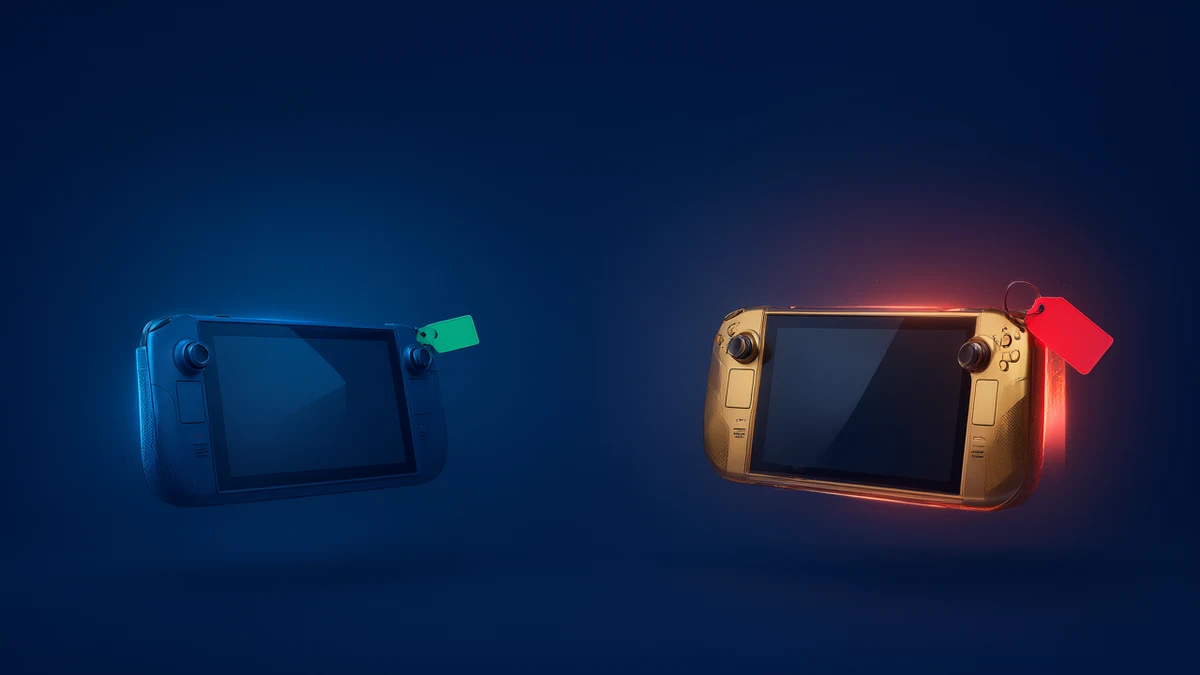
In this round, the handheld market’s trajectory is even more dramatic than desktops: Steam Deck OLED 512GB rose to $789, Legion Go S top config surged to $1,579.99, while ROG Xbox Ally firmly held its $599.99 launch price; meanwhile, the ROG Xbox Ally X20 20th Anniversary Edition, with its AR glasses bundle, pushed the standalone price to $1,299 and the bundle to $2,499.99. In the same market, one side sees budget models getting scarcer, the other anniversary editions going luxury fast — the split is on the table.
In this article I lay out all the first-hand price data I gathered into comparison tables, then give tiered buying advice by budget from a hardware editor’s perspective.
Table of Contents#
- How the price hike reaches handhelds: a timeline from chips to systems
- Current handheld price and spec roundup
- Market split watch: price holders, hikers, and luxification
- Buying advice: a testing-driven approach by budget tier
- Q4 outlook
- Closing thoughts
I. How the Price Hike Reaches Handhelds: A Timeline from Chips to Systems#
Background first: the industry calls this storage crisis “RAMageddon”; the source is AI datacenters’ massive DRAM consumption, which has driven up memory and storage chip prices. As for the supply-demand mechanics of “why chips rose and by how much,” I broke that down in my earlier GPU and storage price-hike analysis, so I won’t repeat it — here we only look at one thing: how chip price hikes landed step by step on handheld price tags.
1.1 Six Key Dates#
| Date | Event | What it means |
|---|---|---|
| February 2026 | Valve added a notice on the Steam Deck product page: handhelds may face intermittent shortages due to memory and storage shortages | Upstream pressure has reached system makers’ doors; the official started inoculating |
| April 2026 | Lenovo raised Legion handheld prices first; Sony PS5 and Nintendo Switch 2 followed with hikes | The hike wave spread from PC components to gaming hardware |
| May 4, 2026 | Steam Controller went on sale as scheduled | Peripherals not yet affected |
| May 28, 2026 | Valve announced Steam Deck OLED price increases; two models restocked | The landmark price-hike node for complete handhelds |
| August 20, 2026 | Legion S price increases took effect across the lineup | Windows handhelds followed with bigger hikes |
| October 15, 2026 | ROG Xbox Ally X20 launched ($1,299 standalone, $2,499.99 bundle) | The signature product of anniversary-edition luxification |
1.2 Steam Deck OLED Price Increase Breakdown#
| Version | Original price | Current price | Increase |
|---|---|---|---|
| Steam Deck OLED 512GB | $549 | $789 | ~+44% |
| Steam Deck OLED 1TB | $649 | $949 | ~+46% |
| Steam Deck OLED 512GB (official refurbished) | —— | $629 | —— |
| Steam Deck OLED 1TB (official refurbished) | —— | $759 | —— |
Valve’s official explanation: “The Steam Deck itself has not changed; the new prices reflect the current cost of components and the global logistics challenges facing the entire industry.” Translated into PC-builder language: the machine didn’t change, the component prices did. A 44% hike with no hardware upgrade is a first in Steam Deck history, showing this cost pressure isn’t a marketing cadence but genuine BOM (bill of materials) pressure.
1.3 Lenovo Legion (Legion Go S / Legion Go 2) Price Increase Breakdown#
Lenovo’s hikes are steeper than Valve’s. Prices as of August 20, 2026:
| Model and config | Original price | Current price | Increase |
|---|---|---|---|
| Legion Go S Z2 Go (16GB/512GB) | $649.99 | $989.99 | ~+52% |
| Legion Go S Z1 Extreme (32GB/1TB) | $899.99 | $1,579.99 | ~+75.6% |
| Legion Go S same configs, Windows version | —— | $1,049.99 / $1,679 | —— |
| Legion Go 2 (Z2 Extreme, 32GB/1TB) | $1,349.99 (launch) | $1,999.99 | ~+48% |
| Legion Go 2 2TB | $1,479.99 | $2,849.99 | ~+93% |
A few notable details:
- The Legion S hikes covered Best Buy, Amazon, Micro Center, B&H, and Lenovo’s own store — a channel-wide synchronized repricing, not one store’s inventory play;
- Lenovo has given no official explanation to date; its site even delisted the lineup at one point, showing “temporarily unavailable”;
- Lenovo raised Legion Go 2 back in April; the 2TB model going from $1,479.99 to $2,849.99, +93%, is the wildest single hike in this handheld cycle.
II. Current Handheld Prices and Specs Roundup#
2.1 Full Price Table by Tier (as of late September 2026)#
| Model | Config highlights | Current price | Price status |
|---|---|---|---|
| ROG Xbox Ally (white) | Ryzen Z2 A (Zen 2 architecture), 120Hz and VRR support | $599.99 | Holding launch price, in stock at Best Buy |
| Steam Deck OLED 512GB (refurbished) | 90Hz OLED, strong contrast | $629 | Official refurb, low-price tier |
| Steam Deck OLED 512GB | Same as above | $789 | Up ~+44% since May |
| Steam Deck OLED 1TB | Same as above | $949 | Up ~+46%; refurb $759 |
| ROG Xbox Ally X | Previous-gen flagship | $999.99 | Best Buy held original price over the same period |
| Legion Go S Z2 Go | 16GB/512GB | $989.99 | Up ~+52% in August |
| Legion Go S Z1 Extreme | 32GB/1TB | $1,579.99 | Up ~+75.6% |
| ROG Xbox Ally X20 | 20th Anniversary Edition, specs in table below | $1,299 | Released October 15 |
| MSI Claw 8 EX AI+ | —— | $1,799 | Long out of stock; listed price for reference only |
| Legion Go 2 (32GB/1TB) | Z2 Extreme flagship | $1,999.99 | +48% vs launch |
| Legion Go 2 2TB | Top config | $2,849.99 | +93% vs launch |
Sorted by price, the pattern is blunt: the $600 tier has only one in-stock model at its original price, the ROG Xbox Ally; $700–1,000 belongs to Steam Deck OLED and refurbs; above $1,000 it’s all hiked models and anniversary editions.
2.2 ROG Xbox Ally X20 Full Spec Table#
The X20 is the most-watched handheld of Q4; official listed specs:
| Spec | Value |
|---|---|
| Processor | AMD Ryzen AI Z2 Extreme (8 cores / 16 threads) |
| Memory | 24GB LPDDR5X |
| Storage | 1TB PCIe 4.0 NVMe |
| Display | 7.4-inch Nebula HDR OLED |
| Brightness | 1,400 nits peak / 600 nits SDR |
| Display features | HDR, FreeSync Premium Pro, 0.2ms response, VRR |
| Battery | 80Wh |
| Weight | 756g |
| Design | Translucent black shell with gold accents |
| Positioning | ROG brand 20th anniversary “collector-grade” product |
Two caveats: first, the official spec sheet does not list a refresh rate, and the rumored 120Hz claim remains unverified — check the official page before ordering; second, the model debuted at Computex 2026 with release details announced during Gamescom, and at $1,299 it costs about $300 more than the previous ROG Xbox Ally X’s $999.
2.3 Display Trade-offs#
The on-sale models each prioritize different display traits — the easiest place to get stuck when choosing:
- ROG Xbox Ally: 120Hz refresh with VRR; wins on high-refresh fluidity;
- Steam Deck OLED: 90Hz, but the OLED panel’s stronger contrast makes dark scenes look better;
- ROG Xbox Ally X20: HDR OLED with 1,400-nit peak brightness — the most aggressive brightness spec among current handhelds.
The three machines trade off among refresh rate, contrast, and brightness; there is no “do-it-all display” — pick by the games you play most.
2.4 China Market Reference Prices#
There is no official China retail pricing to compare against; current third-party e-commerce (third-party stores on JD.com and Tmall Global) reference prices: Steam Deck OLED 512GB around RMB 4,168–4,599, and a self-operated channel has listed the 1TB at RMB 8,899. Note these are third-party gray-market prices — volatile, with no warranty protection, and not official pricing.
III. Market Split Watch: Price Holders, Hikers, and Luxification#
Collapsing the Section II table, the 2026 handheld market is splitting into three playbooks.
3.1 Three Strategies Compared#
| Strategy | Representative models | Market behavior |
|---|---|---|
| Price holders | ROG Xbox Ally ($599.99), ROG Xbox Ally X ($999.99) | Launch prices held, in stock, rated 4.4/5 (at least 930 ratings) |
| Hikers | Steam Deck OLED (+44%/+46%), Legion Go S (+52%/+75.6%), Legion Go 2 (+48%/+93%) | Channel-wide repricing, hikes far beyond past generational steps |
| Luxification | ROG Xbox Ally X20 ($1,299 standalone, $2,499.99 bundle) | 20th anniversary positioning, collector bundle + AR glasses |
3.2 Why ROG Xbox Ally Can Hold Its Price#
Facts first: in the same quarter Valve and Lenovo raised their price tags, ROG Xbox Ally held its $599.99 launch price at Best Buy, in stock, with a 4.4/5 average product rating (at least 930 ratings) and a bundled 3-month Xbox Game Pass Premium included with purchase. The previous-gen flagship ROG Xbox Ally X also holds at $999.99.
From a hardware editor’s view, three criteria explain how this machine holds the $600 tier:
- Well-placed specs: the Ryzen Z2 A uses the Zen 2 architecture, not the latest flagship core, so its cost structure is naturally lighter than Z2 Extreme machines and component inflation squeezes it less;
- In stock + high rating + subscription bundle: in a shortage market, “original price and in stock” is itself scarce, and the Game Pass bundle raises real delivered value — some media analysis calls it the best-value Windows handheld right now, and retail data supports that conclusion;
- Avoiding the big-memory tiers: 24GB/32GB machines are this cycle’s hardest hit (Legion Go S top config +75.6%), while the Ally’s small-memory config takes a lighter direct hit from DRAM price hikes.
One reminder: Lenovo, Sony (PS5), and Nintendo (Switch 2) have all raised prices this year, and consoles — Xbox, PS, Meta, Switch — have been repricing in turns since 2025 — holding price is currently a minority strategy with no official promise of how long it can last; those waiting to buy should keep that in mind.
3.3 Why the Anniversary Edition Goes the Luxury Route#
The ROG Xbox Ally X20 is the best sample for observing “handheld luxification,” and its playbook is clear:
- Anniversary attributes first: positioned as a ROG 20th anniversary “collector-grade” product in translucent black with gold accents, selling not just hardware but commemorative meaning;
- Bundle raises the anchor: the collector bundle is priced at $2,499.99, containing the handheld, the ROG XREAL R1 Edition 20 AR glasses, a dbrand Killswitch case, and a custom Pelican travel case — the bundle costs $1,200.99 more than standalone, and the entire gap is peripheral collectible pricing;
- Bundle first, standalone later: ASUS originally planned to sell only the bundle and added the standalone version after player feedback; preorders opened August 25;
- Specs justify the gap: Ryzen AI Z2 Extreme, 24GB LPDDR5X, 1,400-nit OLED — hardware specs backing up the $1,299 standalone price.
One-line summary: price holders compete on “scarcity of value,” anniversary editions sell “collector’s premium,” and the price gap between the two routes has opened past fourfold ($599.99 vs the $2,499.99 bundle) — that is the split itself.
3.4 The Legion Go 2 SteamOS Limbo#
One product line remains unresolved. At CES 2026 Lenovo announced the Legion Go 2 SteamOS version starting at $1,199 ($100 more than the base Windows version), planned for June 2026; but as of late September I found no reports of it going on sale, nor any clear delay statement — the cause can’t be asserted, but the fact is that anyone wanting a SteamOS flagship handheld right now has nowhere to buy one.
Background: on May 25, 2025, the Legion Go S became the first third-party handheld shipping with SteamOS, by which Lenovo hoped to open a Linux handheld market beyond the Steam Deck; now that line is hiked and its launch in limbo, effectively handing the SteamOS third-party window back to Valve.
IV. Buying Advice: A Testing-Driven Approach by Budget Tier#
My principle is always to let data talk, not vibes. All advice below is based on the listed prices and stock status above.
4.1 Budget Tier Recommendations#
| Budget tier | Pick | Why |
|---|---|---|
| $600 | ROG Xbox Ally | The only mainstream handheld holding launch price — original price, in stock, 4.4/5 rated, buy and play |
| $600–800 | Steam Deck OLED 512GB refurb ($629) | Official refurb saves $160 vs new; the most pragmatic Deck entry after the hikes |
| $800 | Steam Deck OLED 512GB ($789) | For a brand-new unit with full warranty, this is the price; for game compatibility see our compatibility rankings |
| $750–1,000 | Steam Deck OLED 1TB refurb ($759) or new ($949) | 1TB refurb is nearly the price of a new 512GB; heavy-storage users should favor the refurb |
| $1,000 | ROG Xbox Ally X ($999.99) | Previous-gen flagship un-hiked; the price-holder option on Windows |
| $1,300 | ROG Xbox Ally X20 (from October 15) | Strongest spec sheet with 1,400-nit OLED and 24GB, but you pay the anniversary premium |
| $2,000+ | X20 bundle ($2,499.99) / Legion Go 2 2TB ($2,849.99) | The former is collector-oriented, the latter spec-oriented; neither is a rational price zone |
4.2 The “Wait or Buy” Decision Framework#
The answer needs supply-side anchors, not wait-and-save faith:
- Macro anchor: IDC data shows global PC shipments of 68.2 million units in Q2 2026, down 4.9% year over year — the first decline after nine quarters of growth; IDC lists the memory shortage as the main cause and expects no relief before early 2028; IDC also projects full-year 2026 PC shipments down 11.3%, with Q4 declines possibly reaching 20%.
- Inference: the memory shortage becoming a mid-term condition means handheld system costs have no structural reason to fall soon; “waiting for a price drop” lacks a supply-side fulcrum.
- Execution call: if your old handheld still works and no new release demands an upgrade, keep using it and don’t chase the rally; if the old unit is broken or the need is real, buy a price-holder model or an official refurb first, and don’t catch the falling knife of hiked models at high premiums.
- One reminder: whether Valve will follow with another hike, or whether Legion prices keep climbing — there’s no official information on either; don’t bet on “it’ll rise so buy now,” and don’t bet on “it’ll drop any day.”
4.3 Alternatives After the Steam Deck OLED Price Hike#
If your budget was sized for a Steam Deck OLED 512GB ($549 era), four paths now:
- Official refurb: $629, saves $160 vs new, sold through Valve’s official channel with quality assurance — the gentlest path;
- Switch to ROG Xbox Ally: $599.99 at original price, saving about $190 outright, at the cost of leaving the SteamOS ecosystem for Windows handheld controls;
- Install SteamOS yourself on a Windows handheld: some media analysis notes the ROG Xbox Ally is not OS-locked, so hands-on players can tinker, but compatibility and driver support need self-verification — I only recommend this path to builders with experience;
- Wait for the Legion Go 2 SteamOS version: with a $1,199 starting price on the table and the launch in limbo, the time cost of waiting can’t be estimated; not a priority recommendation.
4.4 Pre-Purchase Checklist#
| Check | Criterion |
|---|---|
| Channel | Official channels first; for third-party (especially gray-market) confirm after-sales terms |
| Price basis | Compare against the post-August price levels; beware sellers using pre-hike “original price” scripts |
| Stock status | Listed prices of out-of-stock models (like the MSI Claw 8 EX AI+) have limited reference value; don’t pay deposits on “restock alerts” |
| Rating base | Rely on models with enough ratings (like ROG Xbox Ally’s at least 930 at 4.4/5); avoid newly launched products with no rating sample |
| Display specs | Trust the official spec page; don’t order on unverified rumored specs (like X20 refresh rate) |
V. Q4 Outlook#
5.1 Confirmed Schedule#
- October 15: ROG Xbox Ally X20 official launch and shipping begins — $1,299 standalone, $2,499.99 collector bundle; preorders opened August 25;
- Both Steam Deck OLED restock models are listed, with the $789/$949 price basis continuing.
5.2 Two Open Questions#
- Steam Machine and Steam Frame: originally planned for early 2026; due to the memory shortage, shipping within 2026 is now the best case — whether they go on sale in Q4 is the year’s biggest wildcard for handhelds and consoles;
- Legion Go 2 SteamOS version: originally planned for June, with no sale reports as of late September; a Q4 appearance is equally unanswered.
5.3 The Supply-Side Macro Anchor#
IDC expects the memory shortage may not ease until early 2028, and Q4 PC shipment declines could reach 20% — the supply-side story won’t reverse in Q4, and the handheld price landscape will most likely keep its pattern of “price holders scarce, hiked models stuck high”. As for whether Black Friday brings real discounts, no channel information supports it; the desk can only keep watching, and I won’t write it as a forecast.
VI. Closing Thoughts#
Finishing this roundup, the most striking feeling: the handheld market has never been as torn as in 2026. Three years ago the default script was “new gens cheaper, old models discounted to clear”; now it’s “storage chips eat the margins, budget models count on one hand, anniversary editions sell all the way to $2,499.99 bundles.”
For ordinary players, my advice in three sentences: at $600, buy the price-holding ROG Xbox Ally; at $600–800, watch the official-refurb Steam Deck OLED; for every other budget, first ask yourself whether it’s a need or an impulse. I’ll keep tracking the market after the X20’s Q4 launch, with a hands-on follow-up then.
Note: prices in this article reflect public reporting from May–September 2026; dollar prices are North American retail; China prices are third-party e-commerce market quotes (not official China pricing). Data as of September 28, 2026.
— Zixing, NTGame Hardware & Technology Editor-in-Chief