Professional AI Compute Hardware Special: RTX PRO 5500 Arrives with 84GB GDDR7, Domestic MetaX XiYun C700 Benchmarked Against the H100, and the High-End GPU Price Surge Continues#
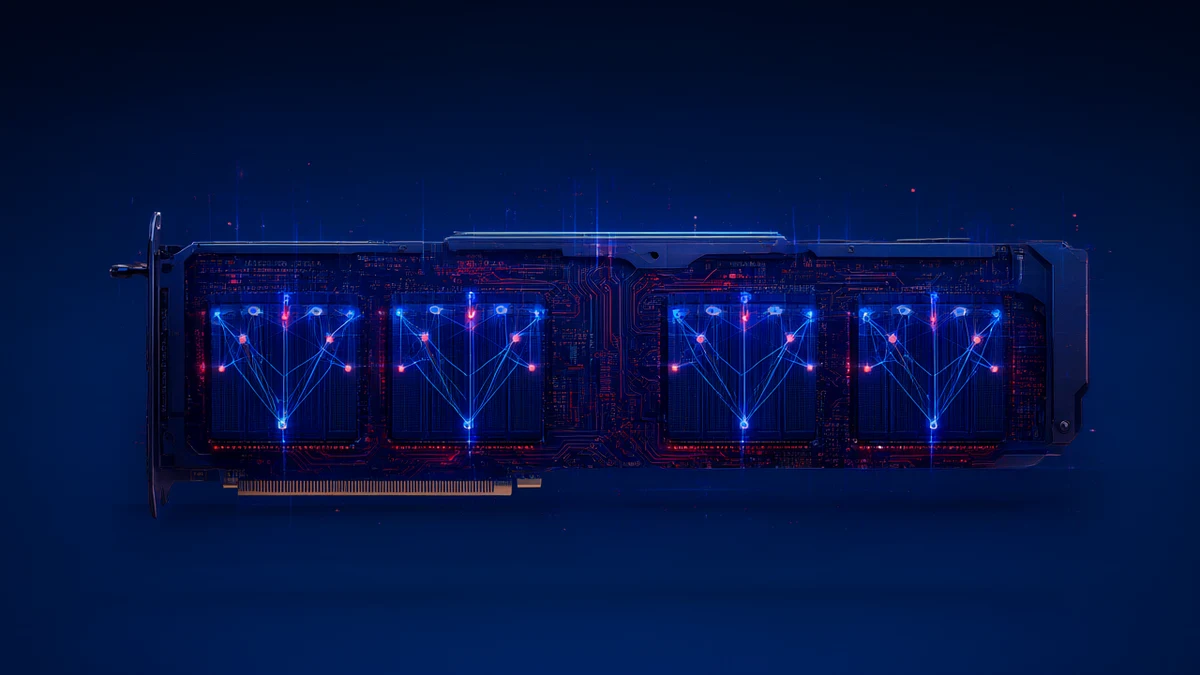
Hello everyone, I’m Zixing. For this edition I brought Wubian along to chat. This week the hardware world and the AI world both blew up over three things — and those three things are actually strung together by a single thread: compute. Whether you want to train large models, build a local AI workstation, or just grab a new card in the gamer market, in the end you can’t dodge the question of “where does compute come from, and how much does it cost.”
I handle the hardware specs, memory configurations, benchmarks, and build costs; Wubian covers the AI industry landscape, domestic substitution, and the technology ecosystem. We’ll take three threads and pull these three stories apart until they’re fully clear.
1. NVIDIA RTX PRO 5500: The “Professional Beast” with 84GB GDDR7#
1.1 Where Exactly Does This Card Sit#
First, position the RTX PRO 5500. NVIDIA’s product stack is finely divided these days: GeForce gaming cards on one side, Data Center cards on the other, and in between a professional visualization and workstation line — the PRO series within the RTX family. The RTX PRO 5500 belongs to that middle line. Its customers aren’t gamers, but creators and enterprise users who need to run local large models, AI inference, 3D rendering, and scientific computing on desktop workstations.
The core logic of this line: you need far more VRAM than a gaming card offers, but you don’t need the monstrous cooling, power delivery, and TCO of a data center card. The RTX PRO 5500 fills exactly that gap — an AI compute card with staggering VRAM that fits into an ordinary workstation.
| Item | RTX PRO 5500 | Positioning notes |
|---|---|---|
| VRAM capacity | 84GB GDDR7 | Far ahead of today’s mainstream gaming cards |
| Memory type | GDDR7 | New-generation high-bandwidth memory |
| Target market | Professional AI workstations | Local inference, fine-tuning, rendering |
| Benchmark counterpart | A down-streamed version of the data center card | Balances performance with desktop usability |
| Core selling point | Huge VRAM + workstation-grade reliability | Another beast for AI |
1.2 Why 84GB Is the Keyword#
Many people pause at the number “84GB,” because in the gaming card market 24GB already counts as large, and consumer flagships typically top out around 32GB. 84GB jumps two notches at once — what does that capacity mean? It means you can run local model inference entirely on one desktop card, without offloading memory to that expensive data center part.
For creators doing AI, VRAM is life. KV cache for large-model inference, gradients and optimizer states during fine-tuning — all of it eats VRAM. Run short and you’re forced to “shard” or lean on CPU memory, and the moment you lean, you slow down. 84GB basically lets one card comfortably run inference on models in the tens-of-billions-of-parameters class, which is a genuine liberation of compute for personal studios and small-to-mid-size businesses.
Wubian adds one note: what makes this generation of GDDR7 meaningful isn’t just capacity — it’s bandwidth. Bandwidth determines how fast data moves during model inference; no matter how large the capacity, if bandwidth can’t keep up you stall on memory reads and writes. GDDR7’s bandwidth gains, combined with the capacity, are the real reason this card “can fight.”
1.3 What Exactly Is New in GDDR7#
GDDR7 is the next-generation memory standard, improving over the previous generation in per-chip capacity, data transfer rates, and power efficiency. For professional cards, the stacking density of memory chips determines whether the card can fit enough capacity within a reasonable PCB area. GDDR7 lets vendors achieve larger capacity with fewer chips, easing the pressure on cooling and power delivery.
Wubian chimes in again: from an industry perspective, memory is also one of the choke points for domestic GPUs. Even if core compute improves, if memory still has to be imported, both cost and supply-chain resilience take a hit. So the 84GB GDDR7 spec is, technically, NVIDIA’s moat — and, industrially, a hurdle domestic GPUs must clear.
| Dimension | GDDR6 era | GDDR7 era |
|---|---|---|
| Per-chip capacity | Relatively low to start | Higher, with greater stacking density |
| Data rate | Previous generation | New generation, significantly improved |
| Bandwidth | Previous generation | Higher, better for model inference |
| Power efficiency | Previous generation | Better |
| PCB area for equal capacity | Larger | More compact |
1.4 The Fundamental Difference from Gaming Cards#
Many will ask: if the card has this much VRAM, can it game? Yes — but there’s no point, and it isn’t well suited. The RTX PRO 5500’s driver stack, cooling, and reliability design are tuned for 7×24 workstation operation, while gaming cards prioritize frame rate and latency. More fundamental is the positioning difference: a gaming card is “peak single-user interactivity,” a professional card is “batch, stable, long-duration throughput.”
In practice, a personal studio running models locally can, budget permitting, genuinely avoid much of the “not enough VRAM, model won’t fit” pain with a large-VRAM professional card. That is the real value these products target.
1.5 Who It Fits and Who It Doesn’t#
Who it fits: individual developers and SMBs doing local large-model inference and fine-tuning; creators who need big VRAM for 3D rendering and scientific computing; enterprises with data confidentiality requirements that won’t upload data to the cloud. Who it doesn’t fit: gamers who only play, and budget-sensitive home users.
| Fit or not | Who | Why |
|---|---|---|
| Fits | Local large-model inference / fine-tuning | Direct beneficiary of 84GB VRAM |
| Fits | 3D rendering and scientific computing | Workstation-grade stability and throughput |
| Fits | Data-security-sensitive enterprises | Data never leaves the premises |
| Doesn’t fit | Pure gamers | Worse value than gaming cards |
| Doesn’t fit | Budget-sensitive home users | Pricey and overprovisioned |
2. Domestic MetaX XiYun C700: Domestic Substitution Benchmarked Against the H100#
2.1 What Is MetaX and the XiYun Series#
Having covered NVIDIA, we turn the camera to China. MetaX is a domestic GPU vendor whose flagship product line is named “XiYun,” aimed at AI computing and high-performance computing scenarios. This round’s XiYun C700 is MetaX’s publicly declared flagship, and its most talked-about point is this: the company benchmarked it directly against NVIDIA’s H100.
That’s a significant signal for domestic GPUs. Domestic GPUs have often carried the “usable but not strong enough” label; making the H100 an explicit public benchmark shows the vendor now has the confidence to put its flagship next to the international first tier. Whether it fully catches up is another matter — but daring to benchmark publicly is itself an expression of domestic compute confidence.
2.2 Why the H100 Is the “Measuring Stick”#
The H100 is NVIDIA’s absolute mainstay in high-performance AI training and inference today, and the industry’s invisible yardstick for any AI compute card. A domestic GPU choosing to benchmark the H100 carries two meanings: first, the question users care about most is “which NVIDIA card is yours equivalent to?” — answer it with the H100 and users instantly have a frame of reference; second, only by benchmarking the H100 can a domestic flagship prove it has truly entered the international mainstream performance band.
Wubian says that from an industry-logic view, domestic substitution is never a binary of “catch up or give up” — it’s a gradual process of “usable first, then dependable, then good.” The H100 remains formidable, but if domestic cards can deliver price and supply-chain advantages within an acceptable gap, cost-sensitive domestic cloud providers, research institutions, and enterprises will have real motivation to adopt them.
2.3 What H2 2027 Mass Production Means#
Official information says the XiYun C700 is planned for mass production in the second half of 2027. That timing matters. On one hand it shows this is a product that needs time to mature; on the other it shows that the path from design to tape-out to mass production remains long for domestic chips. A late mass-production date means the industry still depends on existing supply in the short term — but it also means that at that milestone, domestic compute will see a genuine, purchasable, deployable-at-scale leap.
Wubian cautions rationality about domestic substitution: mass production is only step one; what follows is software ecosystem, operator adaptation, compiler maturity, and whether mainstream large-model frameworks run smoothly. If the hardware compute arrives but the ecosystem doesn’t, users will still suffer. That’s the lesson domestic GPUs most need to learn.
| Item | MetaX XiYun C700 | Context |
|---|---|---|
| Benchmark counterpart | NVIDIA H100 | The international yardstick for high-performance AI compute |
| Mass production | H2 2027 | Needs refinement and supply-chain preparation |
| Positioning | Domestic flagship AI compute card | AI training and inference scenarios |
| Core value | Domestic substitution | Supply-chain autonomy and cost optimization |
| Key challenge | Software ecosystem and operator adaptation | The biggest hurdle beyond hardware |
2.4 What Domestic Substitution Really Means#
Wubian insisted on adding a passage on “why domestic substitution deserves attention.” Many might think: domestic cards are expensive and slow, why chase them? But the industry logic isn’t purely “whoever is faster wins.” When global supply chains wobble and one vendor, one technology route dominates, both pricing power and capacity become risk points. The existence of domestic GPUs is itself the market’s “alternate path.”
The old saying “with grain in the granary, there’s no panic in the heart” holds in the chip industry too. Domestic substitution isn’t about replacing NVIDIA tomorrow; it’s about keeping key links from being wholly hostage to others and giving the market a second choice. That’s both an industrial-security need and the seed of mid-to-long-term cost optimization.
2.5 The Mindset Users Should Have#
For domestic users facing domestic GPUs, the rational mindset is: neither blind cheerleading nor wholesale dismissal. Look at data, look at benchmarks, look at ecosystem maturity. Everything new is imperfect at first; domestic chips need time to catch up on ecosystem, but as long as real progress appears, they deserve serious treatment and sustained observation.
| Mindset toward domestic GPUs | Concrete practice |
|---|---|
| No blind cheerleading | Trust benchmark data, not marketing lines |
| No wholesale dismissal | Accept that progress and gaps coexist |
| Rational assessment | Watch ecosystem maturity and adaptation |
| Long-term view | Judge the investment on a three-to-five-year horizon |
3. The RTX 5090 Price Surge: The Gamer’s Dilemma#
3.1 A $2,000 MSRP Gamers Can’t Buy#
Having covered professional and domestic cards, we return to the consumer market gamers care about most. The RTX 5090 is NVIDIA’s new consumer flagship with an MSRP of $2,000. Impressive on paper — but what really gives gamers headaches is this: almost no one can buy it at anywhere near that price.
Put bluntly, MSRP has become a “theoretical number” these days. Go hunting at that price and you’ll most likely find “out of stock,” “backorder,” or “impossible to find.” The channels that actually have stock price it well above MSRP, and the premium keeps climbing.
3.2 Why It Surged Like This#
The surge isn’t single-cause. For one, flagship chip yields are inherently limited, and the scarcity of flagship cards further inflates demand; for another, the AI boom has spilled massive compute demand into the consumer GPU market — many “PC builders” and even small studios buy high-end gaming cards to run local AI workloads, competing directly with pure gamers.
Wubian adds from the industry angle: this reflects how compute demand has blurred the line between “consumer” and “professional.” You used to buy a gaming card to play games; now a top gaming card doubles as a cheap AI compute tool. When two crowds fight over the same card, a price surge is nearly inevitable.
| Item | Situation | Notes |
|---|---|---|
| Official MSRP | $2,000 | Theoretical reference price |
| Actual purchase difficulty | Extremely high | Out of stock, backorder, impossible to find |
| Real market price | Above MSRP | Premium keeps rising |
| Cause of the surge | Limited supply + strong demand | Scarcity drives price |
| AI demand spillover | Gaming cards repurposed for AI | Competes with gamers |
3.3 How To Cope With Stubbornly High Build Costs#
For ordinary gamers, the direct effect of this surge is that a high-end build keeps getting more expensive. I (Zixing) offer a few practical suggestions:
First, don’t chase the flagship. If you only game, mid-to-high-end cards cover the vast majority of scenarios; spending your budget on a flagship — especially one with a premium this steep — is poor value.
Second, watch the secondhand market and restock rhythm. Once flagship supply opens up, prices usually get a pullback window; patiently buying at restock moments beats chasing the top.
Third, if the budget is truly tight, pick last generation’s card or a mid-tier one and spend the savings on the monitor, PSU, and other parts that improve the experience more. A build is a system, not a single component.
Wubian adds one more: from the compute-tool perspective, unless you must run large models locally, gamers have no need to fight AI buyers for flagships. Hand local AI to cloud services and keep the budget for the gaming experience — usually the more rational call.
| Build strategy | Advice | Who it suits |
|---|---|---|
| Don’t chase the flagship | Mid-to-high-end covers most scenarios | Pure gamers |
| Watch restock rhythm | Buy after supply opens and prices pull back | Value seekers |
| Last-gen / mid-tier card | Save budget for other parts | Tight budgets |
| Local AI to the cloud | Don’t fight AI buyers for cards | Gaming plus light AI needs |
3.4 The Timing Factors Behind the Surge#
Beyond supply and demand, timing factors pour fuel on the fire. One: a new architecture has just launched and the yield ramp can’t keep up with explosive demand, so early supply shortfalls push prices higher; two: channel operators and scalpers, seeing the scarcity, hoard and mark up, pinning an already tight supply further out of ordinary users’ reach.
Wafer-fab capacity allocation is another variable. When foundries prioritize high-margin data center products, consumer flagships get a relatively limited share, and prices climb more easily. Stacked together, these factors make up the surge that leaves everyone gazing longingly at spec sheets.
3.5 Will It Fall Back, and When#
The answer depends on when supply genuinely opens up. Usually, once the yield ramp completes and the product moves into mid-life, prices gradually return to earth. But the AI-demand variable makes “wait it out like history says” less certain — because demand support is stronger than in a pure gaming market.
So my judgment: prices will most likely drift down from the extreme highs, but they won’t return to the old state where “MSRP equals street price.” Rather than gamble on prices, decide by your real needs and budget.
| Variable | Effect on price | Trend judgment |
|---|---|---|
| Yield ramp | Early supply shortfall pushes prices up | Eases as the ramp completes |
| Channel hoarding and scalpers | Marks prices up further | Amplifies short-term swings |
| AI demand spillover | Stronger demand support | Prices unlikely to revisit historic lows |
| Product lifecycle | Later-stage supply grows | Slow return to rationality |
4. All Three Stories, One Thread: The Age of Priced-Up Compute#
4.1 A Hidden Mainline#
Put the RTX PRO 5500, the XiYun C700, and the RTX 5090 price surge side by side, and you’ll see they are three faces of the same coin: compute.
NVIDIA ships a professional card — a “big-VRAM beast” deployed into the professional AI market serving enterprises and individual creators; a domestic card benchmarks the H100, seeking a slice of the international compute market through domestic substitution; and the consumer flagship’s price surge is, at root, compute demand dragging gaming cards into the AI supply-demand equation. Behind all three stories lies the same base logic: compute keeps getting more valuable.
Wubian sums it up well: we used to talk about GPUs in frames per second; now we talk about them in token throughput and model inference. The GPU’s role changed, and its price followed.
4.2 Advice for Different Crowds#
If you’re a professional AI user, the RTX PRO 5500’s 84GB of VRAM has real meaning for you — local models, fine-tuning, and inference all benefit, and it deserves attention. If you follow domestic compute, the XiYun C700’s mass production timeline is worth tracking, viewed rationally through the ecosystem’s catch-up process. And if you’re a gamer facing the price surge, configure rationally, don’t chase highs, and time your purchase to restocks — that’s the most practical playbook.
5. Editorial Banter#
Having talked this far, I (Zixing) want to add a couple of thoughts. After years of making hardware content, my biggest realization is that “Moore’s Law hasn’t vanished — it just moved.” It used to show up in game frame rates; now it shows up in AI compute. The GPU went from “a toy for playing games” to “a tool that produces compute,” and that shift is repricing the entire industry.
Wubian picks it up: what domestic compute is chasing isn’t just a chip but an entire ecosystem. The chip is the skeleton, the software ecosystem is the flesh, and only together do they make a usable system. I have confidence in the XiYun C700, but I value patience for the ecosystem just as much.
That’s a wrap on this hardware and AI special. Tell us in the comments about your build plans and your view of domestic GPUs. See you next time.
— Zixing and Wubian, NTGame Editorial