Xbox Mass Layoffs and Restructuring: Next Halo Goes to Activision, First-Party Studios Cut to Three — an Old Fan’s View of the IP Changing Hands#
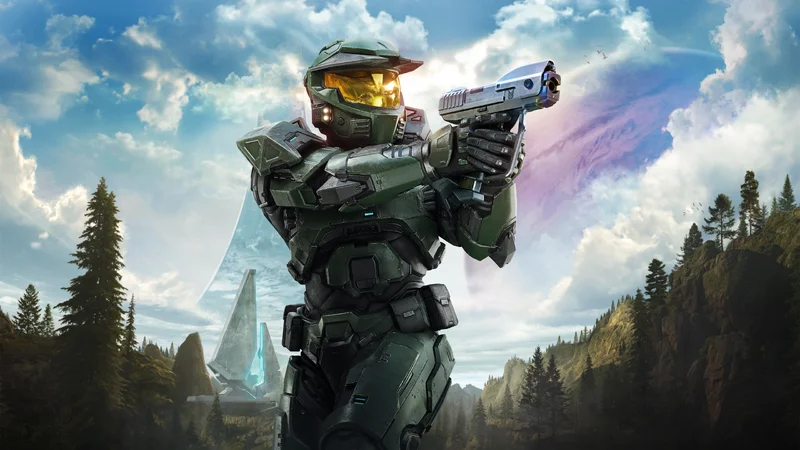
Hey everyone, Zhanlan Yingren here. These past few days, my social feed and several veteran-player group chats have been flooded by one story — Microsoft confirmed a new round of restructuring on September 22, 2026 (Eastern Time) via Xbox Wire, cutting 268 roles. But what really made this old-timer, who has played Halo since the original, flinch wasn’t the number. It was the sentence that followed: the next mainline Halo will be made by Activision.
As a player who has come all the way from that iconic “Master Chief” opening of Halo: Combat Evolved on the original Xbox, my first reaction wasn’t anger — it was a disorientation I couldn’t quite name. That night I stared at the screen forever, and all I could see was the summer of 2001, pressing a controller at a friend’s house, watching a Spartan break out of the ice. Twenty-plus years on, a universe born at Bungie and carried by 343 Industries for so long is being handed to a company that makes Call of Duty. In this piece, from an old fan’s perspective, I want to walk carefully through the light and shadow behind this “change of IP custody.”
1. What This Round of Restructuring Actually Did: More Than 268 Roles#
1.1 The hard facts on layoffs and ownership changes#
First, the restructuring content confirmed on September 22, item by item:
| Key item | Details |
|---|---|
| Announced | September 22, 2026 (Eastern Time), officially confirmed by Microsoft via Xbox Wire |
| Layoff scale | 268 roles cut this round |
| Scope | Halo Studios, other first-party studios, plus Xbox Game Studios leadership and central functions |
| Halo’s destination | The next mainline Halo goes to Activision, handled by a newly built team fully independent of the Call of Duty team |
| Halo Studios | Formerly 343 Industries; not shutting down, keeping only a small team to support existing games and the community |
Two points stand out from the table. First, 268 isn’t the harshest figure in Microsoft’s years of layoffs, but its range stretches wide — not just dev teams but leadership and central functions too, which says this wasn’t localized damage control over one failed project but a systemic re-architecture. Second — and this is the fatal one — development of Halo’s mainline really has passed out of “Microsoft’s own first party’s” hands.
1.2 The great studio reshuffle#
Halo’s mainline moving to Activision is only the most eye-catching piece. Around it, the whole first-party map was redrawn, with dense ownership changes:
| Studio | Outcome this round |
|---|---|
| Halo Studios (formerly 343 Industries) | Not shutting down; keeps a small team supporting existing games and the community |
| Rare | Reassigned to Activision |
| World’s Edge | Reassigned to Activision |
| Obsidian Entertainment | Reassigned to Bethesda, continuing existing projects (including a new Fallout co-developed with Bethesda) |
| Turn 10 | Merged into Playground, which now covers the full Forza series and the Fable reboot |
| Microsoft Casual Games | Handed to King |
Behind every row of that table lies a cohort of fans’ youth. Rare is the storied British house that came up through the N64 era of Banjo-Kazooie and Donkey Kong; World’s Edge has carried the Age of Empires banner these past years; Turn 10 and Playground were near-perfect “cooperative rivals” in the racing space, now pressed into a single company. Taking these apart, herding them, redistributing them — for any player with attachments, it’s like flipping through an old photo album and finding that many of its pages have been repurposed for something else.
1.3 A restructuring with a prelude#
To be clear, September’s layoffs didn’t come out of a clear sky. In the previous July adjustments, Xbox had already laid a chain of groundwork that made this contraction feel almost inevitable:
| Time / context | Event |
|---|---|
| 2025 | The Initiative (the Perfect Dark project) closed |
| June 2026 | Double Fine and Compulsion Games sold back to their respective management |
| June 2026 | Mojang moved out of the Xbox Game Studios structure, now reporting to Xbox CEO Asha Sharma |
| Around June 2026 | Undead Labs completed its ownership transfer (State of Decay 3 still launches day one on XGP) |
| 2026 | Ninja Theory’s two sale agreements fell through; employee consultations over a proposed closure begin |
| 2026 | Arkane remains in consultation with the French works council |
Straighten that timeline and a pattern appears: Microsoft seems to be compressing the first-party footprint by whatever means each case allows — sell what can be sold, merge what can be merged, close what must be closed. The teams once billed as “first-party pride” are leaving the map one after another.
2. The Halo Succession: From Bungie to 343, and Now to Activision#
2.1 A succession line with no road back#
To grasp what this moment means to longtime fans, you first have to replay Halo’s twenty-plus years of baton passes in your head:
| Phase | Steward | Key moment |
|---|---|---|
| Creation and peak | Bungie | Shaped Master Chief and the Covenant world from the original Halo: Combat Evolved |
| The handover trough | Bungie → 343 | Bungie left after 2010’s Halo: Reach; 343 Industries took over |
| Long-term stewardship | 343 Industries | Carried the subsequent mainline sequels and multiplayer operations |
| Now | Activision | The next mainline entry goes to Activision for development |
The row that leaves this old fan most unsettled is the last one. Bungie all but built the Halo universe with its own hands, and after it left, 343 was at least still Microsoft’s own child — fans could take some comfort that “family was still looking after the family estate.” Now Halo has been handed to a publisher built on Call of Duty, and no matter how hard officials stress “fully independent from the Call of Duty team, a newly built team,” the optics of “handed to outsiders” remain a genuine loss for longtime fans.
2.2 What Activision’s leadership said — and what remains unresolved#
After the announcement, Activision president Rob Kostich gave a notably clear statement. He said: “With Halo, our goal is clear: to make the greatest Halo game ever, one worthy of this universe and its legacy… We have already begun building a team dedicated to exactly that.”
It’s a well-crafted, sincere-sounding statement — but as an old fan, what I care about more is everything that went unsaid, everything nobody can clarify even now. As of this writing, the release timing, scale, and head of the new team for Halo’s next mainline entry have not been disclosed; the initiative rests entirely in the other side’s hands. Nobody knows who will lead that “dedicated team,” on what cadence it will move, or where it will take Halo. That uncertainty is precisely the stone sitting in everyone’s chest.
2.3 Halo Studios “staying behind” and Halo’s long tail#
At the same moment Halo’s mainline was handed away, officialdom offered what looks like a comforting patch: Halo Studios (formerly 343 Industries) will not be shut down, and a small team will remain to keep supporting existing games and the community. The meaning of that has to be unpacked.
On one hand, it at least shows Microsoft doesn’t intend to leave Halo gathering dust — someone still has to mind the existing online presence. On the other, “keep a small team” carries its own signal of contraction — the former 343 was once the vast organization carrying the entire destiny of Halo’s mainline; now, with mainline development stripped away, what remains is a maintenance force holding the base. For fans accustomed to “a full development giant standing behind Halo,” this fall from lead creator to caretaker may sting more than an outright split.
At bottom, what has kept Halo anchored in longtime fans’ hearts for twenty-plus years isn’t just the quality of any one entry — it’s the belief that “someone, always, is seriously continuing this universe.” When the bearer of that belief retreats from “building the next chapter” to “maintaining the old order,” the string in an old fan’s chest is bound to slacken.
2.4 An irony I keep turning over#
Digesting the news, one rather delicate irony kept surfacing. Activision once published Destiny — the flagship series Bungie built after leaving Microsoft to go independent. Now Bungie’s old publisher has, in turn, taken custody of the Halo legacy Bungie itself created. “Fate has a sense of humor” fits perfectly. And looking back over recent years, nearly every first-party hit Microsoft has been able to rest on arrived via acquisition — from Bethesda to Activision Blizzard, the pattern holds. Microsoft seems never to have hatched an internal, homegrown path that could go toe-to-toe with rivals. That’s my personal observation and commentary as a player, not any official line — but it is a quietly bitter footnote to this whole restructuring.
3. The Collapse of the First-Party Map: From 14 to 3#
3.1 A cliff-edge contraction#
If the Halo handover is the visible symptom, what truly made me feel “the era has turned” was the cliff in the studio count. In 2021, Xbox Game Studios possessed as many as 14 independent development teams at once; after this restructuring, the whole system is down to 3 development teams plus a publishing arm. Put the two rosters side by side and the drop becomes visceral:
| Time | Composition |
|---|---|
| 2021 peak (14 studios) | 343 Industries, The Coalition, Compulsion, Double Fine, The Initiative, inXile, Mojang, Ninja Theory, Obsidian, Playground, Turn 10, Rare, Undead Labs, World’s Edge |
| After this restructuring (3 studios) | The Coalition, inXile, Playground + Xbox Game Studios Publishing |
From 14 to 3 — I don’t need to narrate the rises and falls, the cycles of acquisition and divestiture in between. Just read the 14 names aloud, and plenty of longtime fans will feel their “first-party pride” shatter on the floor. Xbox once stood on those names when it claimed “we have our own studio matrix too”; with the roster down to three, that air of a sprawling estate is gone entirely.
3.2 The “fewer, bigger” organizational logic#
So why cut this deep? Within the restructuring’s own arc there’s a clear logic, best summarized by the phrase “fewer, bigger.” Rather than feeding a swarm of vaguely positioned studios with scattered product lines, concentrate resources on a few teams and flagship IPs with higher certainty. Reassigning Rare and World’s Edge to Activision, Obsidian to Bethesda, folding Turn 10 into Playground, giving casual games to King — all of it is “consolidation”: every remaining team pushes in one clear flagship direction instead of fighting separate wars.
From a financial-efficiency standpoint, the logic is hardly baseless. But what it sacrifices is precisely the vitality of “many flowers blooming.” For the platform this may be a slim-down; for players, it means the mid-sized teams and mid-sized projects that once delivered surprises are disappearing from this ecosystem one after another.
3.3 The timing coincidence with Halo: Campaign Evolved’s launch#
One more detail strikes me as especially bitter. This round of layoffs came after this very game’s launch — Halo: Campaign Evolved shipped on July 28, 2026, and this round of layoffs was announced roughly eight weeks after its release. Players had barely finished cheering a new Halo release before watching the system that birthed the IP take a heavy blow.
Equally sobering is Gears of War: E-Day. It was originally planned to launch in October 2026, yet its narrative director was laid off four days after the game announced it had “hit its goals.” On one side, a project about to deliver; on the other, the person steering its story already gone. That mismatch — “the project succeeded, the people left” — is exactly what cuts deepest at creators, and at longtime fans, in this restructuring.
3.4 What the remaining three carry#
With the first party down to three development teams, the natural question is: what is each of the survivors assigned to carry? Working backward from this round’s ownership information, a rough division of labor emerges:
| Remaining team | Assigned direction (inferred from this round’s ownership moves) |
|---|---|
| The Coalition | Neither merged nor divested; stays inside the Xbox Game Studios system |
| inXile | Also stays in the existing system, not reassigned to the Activision or Bethesda side |
| Playground | After merging with Turn 10, covers the full Forza series and the Fable reboot |
Read that way, Playground is clearly one of this round’s “beneficiaries” — it not only survived but swallowed the entire Forza series and the Fable reboot, taking both the racing and fantasy cakes for itself. The Coalition and inXile keep their identities unchanged, but against the backdrop of a shrinking system, the expectations on their shoulders will likely run higher than before.
Put another way: Microsoft isn’t simply “cutting its games business” — it’s re-placing its limited pieces on a smaller board that prizes winning probability. Each remaining team now carries a heavier load than before. Whether that “fewer but heavier” arrangement sharpens the survivors into better work or grinds them down under pressure, nobody can say in advance.
4. The Cumulative Chill: More Than 268#
4.1 Stacking 268 on top of 3,200#
If you fixate only on the 268 roles from September 22, you’ll badly underestimate the scale of this shock. This round is merely the latest step in Microsoft’s “Xbox reset” plan, and stacked against July’s move, the chill is far deeper:
| Date | Layoffs / plan |
|---|---|
| July 6, 2026 | Xbox announces 3,200 layoffs (about 20% of the division), including 1,600 immediate cuts that day |
| July 6, 2026 | A further 1,600 planned before June 30, 2027 |
| September 22, 2026 | A new round of restructuring adds 268 more roles |
| Cumulative | A layoff target of roughly 3,200 game-related roles (about 20% of the division) |
Matt Booty, Microsoft’s chief content officer, summed up the process this way: since July (including studio divestitures and transfers), they have completed roughly three-quarters of the originally planned restructuring. In other words, this “reset,” launched in July, was always slated to touch about 3,200 game-related roles — roughly a fifth of the division — and by September 22 it had reached the three-quarter mark. Run the math and 268 looks like the small tip of an iceberg, with a long, unfinished restructuring road still pressing down beneath the surface.
4.2 A date worth remembering#
Near the tail of all this, one more date deserves a note: on October 6, 2026, Xbox plans to hold an all-hands meeting (an ALL-XBOX town hall). After several rounds of layoffs, divestitures, and mergers have mostly settled, a gathering of every Xbox employee may well become this “reset’s” period mark — putting the road ahead and the variables remaining employees must face squarely on the table. For longtime fans, it is both the close of a noisy chapter and the true starting point of a new order.
5. The Newsroom Debate, and Where I Land#
5.1 We argued all night#
This story kept our newsroom arguing a full evening. Zixing, in characteristic form, put on the rationalist hat first: “The math is clear — what certainty did the cost of 14 teams actually buy? Cut to 3 and the money’s saved. But the players’ hearts? I won’t grade the deal good or bad. I just think it’s cold.”
Wubian picked it up from the operations angle: “I don’t actually think handing it to Activision is so bad. Halo is too big an IP — as long as someone takes it seriously, that beats it slowly moldering in Microsoft’s hands. The real question is what that ‘dedicated team’ can actually produce.”
Chasun cared more about the mechanics: “A team fully independent of Call of Duty — that structure I accept. But Halo’s essence was never gunfeel. It’s the narrative weight and the flavor of that universe. Swap in a new crowd, and I put a question mark on whether the flavor survives.”
Longzhui Ri wrapped it up: “We can speculate all night, but the question we should be asking is how many of the people who actually made Halo are still in their seats. If the people are gone, whoever holds the IP is holding an empty shell.”
I sat in the corner listening, hardly saying a word. They all had a point — but for me, Halo was never an org-chart puzzle to be solved. It’s a memory that genuinely walked beside me growing up.
Midway through, the debate swerved from Halo to the bigger question of “does Microsoft even want to make games anymore.” Zixing shook his head: “Let’s not drift. The ledger explains it — what Microsoft wants now is to slam every resource into the few proven, money-making aces. Halo is an ace. Call of Duty is an ace. Forza is an ace. The mid-sized teams with decent credentials are simply the ones this board sacrifices.”
Wubian didn’t fully agree: “But stack all your aces on one table — what if one of them underperforms? Microsoft’s acquired hits have piled up these past years, but a true homegrown pipeline never took shape. Handing Halo to Activision looks like a marriage of giants, but it also admits that Microsoft has no better Halo card left to play.”
Chasun nodded and added: “At bottom it’s a trade. Cut uncertainty, buy certainty. What hurts us as players isn’t whether the math is right — it’s watching the things that once surprised us get pared out of the picture bit by bit.”
Listening to them go back and forth, it struck me that the debate itself was a mirror of our era’s shared confusion about the games industry: when everything is measured as “worth it or not,” how much room is left for the things that can’t be quantified but are what make works feel alive?
5.2 Before I go#
As someone who has played from the original Halo to now and watched the Bungie-and-343 cycle for years, my mood is complicated. On one hand, I hold a thread of hope for Activision’s “greatest Halo ever” — nobody wants to watch this IP wither. On the other, I can’t help worrying: when an IP’s custody changes hands again and again, and the first-party system that raised it shrinks from 14 to 3, how many of the people who truly shaped its soul are still at the table?
The soul of the Halo universe has never lived in financial figures or on an ownership chart. It lives in the star corridors Master Chief has walked, in the sigh when Reach fell, in countless nights of split-screen, win-at-all-costs battles with friends. Whoever carries those forward, whole, is the one who has truly caught Halo.
This time, Microsoft handed the ace away. Rebirth, or slow dilution in a foreign house — the answer probably waits until that “dedicated team” actually shows its work. But at the very least, this old fan will keep watch over that universe, waiting to see where it ends up.
— Zhanlan Yingren, NTGame Editor
Appendix: Key Takeaways at a Glance#
- On September 22, 2026 (Eastern Time), Microsoft officially confirmed via Xbox Wire a new round of restructuring cutting 268 roles, covering Halo Studios, other first-party studios, and Xbox Game Studios leadership and central functions.
- The next mainline Halo goes to Activision, handled by a newly built team fully independent of the Call of Duty team.
- Halo Studios (formerly 343 Industries) will not close; it keeps only a small team supporting existing games and the community.
- Ownership changes: Rare and World’s Edge reassigned to Activision; Obsidian reassigned to Bethesda; Turn 10 merged into Playground; Microsoft Casual Games handed to King.
- First-party studios shrink from a 2021 peak of 14 to 3 development teams after this restructuring (The Coalition, inXile, Playground), plus Xbox Game Studios Publishing.
- Microsoft chief content officer Matt Booty said that, since July, roughly three-quarters of the originally planned restructuring has been completed.
- Of the 3,200-person layoff plan announced July 6, 2026, 1,600 were cut immediately that day, with the remaining 1,600 planned before June 30, 2027.
- This round of layoffs came about 8 weeks after Halo: Campaign Evolved launched on July 28; Gears of War: E-Day’s narrative director was laid off 4 days after the game announced it had “hit its goals.”
- On October 6, 2026, Xbox plans to hold an all-hands meeting.
- The next Halo’s release timing, scale, and new team lead remain undisclosed; Ninja Theory and Arkane’s final outcomes are still in consultation and undecided.
- This piece focuses on the structural shift of “Halo’s IP moving to Activision + the first-party studio contraction,” complementing the separate report on Obsidian and Fallout; for related content, see the site’s Halo: Campaign Evolved guide.
- The claim that “most of Microsoft’s hit IPs came from acquisition and no homegrown pipeline was built” is analysis and commentary from a player’s perspective, not an official Microsoft position.
- For longtime fans, Halo’s repeated changes of custody carry the loosening of a succession chain and a nagging worry for the universe’s direction — and that worry is where this article began.