Halo’s Mainline Goes to Activision for the First Time: Halo Studios Demoted to Support Studio — a Longtime Fan’s Take on a Make-or-Break Moment for the Series#
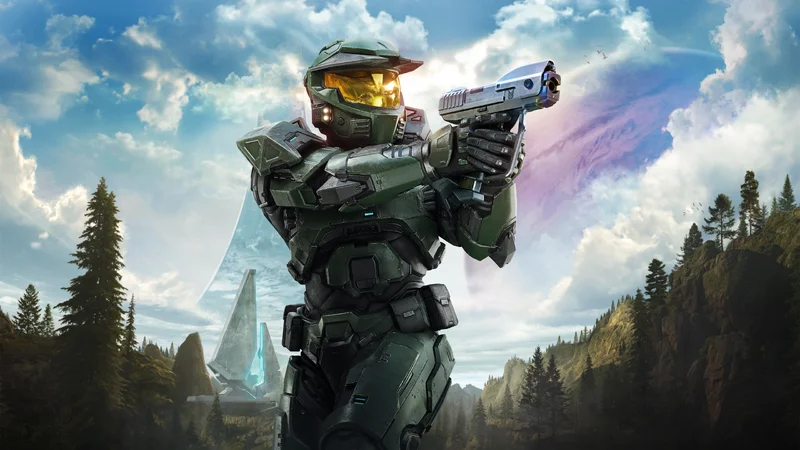
Hey everyone, Longzhui Ri here.
I picked up a controller for the first time in 2001 and watched a Spartan smash his way out of a frozen escape pod. For more than twenty years since, Master Chief and the universe called Halo have held a permanent spot on my hard drive — and in my chest. But on September 22, 2026, the announcement Microsoft made official through Xbox Wire left this old-timer, who has been playing since the original, staring blankly at the screen for a long while.
In this round of restructuring, what really made my stomach drop wasn’t the 268 eliminated roles — though that is hardly a small number either. It was the sentence buried deep inside the memo: the next mainline Halo game will be developed by Activision. Meanwhile Halo Studios, which took over the series after Halo 4 and carried it for more than a decade, has been demoted to a small team doing support work only.
As a hardcore single-player player, I don’t much care about asset movements in a financial report and have no interest in doing Microsoft’s accounting for it. What I care about is this: when development of Halo’s mainline passes into an “outsider’s” hands for the first time, what does that actually mean for a series I’ve played half my life? In this piece I want to put down, exactly as I felt them, an old fan’s worries, hopes, and everything in between.
1. The Hard Facts First: the Memo, the Headcount, and “About 3/4”#
1.1 The memo and the layoff figures#
This restructuring was announced by Xbox chief content officer Matt Booty in an internal memo titled “Continuing Our Reset,” later published via Xbox Wire. Here is the officially confirmed hard information, laid out plainly:
| Key item | Details |
|---|---|
| Announced | September 22, 2026, published by Microsoft via Xbox Wire |
| Announced by | Xbox chief content officer Matt Booty |
| Memo | “Continuing Our Reset” |
| Roles cut this round | 268 |
| Scope | Halo Studios, other first-party studios, and Xbox Game Studios leadership |
| Progress | Booty says the “reset” plan is about three-quarters (roughly 3/4) complete |
| Microsoft-wide related layoffs | Reported at roughly 500–600 people (across games, cloud, AI, marketing, and other areas) |
Two points here deserve to be pulled out separately.
First, 268 is a hefty number on its own, but what deserves more attention is its sense of “progress.” Booty made clear this is roughly three-quarters of the way through the previously announced “reset” plan — meaning these 268 people are not an isolated contraction but one link in a structural reshuffle that started long ago and is now nearing its end. From a player’s perspective, that means similar adjustments may well continue for a while yet, and we should brace ourselves.
Second, the scope explicitly names “Xbox Game Studios leadership.” That is different from the usual “cut a dev team” layoff — this time the knife reached management and central functions too, which tells you Microsoft is not doing localized damage control over one botched project, but systematically re-architecting the entire first-party structure.
1.2 Where Halo goes next: a list of what’s settled and what isn’t#
First, let me separate what is “confirmed” from what “hasn’t been disclosed” on the Halo front, so our emotions don’t smear the facts:
| Status | Details |
|---|---|
| Confirmed | The next mainline Halo goes to Activision for development |
| Confirmed | Handled by a “newly built team independent of Call of Duty’s existing development plans” |
| Confirmed | Halo Studios demoted to a support studio, keeping a small team to support Halo Infinite, Halo: Campaign Evolved, and the Halo community |
| Confirmed | Activision president Rob Kostich says team building has already begun |
| Not disclosed | Creative director on the new game |
| Not disclosed | Engine the new game will use |
| Not disclosed | Release window |
| Not disclosed | Platform list |
| Not disclosed | Whether Activision will put Halo on an annualized cadence |
On the last rows of that list, the “annualization” item has no official answer right now. But every longtime fan knows what it means the moment “annualized” lands on Halo: Master Chief’s story could stop being a patiently polished epic and become a product squeezed out on a fixed rhythm. Nobody can answer that question today.
2. The Halo Succession Wheel: From Bungie to 343, and Now to Activision#
2.1 A baton passed for more than twenty years#
To understand what this “change of custody” means to longtime fans, you have to walk the Halo succession line in your head first. I laid it out as a table, and looking at it stirs something I can’t quite name:
| Phase | Steward | Key moment |
|---|---|---|
| Creation and peak | Bungie | Shaped Master Chief and the Covenant universe from the original onward |
| First departure | Bungie | Split from Microsoft in 2007 to go independent |
| The handover | 343 Industries | Created specifically to take over the Halo series |
| Renamed | Halo Studios | In October 2024, 343 Industries was renamed Halo Studios and announced a move to Unreal Engine 5 |
| Now | Activision | The next mainline entry goes to Activision for development |
The row that stings most in that table is 2007. When Bungie left Microsoft, Microsoft created 343 Industries specifically to carry the torch. Fans grieved, but there was at least one comfort: 343 was still Microsoft’s own child, and Halo stayed “in the family.”
This time is different. Development of Halo’s mainline has passed, for the first time, from “Microsoft’s own first party” into the hands of a publisher built on Call of Duty. No matter how often officials stress “fully independent from the Call of Duty team, built from scratch,” the optics of “Halo handed to outsiders” land, for an old fan, as a genuine emotional blow.
2.2 A historical echo I keep turning over#
Longtime students of Halo history will know the past between Activision and Bungie: Activision once published Destiny — the flagship Bungie built after leaving Microsoft to go independent. Now one of Bungie’s old publishers has, in turn, taken over the Halo legacy that Bungie created and 343 sustained for years. “Fate has a sense of humor” barely covers it.
As an onlooker I don’t want to rule on whether this arrangement is right or wrong. I’ll just note one observation: Halo’s peaks and valleys, its rises and handovers, are almost a mirror of Microsoft’s first-party fortunes over twenty-plus years. Every change of custody has landed exactly where Microsoft turned a corner on its first-party strategy.
3. Activision Takes Over: the “Two-Track” Positioning Problem#
3.1 A dedicated team: the effort to draw a line around Call of Duty#
In this handover, what players should watch most closely is a qualifier Activision keeps repeating — independent of Call of Duty’s existing development plans. Activision president Rob Kostich offered a fairly explicit statement:
“Our goal is clear: to make the greatest Halo game ever made, one worthy of this universe and its legacy, and true to the things that first made players fall in love with it. We have already begun building a team dedicated to exactly that.”
Let me take the statement apart. The first half — “the greatest Halo game ever” — is standard big-publisher rhetoric; any team taking over a major IP says it. But the second half — “true to the things that first made players fall in love with it” — plus “a team dedicated to exactly that” is what players should actually weigh.
Set alongside the “annualization” worry, here is my read, in table form:
| Feared outcome | Official wording | My judgment |
|---|---|---|
| Absorbed into the Call of Duty cadence | Independent of Call of Duty’s existing plans | Officially a clean split, but the implicit pressure of sharing a roof remains |
| Polish time squeezed by annualization | No word on annualization | Unanswered — the biggest open question |
| Halo’s distinct narrative/art style lost | “True to what made players love it” | A sincere statement, awaiting proof in the product |
| The franchise commercially overdrawn | “Worthy of this universe and its legacy” | Positive on paper, execution to be observed |
3.2 Halo and Call of Duty: two fundamentally different animals#
As someone who has played both for over twenty years, I’ll say it plainly: Halo and Call of Duty are built from different stuff. Both are fast-shooting games that prize gunfeel, but Halo’s soul was never the “shooting feel” itself — it is the narrative thickness of that universe, Master Chief’s solitude, and a brand of science fiction with a philosophical streak. Force all of that into a Call of Duty cadence and it will not take.
So Activision’s “dedicated team, independent of Call of Duty” arrangement is, to me, not a throwaway line but the bottom line this new team must hold. Whether Halo survives in longtime fans’ hearts depends, to a large degree, on whether that line holds.
4. Halo Studios Demoted: the Fall from “Lead Creator” to “Caretaker”#
4.1 What the demotion means#
In this restructuring, what left this old fan most conflicted wasn’t Halo “going to another house” but the fate of Halo Studios itself. What’s officially confirmed: Halo Studios (formerly 343 Industries) will not be shut down; instead a small team remains to keep supporting Halo Infinite, Halo: Campaign Evolved, and the Halo community.
Put “lead creator” and “caretaker” side by side and the drop is easier to see:
| Dimension | Then (lead creator) | Now (caretaker) |
|---|---|---|
| Position | The development body carrying Halo’s mainline destiny | A small team doing support work only |
| Mission | Lead development of the next major entry | Support released games and the community |
| Authority | Held the series’ direction | No longer leads new development |
| Player expectation | “The new Halo will be theirs” | “The old Halo is theirs to watch over” |
At bottom, what has kept Halo’s universe anchored in longtime fans’ hearts isn’t just the quality of any one mainline entry — it’s the belief that “someone, always, is seriously continuing this universe.” When the bearer of that belief retreats from “building the next chapter” to “maintaining the old order,” the string in an old fan’s chest is bound to slacken a little.
4.2 The support team’s quiet value: keeping proof that Halo is alive#
From another angle, though, keeping Halo Studios as a support team is not meaningless. As the long-term operational force behind Halo Infinite and Halo: Campaign Evolved, this small team at least guarantees that Halo’s existing online world, campaign content, and community still have someone looking after them. For games that shipped recently, that beats “letting go entirely” by a wide margin.
I only just finished writing Halo: Campaign Evolved, and I have real feelings for this remake — it launched in July 2026 and was subsequently reported by foreign media to have underperformed commercially. That Halo Studios will continue to exist as the force supporting it at least means the “still-living part” of this universe won’t be cut off overnight.
4.3 The Halo universe co-creator reacts#
One reaction in all of this caught my attention in particular — Halo universe co-creator Marcus Lehto. On social media he responded that he was “shocked but not entirely surprised” by the end of Halo Studios’ leadership role and the series’ move to the Activision team, and wished the affected developers all the best.
As an old fan, I understand that shock completely. Someone who helped build a universe with his own hands and then watched it handed off again and again, only to find that even “who carries it next” no longer passes through his hands — “like watching a different lifetime” doesn’t cover it. This isn’t about who was right or wrong. It’s the desolation of “the person who shaped the world now watching from the sidelines.”
5. The First-Party Reshuffle in Full: Consolidating Into a Few Big Structures#
5.1 Where each studio lands#
Halo’s handover is only the entry point of this restructuring; behind it, the whole first-party map is being redrawn. Here’s where each studio lands:
| Studio | Outcome this round |
|---|---|
| Next mainline Halo | Goes to Activision, handled by a dedicated team independent of Call of Duty |
| Rare (Sea of Thieves) | Placed under Activision |
| World’s Edge (Age of Empires) | Placed under Activision |
| Obsidian | Goes to Bethesda |
| Microsoft Casual Games | Goes to King |
| Playground Games | Merged with Turn 10 into a single racing studio |
5.2 One throughline: consolidation#
Read the table together and the logic of this round is remarkably consistent: pull the scattered independent studios into a few big structures — Activision, Bethesda, King. Activision swallows the new mainline Halo, Rare, and World’s Edge; Bethesda takes Obsidian; King picks up the casual games; and what remains keeps merging — Playground and Turn 10 pressed into one racing studio.
The logic, stripped bare, is “control costs, concentrate resources, fight only winnable battles”: sell off or fold in the less central teams, gather ace IPs under a few big mountains. There is business sense in it. But as a player, what I notice more is what it sacrifices — that first-party ecosystem of “many flowers blooming, each with its own character.” When a platform’s studios turn from “a big family with distinct personalities” into “assets” herded into a few big structures, what players feel is the mid-sized teams that once delivered surprises fading out of the ecosystem one by one.
5.3 A date worth remembering#
Near the tail end of this restructuring there’s another date worth writing down: October 6, 2026, when Booty announced an all-hands town hall to review “reset” progress and preview what’s being called “the strongest games lineup in Xbox history.”
For longtime fans, that town hall reads two ways: on one hand, it is a phased wrap-up of a “reset” that began in July and has now reached the three-quarter mark; on the other, it may be the very node where the new order actually settles. “Strongest lineup ever,” said right after a wave of layoffs and consolidations, carries a faint need to redefine the word “strongest.”
6. Impact and Outlook for the Halo Community, and the Fate of Its Narrative and Art#
6.1 The community’s emotional shock#
As a player who has been here since the original, I have no doubt this “change of custody” will land hard on the Halo community. The people most active in it came up through the Bungie era; they witnessed Bungie’s 2007 departure, 343’s takeover and its ups and downs, and now they’re asked to witness Halo’s mainline developed, for the first time, by a studio that is neither the creator nor Microsoft’s own.
Trying to look at it from a player’s vantage, here’s the range of emotions likely to surface:
| Emotion | Where it comes from | My take |
|---|---|---|
| Worry | The mainline changes hands; the series’ fate rests in others’ hands | Reasonable, especially with no new-game details disclosed |
| Anger | The studio that carried the torch demoted to a support team | Emotionally understandable; officially confirmed it won’t close |
| Hope | A new team might bring new energy | Worth keeping a little of |
| Watchful calm | Let the work speak | The most rational stance |
6.2 Whether the narrative and art style can survive#
Halo’s narrative and art style are the core assets that separate it from countless other shooters. That faintly liturgical Covenant aesthetic, the tragedy behind Master Chief’s silence, the grandeur and loneliness radiating from ship after ship and ruin after ruin — all of it was grown slowly, detail by detail, by generations of developers.
And that is exactly what worries me most. When an IP’s development is handed off, even a conscientious new team will find that “the flavor” never transfers easily. Narrative and art cannot be replicated by imitation; they require the presence of people who genuinely understand the universe. The co-creator of the Halo universe has already voiced shock and a wait-and-see stance — with the world’s shapers no longer at the table, whether the new torchbearers can truly catch that “flavor” is a question only time can answer.
6.3 A little hope to leave longtime fans with#
After all that worry, I want to leave something hopeful — for myself and for friends who are Halo players too.
Activision’s president’s line about being “true to the things that first made players fall in love with it” sounds like standard talking points, but at minimum it shows Activision knows what Halo veterans want. And a “dedicated team, independent of Call of Duty” genuinely preserves a path that cuts Halo’s rhythm free from Call of Duty’s. If that path holds, Halo may yet have a new burst in it.
The soul of the Halo universe has never lived in financial figures or on an org chart. It lives in the star corridors Master Chief has walked, in the sigh when Reach fell, in countless nights of split-screen, win-at-all-costs battles with friends. Whoever carries those forward, whole, is the one who has truly caught Halo.
This time Microsoft handed that ace to Activision. Rebirth, or slow dilution in a foreign house — the answer probably waits until that “dedicated team” actually shows its work. But at the very least, this old fan will keep watch over that universe, waiting to see where it goes.
— Longzhui Ri, NTGame Editor-in-Chief
Appendix: Key Takeaways at a Glance#
- On September 22, 2026, Microsoft announced a new round of restructuring via Xbox Wire, published by Xbox chief content officer Matt Booty in a memo titled “Continuing Our Reset.”
- This round cut 268 roles, affecting Halo Studios, other first-party studios, and Xbox Game Studios leadership; Booty said the “reset” plan is about three-quarters complete; Microsoft-wide related layoffs were reported at roughly 500–600 people.
- The next mainline Halo goes to Activision, handled by a “newly built team independent of Call of Duty’s existing development plans.”
- Activision president Rob Kostich said the goal is “to make the greatest Halo game ever” and that team building has already begun.
- Halo Studios (formerly 343 Industries) is demoted to a support studio, keeping a small team to support Halo Infinite, Halo: Campaign Evolved, and the Halo community, and no longer leads new development.
- Bungie split from Microsoft in 2007, and Microsoft created 343 Industries to take over Halo; in October 2024, 343 Industries was renamed Halo Studios and announced a move to Unreal Engine 5.
- Halo universe co-creator Marcus Lehto responded on social media that he was “shocked but not entirely surprised” by the end of Halo Studios’ leadership and the series’ move to the Activision team, wishing affected developers well.
- Other studio moves: Rare and World’s Edge placed under Activision; Obsidian to Bethesda; Microsoft Casual Games to King; Playground Games merged with Turn 10 into a single racing studio.
- On October 6, 2026, Xbox will hold an all-hands town hall to review “reset” progress and preview “the strongest games lineup in Xbox history.”
- The new Halo has no disclosed creative director, engine, release window, or platform list, and no word on whether it will be annualized.
- This piece focuses on the change of custody around “Halo’s mainline moving to Activision + Halo Studios’ demotion” and the series’ fate, complementing — without duplicating — the site’s macro overview of the Xbox mass layoffs and the report focused on Ninja Theory’s closure.
- Halo: Campaign Evolved launched in July 2026 as a multiplayer-free campaign remake, which foreign media reported underperformed commercially (no official figures released).
- All viewpoints here are analysis and commentary from a longtime fan’s perspective; officially unconfirmed details (such as the new game’s engine, release window, and possible annualization) are flagged as “not disclosed / unconfirmed.”