Rockstar’s Strict New Mod Policy Bans Story Rewrites and Cross-Title Ports: The GTA6 Community Erupts#
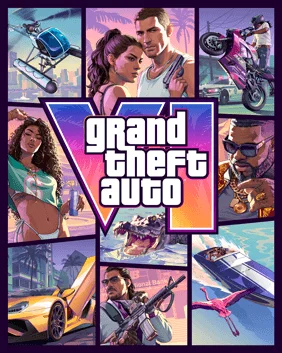
Hello everyone, I’m Long Zhuiri, a player who has been tinkering with mods since the Vice City era. Today we’re not talking stats or specs — we’re talking about the story that has thrown the entire GTA player community into turmoil over the past few days: Rockstar has officially published a set of modding rules covering the entire Grand Theft Auto series.
Why did I reach for the word “erupts”? Because on the surface, this policy merely “reaffirms” Rockstar’s long-standing position on mods — but parse the wording closely and you’ll see it locks down exactly the modding directions that have been the most active and most visible over the past decade-plus. Working from the clauses themselves, and setting them against the real-world takedown of the Liberty City Preservation Project, this piece digs into what the policy actually means and why the community has split into two very different camps.
1. What the New Policy Actually Says: A Clause-by-Clause Breakdown#
Before picking sides, let’s untangle the most consequential clauses first. The core of Rockstar’s policy (effective September 10) boils down to this table:
| Clause | Specific restriction | Who it hits directly |
|---|---|---|
| Story protection | Extending, modifying, or rewriting any official plot or storyline is prohibited | Story mods, added quests, original storylines |
| Character and lore protection | Changing official character settings, worldbuilding, or mission flow is prohibited | Character model swaps, world-setting mods |
| Cross-title ports banned | Porting maps, locations, characters, or assets from one Rockstar game into another is prohibited | Large projects that “rebuild title B on title A’s map” |
| Multiplayer restriction | Multiplayer mods may operate only through officially licensed Creator Platforms | Independently built multiplayer frameworks |
| Distribution channels | All mods must be published on platforms or channels recognized by Rockstar | Independent mod sites, direct forum releases |
Anyone who has been around these games will recognize the “familiar recipe” immediately. This is not the first time Rockstar has taken a hard line on mods, but writing “cross-title ports” and “multiplayer restrictions” into a formal policy in black and white is genuinely a first. In the past, Rockstar largely turned a blind eye to single-player story mods; this time, the policy aims squarely at the two biggest bodies of community labor.
Worth noting: the policy explicitly states it “applies to the Grand Theft Auto series” — in other words, it draws the red line ahead of Grand Theft Auto VI. After years of ambiguity, Rockstar chose to spell the rules out shortly before the game’s November 19 launch.
2. The Real Trigger: the Takedown of the Liberty City Preservation Project#
This policy did not fall from the sky. Over the past year and more, one of the hottest topics across the GTA mod community has been a project called the Liberty City Preservation Project. It rebuilt Liberty City — the smoke-stained city from GTA4 — piece by piece inside the engine of Grand Theft Auto V.
Let me first explain why the project electrified the community, because it hit nearly every nostalgia trigger:
| Nostalgia trigger | What the project actually delivered |
|---|---|
| Map scale | A complete recreation of GTA4’s Liberty City main city plus the four boroughs of Broker, Dukes, Algonquin, and Bohan |
| City atmosphere | Recreated the distinctive gloomy palette, building materials, and license plate styles of 2008-era Liberty City |
| Playability | Fully drivable and playable inside the GTA5 engine, not a static model showcase |
| Technical difficulty | Involved massive asset remakes and engine migration, regarded by the mod community as a “technical ceiling” work |
The project earned extremely high praise across the industry and player circles; many saw it as the benchmark for “rebuilding a classic old city in a modern engine”. Yet earlier this year, as the project neared completion, Rockstar took it down on copyright and terms-of-use grounds, and all public downloads stopped with it. The developer’s statement carried resignation between the lines — frustration, but no way out.
The fate of the Liberty City Preservation Project is the best annotation for the new policy’s “no cross-title porting” clause. For Rockstar, this was an unmistakable signal — however careful, however faithful, however nostalgia-driven, “moving title A’s assets into title B” crosses the line. And now that the clause has been written into a formal policy, the message to every developer holding a similar dream is: there will be no next “Liberty City”.
3. The Player Perspective: Who Gets Hit, and Who Gets Protected#
To understand why the community “erupted”, you first need to know where this policy cuts. I’ve sorted it into two buckets: “directions being cut” and “directions that survive”.
3.1 Creation directions explicitly targeted#
| Direction | Typical representatives | Where they stand under the new rules |
|---|---|---|
| Story rewrites / added quests | Assorted “new quest lines” and “alternate ending” mods | Explicitly barred from modifying official storylines and plots |
| Cross-title map remakes | Liberty City Preservation Project | Explicitly barred from porting maps and assets |
| Old-city port projects | Projects moving classic cities into newer titles | Fall under the same prohibition as above |
| Community multiplayer frameworks | Community-built online mod servers | Licensed Creator Platforms only |
| Character replacement | Face-swap and model-swap mods | Hits the “official character settings may not change” red line |
3.2 The space that remains, and the official posture#
If you assume Rockstar is killing mods outright, that isn’t quite right either. The policy still leaves some doors open:
- Pure visual and fidelity upgrades: texture, lighting, and vehicle model replacement mods that don’t touch story or worldbuilding generally remain within tolerated bounds.
- The official Creator Platform: Rockstar points multiplayer mods squarely toward its own licensed Creator Platform — a sign the company wants to fold community creation into a platform it controls.
- Single-player experience enhancements: assistive tools that don’t touch the storyline or official assets are largely safe.
In other words, the boundary Rockstar has drawn amounts to a property-defense consolidation: protect the official narrative and worldbuilding from dilution, while steering community creation onto officially controlled rails. What it targets is not “people who play mods” but developers building large original derivatives on official IP.
4. Why Many Players Actually “Support” It: the Other Side of the Story#
I said the community “erupted”, but to be fair, anger wasn’t the only thing erupting. After a sweep of forums and comment sections, I found a large bloc of players standing on Rockstar’s side of this one — and their reasons carry real weight.
A good chunk of these supporters have been burned by mods that smuggled in unwelcome content. Here are the representative voices I gathered:
| Why they support it | The sentiment behind the words |
|---|---|
| Protecting the original narrative’s integrity | “I don’t want a mod to completely rewrite the personalities of official characters.” |
| Hostility toward mods laced with malicious content | “How many pretender mods smuggled junk into their packages? Who dares install one casually now?” |
| The copyright legitimacy of cross-title ports | “Liberty City is Rockstar’s turf after all — not wanting it hauled off is fair enough.” |
| Hopes for an official Cap ecosystem | “If the Creator Platform lifts up talented creators, that beats a scattered free-for-all.” |
| Cleansing a polluted multiplayer environment | “Community multiplayer frameworks are drowning in scripts — official stewardship is cleaner.” |
The mindset of this group comes down to one word: “tired”. After years of the mod ecosystem growing wild, honest developers and bad-faith opportunists have become hopelessly mixed together, and plenty of players have long been waiting for someone to “set rules”. Their support doesn’t spring from affection for Rockstar; it springs from the feeling that the community has reached the point where nobody is gating the door and anything goes.
5. The Opposition’s Concerns: Creative Freedom and the “Underground Mod Scene”#
On the flip side, the opposition is just as loud — and these concerns don’t come from mindless keyboard warriors, but from mod developers who have worked in this space for years. Their anxiety concentrates on three levels.
5.1 Large original projects lose their footing entirely#
A project on the scale of the Liberty City Preservation Project demands years of work and the volunteer labor of dozens of people. It earns nothing; it runs purely on passion. Once the publisher explicitly designates “cross-title porting” a forbidden zone, these high-investment, long-cycle original recreation projects lose their room to exist — because nobody wants to labor for years only to be halted by an email.
5.2 Creative freedom effectively tightened#
“Don’t touch the story, don’t touch the characters, don’t touch the worldbuilding” — these three lines compress mods from “derivative creation” back down to “surface re-skinning”. For many developers, the appeal of modding lies precisely in “pushing past the boundaries of official settings” — and when those boundaries are sealed in concrete, most of the passion drains out of creating.
5.3 The inevitable backlash of an “underground mod scene”#
This is my biggest worry. History has proven that the stricter the ban, the harder creation gets pushed underground. Many developers have made clear they’ll stick to the traditional “watch first, route around later” playbook — worst case, distribution moves to closed communities and private group chats, or spreads through unofficial channels. You can predict that the “underground mod scene” will not disappear because of this policy; it will simply go deeper, become harder to police, and quality content that used to be findable through legitimate channels will retreat into dark corners.
That produces a rather interesting paradox:
| What the policy wants | What it may actually provoke |
|---|---|
| Define creative boundaries | Pushes creators underground, making oversight harder |
| Fold multiplayer into the official platform | Community frameworks move to private servers and closed networks |
| Protect narrative integrity | Breeds a “counter-official-narrative” subculture |
| Reduce copyright disputes | Copyright fights retreat into grayer, less visible territory |
6. What This Means for the GTA5 Ecosystem Today and GTA6’s Tomorrow#
After all that deep water, let’s land on the most practical question: what will this policy actually change for GTA5’s vast existing mod world, and for the still-unreleased GTA6?
6.1 Short-term impact on the GTA5 ecosystem#
GTA5 has been running for over a decade, and its mod ecosystem is arguably the most mature in the industry. In the short term, existing mods that exist will keep existing — once the novelty of the policy wears off, it won’t instantly trigger a mass takedown wave. But a few things are predictable:
- Large port projects long operating in copyright gray zones under constant risk will accelerate their wind-down or go semi-private.
- Big new cross-title remake projects will essentially die in the cradle; developers pivot toward safer fidelity-enhancement work.
- Community sentiment will pass through a cycle of “shock” to “wait and see” to “a new consensus on the rules”.
6.2 Long-term impact on the GTA6 ecosystem#
GTA6, launching November 19 as a phenomenon-level release carrying ten years of expectations, will build its mod ecosystem from day one inside an entirely new rulebook. Here’s my projection table:
| Timeframe | Likely trajectory |
|---|---|
| Launch window | Attention centers on the base game; modders stay in a wait-and-see period |
| When the first major mod appears | Developers will for the first time truly “follow the new rules” and probe the boundaries |
| Once the official Creator Platform lands | Multiplayer goes officially managed; room for community frameworks shrinks |
| Mid-term | A cluster of “gray-zone” underground projects emerges, sporadically policed |
| Mid-to-late term | A new bargaining equilibrium settles between the publisher and creators |
Ultimately, whether GTA6 ends up with a more flourishing or more barren mod ecosystem than GTA5 depends not on the policy itself but on how much “safe zone” Rockstar is willing to give creators. If the official platform genuinely supports capable creators, then the policy is “kicking out the bad apples”; if it’s just a blunt forced consolidation, what players lose are the truly stunning rebel works.
7. A Historical Lens: Rockstar’s Mod Stance Has Been Evolving for Twenty Years#
Many people feel this policy “came out of nowhere”. But as an old player, I can say responsibly: Rockstar’s attitude toward mods has never been static — it has evolved the whole way. Only by walking through these twenty years can you locate where this new policy actually stands.
7.1 Four eras of Rockstar and mods#
| Era | Period | Representative works / events | Official stance |
|---|---|---|---|
| Hands-off era | Early 3D era | Community visual/model mods for Vice City and San Andreas | Essentially no interference |
| Ambiguous era | GTA4 through early GTA5 | Car models, textures, and ENB visual enhancers proliferated | Tacitly allowed, no endorsement |
| Tightening era | Around 2017 | The “OpenIV” incident triggered mass community protest | Brief crackdown, then retracted |
| Codified era | This policy | A written modding rulebook, effective September 10 | Explicit, in writing, boundaries defined |
7.2 The aftershocks of the OpenIV incident#
You can’t discuss tension between Rockstar and its mod community without the 2017 “OpenIV” incident. Back then, Rockstar’s parent company Take-Two sent a takedown notice to OpenIV, the official GTA modding tool, on the grounds that it “allowed the game to be modified to support third-party content”. The move instantly detonated the GTA5 community: players buried the game with massive Steam review-bombing and thousands of negative comments, and Take-Two ultimately reversed its decision.
That “reversal” left a deep impression on the community: collective player pushback works. Which is why, facing this new policy, many veterans harbor a gambler’s hope — that if the noise is loud enough, the policy can be “shouted back” the way OpenIV was. This time, I’m skeptical, because OpenIV targeted a tool itself, while this new policy targets “creative boundaries” — top-level strategy in nature, not an accidental hit, and far less likely to be walked back.
7.3 Why this one is unlikely to be retracted#
- The timing is different: the policy landed just before GTA6’s launch, to set the tone for the next generation’s mod ecosystem — a strategic move.
- The wording is more systemic: no longer a letter targeting a single tool, but a complete written rulebook.
- There’s a supporting platform: the official Creator Platform stands behind the policy, suggesting Rockstar wants to hedge resistance with an “alternative” rather than simply ban things.
7.4 A detail worth savoring: what exactly is the official Creator Platform?#
This is the most intriguing and vaguest part of the policy — “multiplayer mods may operate only through officially licensed Creator Platforms”. Judging from the wording and industry convention, such a platform would probably look like this:
| Dimension | Probable shape |
|---|---|
| Entry threshold | Creators register and apply, passing credentials and content review |
| Content review | Official copyright and compliance checks on uploaded multiplayer custom content |
| Monetization room | Creators may receive revenue shares, forming a platform profit-split model |
| Distribution channel | Players browse, subscribe, and install directly within the platform — no outside distribution |
If these inferences hold, the Creator Platform is the “paved highway” Rockstar has drawn for the community — at the price of accepting official review and revenue splitting. Compared with the GTA5 era’s “anything goes” wilderness, these are two entirely different ecosystem philosophies: one is a controlled garden; the other is an uncontrollable jungle. Which side players want is a matter of taste.
8. Final Words: an Old Player’s Honest Take#
As someone who has played from Vice City to today, I’ve spent these past few days turning this policy over in my head. Frankly, I’m conflicted.
On one hand, I understand Rockstar’s position — Liberty City is, after all, a world they created, and those multi-year recreation projects really did use official assets and IP. Protecting your own work is only natural.
On the other hand, I genuinely can’t let go of those “parallel worlds” built brick by brick by players. They weren’t stacked up by capital; they were stacked up by one late night after another, one debugging session after another — love, plain and simple. When that love is frozen inside a “do not modify” box by a sheet of written rules, I’m not sure how much of that old liveliness is left in what used to be a mod paradise full of surprises.
But I won’t write its obituary either. The community’s vitality has always been stubborn — from the era of official ambiguity toward mods to today’s black-and-white policy, the tug-of-war between Rockstar and creators will continue. Maybe GTA6 will chart a different, more mature path. Maybe it won’t.
Who knows. As players, all we can do is keep playing the game well — and give the people still making mods a little more understanding.
See you in the next one, friends.
— Long Zhuiri, NTGame Editor-in-Chief