Resident Evil’s New Movie Opens to a Franchise-Record $108.3 Million Worldwide#
Hello everyone, I’m Zhanlan Yingren.
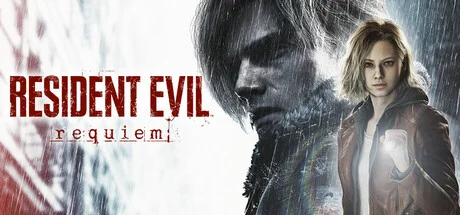
As a domestic veteran player who has been with Resident Evil since the original, seeing Zach Cregger’s new film project a $108.3 million global opening weekend (North America $60 million + overseas $48.3 million) leaves me with genuinely mixed feelings. On one hand, that number not only blows far past the studio’s own pre-release North America estimate of $40 to $50 million — it stomps the franchise’s opening record outright. On the other, the film’s bold choice to lead with an original character, Bryan, and to deliberately downplay Leon and other classic elements, left plenty of longtime fans like me shaking their heads as they walked out.
That split between box office and reception is exactly what this piece wants to talk about. No formulaic review scoring today — instead, starting from the difference in how film and games express the same material visually, let’s dig into why the same work can show longtime fans and general audiences two entirely different Resident Evils.
I. The Numbers First: Where the $108.3 Million Came From#
Data is always the first key to understanding a film’s market performance. Let’s spread out the opening’s key figures.
| Dimension | Figure | Notes |
|---|---|---|
| Opening weekend worldwide | About $108.3M | A franchise opening record |
| North America opening | About $60M | Far above the pre-release estimate of $40–50M |
| Overseas opening | About $48.3M | Overseas nearly even with North America |
| Production budget | About $75M | A mid-sized budget |
| CinemaScore audience grade | B+ | The franchise’s highest grade ever |
| Director | Zach Cregger | Previously known for horror comedy |
| Box-office-to-budget ratio | About 14.4x (opening week) | Nearly recouped twice over in the first week |
The most obvious point first: a $75 million budget returned a $108.3 million opening weekend. The film covered its entire production budget in week one — every ticket after that is pure profit. Against recent tentpoles with $150 to $200 million budgets, this Resident Evil ran a near “mid-sized” spend to an opening with top-tier blockbuster energy, and that alone is a beautiful financial statement.
Then there is the CinemaScore B+. To be clear: CinemaScore measures the immediate reaction of ticket-buying audiences, not critics. A B+ is already a high grade for horror-thriller fare — the genre is chronically a graveyard of C grades — and pulling a B+ says ordinary walk-in audiences received the film far better than expected.
And the near 50/50 split between North America’s $60 million and the overseas $48.3 million is worth savoring too. Plenty of Hollywood franchises lean heavily on overseas markets to hold up the total; this film kept both sides almost level, which shows the Resident Evil name still carries enormous pull on its home turf — no “only overseas fans show up” imbalance here.
II. A Stage-Play Adaptation: Original Character Bryan and the Trade-Off of Downplaying Leon#
If the box office is this film’s “front line,” then the character adaptation is the “undercurrent” running through everything — the thing that truly tore the fanbase in half.
2.1 Why an Original Character?#
What most veteran players can’t wrap their heads around is why the film passed over Leon, Chris, Jill, and the series’ soul characters, and instead let an original character, Bryan, carry the load. On this point, Zach Cregger’s answer in interviews is already quite plain — he repeatedly stressed that he didn’t want to “adapt the game’s plot frame by frame.”
Unpack that sentence. From a creative standpoint, this isn’t laziness; it’s a deliberate trade. Leon in the games is a character written and rewritten across multiple entries, his personality and life trajectory long since filled in by players; no live-action adaptation can satisfy every fan. An original character, by contrast, hands the writer full “writing freedom” in direction, unchained from any preordained fate.
2.2 The Risks and Dividends of an Original Lead#
| Dimension | Risk | Dividend |
|---|---|---|
| Longtime-fan buy-in | Longtime fans may be hard to win over | No historical baggage, maximal narrative freedom |
| Accessibility to newcomers | None | Enterable with zero knowledge of the series |
| Series easter eggs | May feel foreign to classic fans | Easier to engineer “zero-barrier” surprises |
| Sequel runway | Existing character arcs left idle | A worldview can be rebuilt around the new lead |
The table makes it clear: this adaptation is a double-edged sword, and which way it cuts depends entirely on how firmly the creators grasp the core temperament of “Resident Evil.”
2.3 The Director’s Own Defense#
Zach Cregger’s posture throughout the entire promotional cycle has been “I respect the source, but I trust my own expression more.” He says he has no intention of replicating the game’s plot shot for shot; he wants to restore the IP’s “core survival-horror temperament.” Logically that holds — after all, the games’ appeal was never just those character names, but the claustrophobic pressure of “resources never enough, dread always at your back.”
The problem: for veteran players who have “Leon’s side part” etched into their DNA, “right temperament” can never substitute for “right characters.” That is exactly why discussion has stayed white-hot and radically split on Douban and Tieba in the Chinese community, as well as on reddit’s Resident Evil boards.
III. Visual Language: Film and Games Run on Two Different Art Systems#
As someone who has long written Resident Evil guides and moonlights as the site’s art editor, I’d rather approach this film from the “visual” angle — because film and games are, at bottom, two entirely different art languages telling one story about the same world.
3.1 Games: Space You Can Walk Into#
The keyword of Resident Evil’s game art is space. From the classical opulence of the mansion (in both the original and its remake), to the dust-shrouded yet functionally detailed police station, to the lifeless European small-town feel of the village streets — game art pursues a three-dimensional world you can enter, explore, and check behind every door.
The player is the active explorer, and the art’s job is to build the suspense of “something could be hiding here at any moment.” So game art leans cold-toned, high-contrast, and dense with detail, inviting players to linger in every corner.
3.2 Film: Images Made to Be Watched#
Film is entirely different. Its art revolves around the lens — the creator wants the audience to follow the camera, guided by the director’s pre-designed compositions, lighting, and blocking, toward a handful of carefully chosen highlight moments.
| Dimension | Game art | Film art |
|---|---|---|
| Core aim | Space to explore | Images to behold |
| Source of impression | Player-driven | Camera-guided |
| Detail delivery | Dense detail for searching | Detail serves composition; choices required |
| Emotional pacing | Player sets the pace | Director sets pace and scares |
| Adaptation difficulty | Must feel “walkable” | Must capture “a moment worth lingering on” |
3.3 Why “Faithful Restoration” Was Never Possible#
The gap between these two languages means no live-action film can ever deliver a “faithful restoration of the game.” The endless item boxes players scan and the long corridors they walk become a plodding laundry list on screen; and a film close-up that makes a player’s heart skip can’t reproduce the constant “an enemy could appear any second” tension of a game.
So judging a Resident Evil movie by “restoration fidelity” is misaligned from the start. I prefer a standard closer to a working artist’s: does the film capture the IP’s signature visual temperament — that clammy, damp, resource-starved, all-pervading rot. From that angle, as long as the film’s aura is right, swapping characters is a difference in language, not a betrayal in essence.
IV. Fans and Walk-Ins: One Film, Two Viewings#
A record opening coexisting with fan controversy — beneath that phenomenon sit two audiences living in parallel universes.
4.1 General Audiences: Drawn by the Name#
For viewers who never touched the games, “Resident Evil” is a marquee that comes pre-loaded with blockbuster imagination — zombies, gunfights, gore, spectacle. They walk in wanting “a good popcorn thriller.” As long as the pacing is quick, the scares are dense, and the lead is charismatic, they’ll walk out satisfied.
That is exactly where the CinemaScore B+ comes from: the ticket-buying general audience came for the thrill ride, and the new film delivered precisely the thrills they expected.
4.2 Longtime Fans: Haunted by “Is This Even Resident Evil?”#
Veterans watch on a completely different path. They run twenty-plus years of memory against every familiar element — is that corridor the one from back then? Does this detail match the series’ lore books? Why is a newcomer carrying the film? This “cross-check viewing” is almost guaranteed to end in disappointment, because a film is two hours long and can never fill the vast mansion in a player’s head.
4.3 The Split May Be This IP’s Permanent Fate#
| Audience type | Viewing motive | Rating tendency | Attitude to the adaptation |
|---|---|---|---|
| General audience | Chasing blockbuster thrills | Leans positive | Doesn’t care about fidelity |
| Veteran players | Hunting nostalgia and detail | Leans negative | Highly sensitive to characters and lore |
You could say “adaptation fans are never satisfied; new viewers are always welcome” is the fate of every major IP’s live-action treatment. Resident Evil’s games are simply so immersive that the fault line gets torn wider than most.
V. Closing: The Box Office Won; the Argument Will Go On#
Back to that opening number. A $108.3 million opening proves one thing — however the fans argue, the Resident Evil name still commands serious commercial pull. It recouped its full $75 million budget in week one, answering every “is this IP stale” question with a near-perfect ledger.
But a box-office victory cannot smooth over the adaptation dispute. The original character Bryan satisfied the creator’s freedom of expression while cutting off countless veterans’ emotional tether to the classic cast; downplaying Leon and the other icons bought newcomers a zero-barrier entry, but left old fans feeling a touch of strangeness in their seats.
As a player, I won’t slap a “ruined the original” or “adaptation exemplar” label on this film. What I’d rather say is that it reminded me, once again, that games and film are two profoundly different arts — they share one worldview, yet each tells, in its own medium’s language, a story the other can never fully overlap.
Perhaps precisely because of that non-overlap, Resident Evil still burns this brightly more than thirty years on. The box office is the market’s vote; the controversy is the fans’ vote — and both ballots were cast for the same unforgettable series.
— Zhanlan Yingren, NTGame Editor-in-Chief