Paramount’s $110 Billion Warner Bros. Discovery Acquisition Closes: Where WB Games and the Classic IP Land#
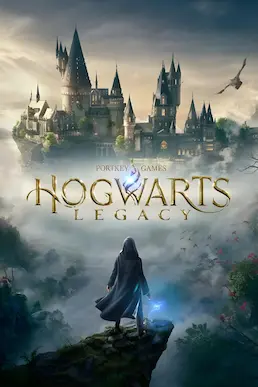
Hello everyone, Zhan Lan Ying Ren here. On Tuesday, October 6, 2026, Hollywood wrote one of the biggest entries in its history: Paramount Skydance completed its acquisition of Warner Bros. Discovery in a deal worth roughly $110 billion, with the new company named Skydance Corporation. For the business pages, this is a story about debt, share prices, and cost cuts. For us as players, the part that really tightens the chest sits elsewhere — WB Games, together with Hogwarts Legacy, Mortal Kombat, and the entire Batman: Arkham line, changed owners overnight.
As a longtime player who came up through the domestic MMO era, and the site’s art editor on top of that, my angle on this differs from a financial reporter’s. What I care about is not who won or lost, but the art assets, the worlds, and the open question of whether the next entries ever arrive — above all Hogwarts Legacy, a flagship with more than 30 million copies sold, whose sequel now hangs on a brand-new conglomerate’s cost spreadsheet. In this piece I lay out the hard facts of the deal, the integration moves on the games side, the studio and IP inventories of both companies, and the room for imagination under a $6 billion cost-cutting plan — all at once. I will mark, item by item, what is officially announced and what is analysis or expectation.
1. How the Deal Closed: First, the $110 Billion, Explained#
Let us line up the hard facts announced on October 6 first; this table is the foundation for everything that follows:
| Key item | Detail |
|---|---|
| Closing date | October 6, 2026 (Tuesday) |
| Deal size | Roughly $110 billion (the Los Angeles Times puts it at $111 billion, reflecting differences in how the debt structure is counted) |
| Per-share consideration | About $31 in cash (SEC filings list precisely $31.01666668 per share) |
| New company name | Skydance Corporation |
| Listing arrangement | Trades on the NYSE under SKYD (previously PSKY on the Nasdaq) |
| Chairman and CEO | David Ellison |
| Co-CEO | Ynon Kreiz, former Mattel CEO, in charge of daily operations and integrating the two companies |
| First-day stock | Opened at $9.51, down 2.7% from the prior close (some outlets cite about 5%) |
| Skydance president | Andy Gordon, responsible for internal communications |
A few details from around this deal deserve their own mention. First, the bidding process: Paramount and Netflix pursued Warner Bros. Discovery for months; on February 27, 2026, Paramount and Warner signed a merger agreement, Netflix was out, and Paramount paid Netflix a $2.8 billion breakup fee on Warner’s behalf. Larry Ellison personally guaranteed the financing for the deal. Paramount had also pledged that, if the transaction was not completed by September 30, it would pay Warner shareholders $7 million per day — and from the February signing to the October 6 closing, the timeline ran almost right up against that penalty line.
Next, the regulatory gates. Before completion, Paramount settled with a group of 12 state attorneys general led by California Attorney General Rob Bonta, and with the Writers Guild of America (WGA), clearing the legal hurdles. Settlement terms included: at least 30 theatrical film releases per year in each of the first two years after the merger, each with at least a 45-day theatrical window; no sale or shutdown of the Paramount and Warner studio lots for at least five years; and an “independent news editorial committee” for CNN and CBS. On the antitrust side, the US Department of Justice’s antitrust division has closed its investigation into the merger; roughly 70 jurisdictions’ competition regulators approved (a single-source figure), while the company itself claims unanimous approval from competition regulators worldwide — the two accounts differ slightly in detail.
Now the new group’s scale: the combined company will serve audiences in more than 200 countries and regions, with more than 200 million streaming subscribers across platforms and combined annual revenue near $70 billion. On the funding structure: a Gulf sovereign wealth fund put up $24 billion in equity — meaning nearly half the company is foreign-held, but that stake carries no voting rights.
The co-CEO appointment was only announced last week (late September into early October): Ynon Kreiz, the former Mattel CEO, was placed in the seat responsible for daily operations and integrating the two companies. Putting a consumer-products background operator in the co-CEO chair, with “integration” as the portfolio, sends a fairly blunt message — the new group’s theme at this stage is not expansion but merging two businesses into one that runs. Note the cadence too: the post-merger leadership list was published on October 5, the deal closed on October 6, and the internal email merging the games division went out that same evening — three things landing within 48 hours. An acquisition of $110 billion, with even the org chart’s execution timed to the hour.
A note on figures: most media reports put the deal at $110 billion; the Los Angeles Times and TheBrief write $111 billion — the same cash-plus-debt structure described differently, and this article uses “roughly $110 billion” throughout. The first-day drop figures of 2.7% and about 5% likewise come from different outlets; “roughly 70 jurisdictions approved” is a single-source report that coexists with the company’s own claim of “unanimous global regulatory approval.” No currency conversion is applied to any amount in this article.
2. The Games Division Changes Flags Within 24 Hours: Games and Experiences#
For players, the fastest-moving piece of this merger was not the film slate but the games division. On the evening of October 6 — less than 24 hours after closing — Skydance president Andy Gordon sent an internal email announcing that WB Games and Paramount Games Studio would merge into a unified division, “Games and Experiences.”
Running the new division is Tony Driscoll. His resume is worth a close look: stints at Epic Games and Warner Bros., and in June 2026 he was appointed to lead the newly formed Paramount Games Studio. Connect the timeline: he arrived in his new post in June, the deal closed in October, and that same evening he took over as president of the merged Games and Experiences division while continuing to oversee corporate strategy and development. The pace of the games integration ran far ahead of outside expectations.
Beyond him, the rest of the games business leadership also fell into place:
| Appointment | Detail |
|---|---|
| Josh Silverman | Becomes president of global products and publishing |
| Jim Sterner | Stays on as chief people officer |
| Jose Turkienicz | Continues as president of global operations |
| Jeff Silberman | Serves as chief of staff to Gordon |
At the group level, on October 5 (the day before closing) Skydance published the post-merger leadership list: David Ellison as chairman and CEO, Ynon Kreiz as co-CEO; HBO/Max content chief Casey Bloys becoming co-chair of direct-to-consumer content and chief content officer; Mark Thompson continuing to run CNN; Bari Weiss staying on as editor in chief of CBS News. The games division sits in the middle-to-lower reaches of that entire new org chart — itself a signal.
One fact has to be stated clearly first, so nobody gets dragged around by clickbait: as of press time, neither the closing announcements nor the integration announcements named any studio closure, layoffs, or game cancellations; how WB Games and Paramount Games Studio will divide responsibilities going forward has not been published either; the closing press release covers only film output and cost cuts and never mentions games. The worries circulating in player circles are understandable, but officially, not a single cut has fallen yet.
3. Who Owns Whom Now: Two Studio Lists and One IP Vault#
Next comes the most practical section of this piece — sorting out who owns whom right now. First, the game studios coming over from the Warner side:
| Studio | Signature works / tags | Most recent release |
|---|---|---|
| Avalanche Software | Hogwarts Legacy, published under the Portkey Games label | More than 30 million copies sold |
| NetherRealm Studios | Mortal Kombat series, Injustice series | Mortal Kombat 1, 2023 |
| Rocksteady Studios | Batman: Arkham series | Suicide Squad: Kill the Justice League, 2024 |
| TT Games | LEGO series games | LEGO Batman: Legacy of the Dark Knight, 2026 |
Beyond those four teams with flagship titles to their names, WB Games Montreal and WB Games Boston were folded in as well.
Two things in this list deserve chewing on. One: Warner’s games cupboard is genuinely deep — four flagship-carrying studios spanning magic, fighting, superhero, and family-friendly lanes, a breadth rarely seen across the whole industry. Two: nearly all of these teams stand right at the juncture where “the next game sets the tone” — Mortal Kombat 1 is already a 2023 title, with no official word on NetherRealm’s next move; Rocksteady has no public information on any project after Suicide Squad: Kill the Justice League; TT Games’ LEGO Batman: Legacy of the Dark Knight is a 2026 release. They changed owners at exactly this pivot point, and that is precisely why players are uneasy. As for the project situations at WB Games Montreal and WB Games Boston, reports did not name titles one by one, and this article will not fill that in on officials’ behalf.
Now the Paramount side: Skydance Interactive, Skydance New Media, and Paramount Games Studio are consolidated into a unified Paramount Games Studio. The two projects led by Amy Hennig — Marvel 1943: Rise of Hydra, and a new Star Wars game in cooperation with Lucasfilm — will continue forward; no release date has been announced so far, and no platform list either.
After the merger, the IP library under this new games division looks like this:
| Side | IP list |
|---|---|
| Warner side | Harry Potter, DC Universe, Mortal Kombat, The Matrix, Rick and Morty, Game of Thrones |
| Paramount side | Star Trek, Mission: Impossible, SpongeBob SquarePants, South Park, Avatar: The Last Airbender, The Godfather, TMNT: The Last Ronin, and the Avatar Legends: The Fighting Game project |
Also per BBC’s merger coverage, the new group’s brand overview lists The Lord of the Rings and other brands. As for what has not been announced, I list those separately, so speculation does not get mistaken for fact:
- How WB Games and Paramount Games Studio will divide responsibilities going forward;
- The specific pipelines at each studio — there is no official announcement of any closures, layoffs, or canceled projects;
- How the two game brands, Warner’s and Paramount’s, will be used next;
- The closing press release’s total silence on games, which means games’ place in the group narrative is still to be defined.
4. Hogwarts Legacy: After 30 Million Copies, What Players Care About and Wait For#
Talking about WB Games assets, I have to pull out Hogwarts Legacy on its own. Developed by Avalanche Software and published under the Portkey Games label, it has sold more than 30 million copies — the hardest number among all the game assets entering the new group. For the new Games and Experiences division, it is the ballast stone.
The question players care about most is, naturally, the sequel. Here I need to split the record very finely: before the acquisition, media reported that a sequel was “in development in some form” — but even that account came with no showcase, no date, and no official confirmation; after the acquisition, there has been no official update on the sequel’s status whatsoever. So if anyone tells you flatly right now that “the sequel is safe” or “the sequel is dead,” take neither at face value. The current state: nobody knows, and officials have said nothing.
For many players, myself included, Hogwarts Legacy is not just another name on an annual bestseller list. That wizarding world carries things accumulated across generations — from printed pages, to screen light, to the castle gates you push open by hand in the game. As an art editor, I know exactly how heavy the art assets of an IP like this are: the spires of Hogwarts, the shop signs of Diagon Alley, the mist of the Forbidden Forest — these images stand on decades of accumulated visual and design language belonging to the whole IP. Whether that changes flavor after a change of ownership is the thing players truly hang their hearts on.
Here is the players’ concern list, each item annotated with its current status:
| Player concern | Current status |
|---|---|
| Whether the Portkey Games label continues | Not mentioned by officials |
| Whether the Avalanche Software team is stable | No changes announced |
| Whether the sequel is moving forward | Pre-acquisition, only a “in development in some form” media account — no showcase, no date; post-acquisition, no official updates |
| Whether sequel pacing is affected by the cost plan | Nobody knows; any assertion belongs to analytical expectation |
While waiting for official word, here is the source-filtering method I use myself, sorting information into three tiers. Tier one: official statements, internal emails, and announcements from the new group and the games division — believe what this tier says. Tier two: bylined reporting from mainstream outlets; the closing details in this piece come from CBS News, the Los Angeles Times, The Irish Times, Variety, and several others, and the parts where they cross-check can be trusted. Tier three: “insider leaks” on forums and in communities — until officials speak, treat all of it as stories. The community’s worries did not come from nowhere — the timeline in the previous section is exactly where they come from — but turning worry into a conclusion is premature.
5. Before the New Owner Took Over, Warner Games Had Just Been Through a Shrink#
To understand what the new owner is inheriting, you first have to walk through Warner Games’ turbulent recent years. All of these events had prior public reporting, and the timeline is stark:
| Time | Event |
|---|---|
| 2024 | Suicide Squad: Kill the Justice League failed commercially and critically, and Rocksteady Studios subsequently laid off staff |
| 2024 | Warner Bros. Discovery streaming and games CEO JB Perrette called the year a “disappointing 2024” in an email, announcing a focus on four IPs: Harry Potter, Mortal Kombat, DC, and Game of Thrones |
| January 2025 | Warner Bros. Games president David Haddad departed |
| Early 2025 | WB Games closed three studios — Monolith Productions, Player First Games, and WB San Diego — and canceled the Wonder Woman game, which had been announced at TGA in 2021 and reportedly absorbed roughly $100 million (single-source figure) |
| May 30, 2025 | MultiVersus was delisted and support ended |
Read that timeline through and a brutal rhythm emerges: first a flagship fails, then an executive sets a retrenchment tone and the division chief exits, then three mid-size studios are uprooted and a heavily funded project is cut outright, and finally even a live party fighter does not survive. In other words, Paramount is not taking over a steadily expanding games empire but a division that was just wrung dry and ordered to concentrate resources on four IP pillars. The Wonder Woman game is the especially bitter one — announced to such fanfare at TGA 2021, cleared out with the project three-plus years later. One more disclosure: before the merger there were indeed rumors of WB Games being sold as a whole, none officially confirmed; however many versions you heard, they were just wind.
That background is key to reading the current integration. Note that Perrette’s “four-IP focus” list — Harry Potter, Mortal Kombat, DC, and Game of Thrones — falls entirely within the Warner-side IP list in section three. In other words, the strategic priorities set during retrenchment and the asset base the new owner receives are the same batch of things. Whether this four-IP strategy continues or gets rewritten under the new group, officials have not said; but at least one thing can be stated firmly: whoever runs it, the Hogwarts Legacies are the most valuable chips at this table.
One more piece of background to disclose: before the merger there were indeed rumors of WB Games being sold whole, none officially confirmed. When Ellison and Kreiz wrote in employee emails that integration would bring “difficult decisions, including ones affecting employees,” players familiar with Warner Games’ last two years could hardly avoid connecting that line to the three studios closed in early 2025. Whether that connection is fair gets its own discussion in the next section.
6. A $6 Billion Cost-Cut Hanging Overhead: How the Games Division’s Ledger Adds Up (This Entire Section Is Analysis)#
First the group-level financial targets — all officially announced hard numbers:
| Metric | Target | Timeline |
|---|---|---|
| Post-merger debt | Over $80 billion | At closing |
| Cost cuts | $6 billion | Within 3 years |
| Cut sources | Technology integration, procurement consolidation, marketing reductions, real estate consolidation | — |
| Leverage target | Debt down to 3x annual adjusted earnings | By end of 2029 |
| Free cash flow | Over $10 billion | By 2030 |
| Theatrical commitment | At least 30 films per year, each with at least a 45-day window | First two years post-merger |
Let me flag this up front: every judgment below is analytical expectation, not a factual assertion. Officials have so far announced no cuts or cancellations targeting the games division; all I can do is put the officially announced ledger next to known history and point at where the pressure might come from.
First analytical expectation: the games division’s position in the cost-cut plan looks unfavorable. The $6 billion in cut sources never names games, but Warner Games just demonstrated what retrenchment looks like — three studios closed plus a project axed — while the new owner has to save $6 billion in three years and also press more than $80 billion of debt down to 3x adjusted earnings by the end of 2029. Against a ledger like that, games — long development cycles, uncertain returns — sits naturally at a disadvantage. That is a worry read from the numbers, not an official announcement.
Second analytical expectation: the pecking order of resource allocation. The group simultaneously carries a theatrical commitment of at least 30 films a year, a streaming subscriber base, and a target of over $10 billion in free cash flow before 2030 — each of those tells capital markets a more complete story than games does. The closing press release not mentioning games at all is itself evidence that games currently sits outside the first tier of the group’s outward narrative.
Third analytical expectation: further organizational moves. Whether WB Games gets sold as a whole, or is merged down further with Paramount Games Studio — there were rumors before the merger, none officially confirmed. That “difficult decisions” line in the employee email is the only official signal — it shows management itself expects integration to have costs; who pays them, and when, remains unanswered.
One last thing players can genuinely relax about: as of press time, there is no official information about platform exclusivity or any change in platform relationships. Where the Hogwarts Legacies are sold, and where future entries ship, there is no news of any change whatsoever. But to be equally clear: that is “no news,” not any kind of promise — do not read “no news” as “no change.”
7. After the Merger: The IP Matrix and the Film-Game Synergy Upside#
Put the two IP lists from section three side by side and you see what is genuinely rare about this merger: one company simultaneously holding Harry Potter, DC, Mortal Kombat, Game of Thrones, Star Trek, Mission: Impossible, SpongeBob SquarePants, and South Park. Warner’s magic and superheroes, plus Paramount’s starfleet and pineapple under the sea — an IP matrix spanning fantasy, superhero, fighting, sci-fi, and family fare, with no second copy to be found in the industry.
For the games business, that matrix paired with a same-group film system is, on paper, one of the new company’s rare differentiating chips. Warner-side IPs stand behind HBO and the Warner film system; Paramount-side IPs stand behind Paramount Pictures; both sides have traditions of adapting IP back and forth among series, films, and games. Screen adaptations boosting games and games extending screen franchises in return — the two-way amplification has been proven repeatedly over recent years, and that is the single most watchable thread for players in this merger, to my mind. To stress it once more: this is an observation angle, not any officially announced project plan.
On concrete possible forms: Paramount-side Avatar: The Last Airbender and TMNT: The Last Ronin are, in this art editor’s eyes, adaptation material with superb foundations; Warner-side Rick and Morty and Paramount-side South Park are two flagship names in adult animation with highly complementary audiences. Once the two-way film-game adaptation channel opens, this matrix has an enormous play space. At the product level, none of this has been announced — what I have written is observation, not a preview.
One set of rights relationships that players keep mixing up needs untangling, especially around the much-discussed streaming topic. HBO’s series business went into the new group with the deal — no dispute there. But series and games are two different things: take The Last of Us as the example. Its series business sits with HBO — meaning the series business entered the new group along with HBO — while the game IP the show adapts belongs to Sony and Naughty Dog and is not part of this transaction at all. One layer is a distribution channel, the other is IP ownership; do not blend the two in discussion.
8. Coda: The Days of Waiting for Official Word#
When the news hit the editorial group chat, several colleagues reacted in ways that map the playerbase’s factions well. Zi Xing, as ever, ran the numbers first: “$80 billion in debt, $6 billion saved over three years, leverage down to 3x by end of 2029 — those are all hard constraints. The games division, in the new ledger, first has to prove whether it is cash flow or a cost item; everything else is secondary.”
Wu Bian picked up from a live-operations angle: “I am watching those 200 million streaming subscribers. That much IP, plugged into a streaming platform ecosystem, has real room for synergy — games or otherwise. The problem is the MultiVersus lesson sits right in front of us — a live game can get switched off just like that, and that is exactly what long-term players fear most.”
Chasun took apart the organizational design: “Tony Driscoll running the Games and Experiences division presidency while also overseeing corporate strategy and development says the new group has put games inside the company-strategy frame. Good or bad, hard to say — but at least games is no longer the scrap that could not even earn a mention in the closing press release. They did, after all, install a division president within 24 hours.”
Long Zhui Ri answered with one blunt player truth: “For all this talk, players care about exactly one thing — is a Hogwarts Legacy sequel coming or not. Until officials say a word, we have no answer.”
The chat went quiet for a while. My mind was on something else: from the Stone Age MMO servers of my early days all the way to today, I have seen too many studios change hands and too much IP pass along. Some lived better under new owners; some were never recognizable again. On a balance sheet, IP is an asset; in the eyes of players like us, it is memory — the castle door pushed open late some night, a line of dialogue, a piece of score, an art style. Assets can be revalued; memories cannot be liquidated. All anyone can do now is what Warner-system players have already practiced many times these past two years: set the worry down for a while, and wait for an official word.
— Zhan Lan Ying Ren, NTGame Editor
Appendix: Key Points at a Glance#
- On October 6, 2026, Paramount Skydance completed its roughly $110 billion acquisition of Warner Bros. Discovery ($111 billion per the Los Angeles Times); the new company is named Skydance Corporation, NYSE ticker SKYD; per-share consideration about $31 (precisely $31.01666668 per SEC filings).
- David Ellison serves as chairman and CEO; former Mattel CEO Ynon Kreiz is co-CEO (appointment announced last week); the post-merger leadership list was published on October 5; first-day open was $9.51, down 2.7% from the prior close (some outlets cite about 5%).
- Bidding background: Netflix was out with a $2.8 billion breakup fee (paid by Paramount on Warner’s behalf); Larry Ellison personally guaranteed the financing; Paramount had pledged to pay $7 million per day to Warner shareholders if the deal missed September 30.
- Settlement terms: at least 30 films per year in the first two years (each with at least a 45-day window), no sale of either studio lot for at least five years, an “independent news editorial committee” for CNN and CBS; the DOJ antitrust investigation has closed.
- Group scale: audiences in more than 200 countries and regions, more than 200 million streaming subscribers, annual revenue near $70 billion; a Gulf sovereign wealth fund put up $24 billion in equity (non-voting).
- Within 24 hours of closing: WB Games and Paramount Games Studio merged into a “Games and Experiences” division, with Tony Driscoll as president (previously at Epic Games and Warner Bros.; had led Paramount Games Studio since June 2026); Josh Silverman became president of global products and publishing.
- Warner-side studios folded in: Avalanche Software (Hogwarts Legacy, more than 30 million copies sold), NetherRealm Studios (Mortal Kombat, Injustice), Rocksteady Studios (Batman: Arkham series), TT Games (LEGO games), WB Games Montreal, WB Games Boston.
- Paramount side: Skydance Interactive, Skydance New Media, and Paramount Games Studio consolidated into Paramount Games Studio; Amy Hennig’s Marvel 1943: Rise of Hydra and the new Star Wars game continue forward, with no release date and no platform list.
- Post-merger IP vault: Warner side — Harry Potter, DC, Mortal Kombat, The Matrix, Rick and Morty, Game of Thrones; Paramount side — Star Trek, Mission: Impossible, SpongeBob SquarePants, South Park, Avatar, The Godfather, and more.
- No studio closures, layoffs, or game cancellations have been announced; the WB Games / Paramount Games Studio division of duties is unpublished; the closing press release never mentions games.
- Hogwarts Legacy sequel: pre-acquisition, only a “in development in some form” media account (no showcase, no date); post-acquisition, no official updates — never treat it as a confirmed plan.
- Group finances: over $80 billion in debt, $6 billion in cost cuts within three years, debt down to 3x adjusted earnings by end of 2029, over $10 billion in free cash flow before 2030; whether the games division bears pressure is analytical expectation either way.
- Warner Games’ turbulent precedents: the 2024 Suicide Squad: Kill the Justice League failure and Rocksteady layoffs, the “disappointing 2024” four-IP focus; David Haddad’s January 2025 departure; three studios closed; the Wonder Woman game canceled (the roughly $100 million figure is a single-source account); MultiVersus delisted on May 30.
- HBO’s series business entered the new group with the deal; The Last of Us series business came along with it, but its game IP belongs to Sony and Naughty Dog and is not part of this transaction.
- As of press time, no official information on platform exclusivity or any platform relationship changes.