Palworld 1.0 Full Release Out Today: Pocketpair Confirms No Pal Evolution System#
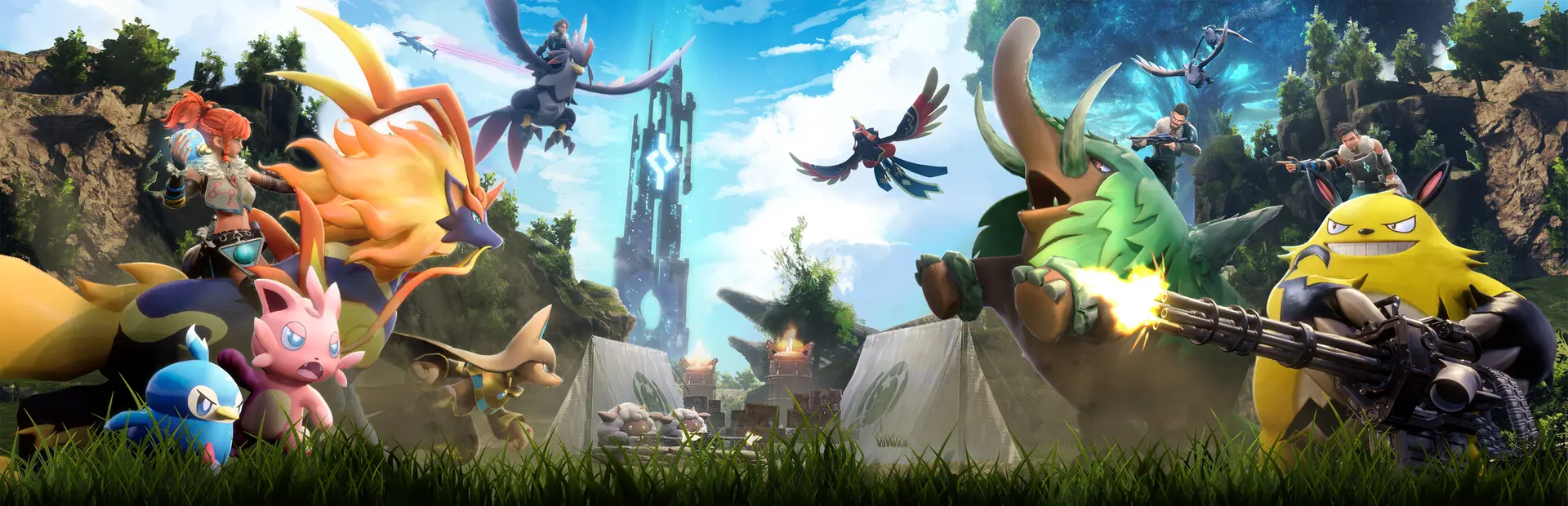
July 10, 2026
Version Info#
| Item | Details |
|---|---|
| Game name | Palworld |
| Developer | Pocketpair |
| Publisher | Pocketpair |
| 1.0 release date | July 10, 2026 |
| Early Access start | January 2024 |
| Platforms | Steam, Xbox Series X|S, Xbox One, PC Game Pass |
| Genre | Open-world survival crafting |
| Price | $29.99 (unchanged) |
From Early Access to 1.0#
Palworld entered Early Access in January 2024 and built enormous popularity fast on the strength of its “catch Pals + combat + building + survival” combination. Over the following year and more, Pocketpair kept shipping patches large and small to add content and fix problems, gradually polishing the game into the shape you see in the full release today.
The 1.0 release on July 10, 2026 marks the game’s formal exit from Early Access. It brings a complete main story and a final boss, and it fills in much of the late-game content players had been waiting on. For players who followed it all the way, this is both the close of one stage and the start of a new round of content accumulation. Worth noting: despite the full release, the price has not gone up — 1.0 still costs $29.99, which is quite friendly to players still on the fence.
Official Confirmation: No Pal Evolution System#
This is the single most important item on this page. Around the 1.0 launch, the community churned out endless speculation about “Pal evolution,” with many players asking whether the full release would finally let Pals permanently grow into stronger new forms. On that question, Pocketpair has stated its position clearly and repeatedly: Palworld will not add a Pal evolution system.
The studio’s explanation is that differences between Pals should come primarily from breeding, stats, and skill loadouts, not from one Pal permanently upgrading into another form. That design stance continues Palworld’s consistent philosophy: you build your team by catching, breeding, and sensible pairing, not by climbing a fixed “evolution tree.”
So do not go hunting for evolution materials, evolution stones, or evolution level requirements in 1.0 — none of that exists. If you have come across guides or tables listing evolution chains, they are baseless rumors; handle them with care. This is, in fact, the question many players cared about most, and the official denial saves everyone the trouble of guessing.
The Real New System: Mutation Breeding#
The new system Pocketpair actually added in 1.0 is the Mutation breeding system, and its essence is not evolution. Through specific breeding combinations, players can introduce random variables into offspring and produce some genuinely distinctive new individuals.
| Direction | Details |
|---|---|
| Core idea | Trigger mutations in offspring through parent pairing, not fixed form upgrades |
| What to chase | Pals with standout stats, skills, or appearance |
| Difference from classic evolution | Mutations are random and repeatable; no single Pal permanently swaps its form |
| Impact on play | Puts the emphasis on a “pick the parents, breed repeatedly” loop |
Under the mutation system, breeding is no longer simply passing stats down to the next generation — every hatch is a chance to produce a Pal carrying unique passive skills. These Pals are visually distinguishable too, and individuals with unique skills tend to be the ones players prize. For players who love the grind and the theorycrafting, this is a deep late-game progression system, and it redefines what breeding is worth.
If you are looking for a full breakdown of Pal breeding, check the site’s dedicated breeding and mutation guide, which lays out the complete breeding farm loop, inheritance rules, and the boundaries of the mutation system as of the 1.0 release.
New Endgame Areas#
1.0 prepares new playable areas for players past the main story. The developer added the endgame area World Tree, plus the floating Sky Islands, the latter also appearing under the name Sunreach in some official materials. These areas expand the explorable range of the Palpagos Islands and give late-game content new places to land.
For players who have cleared the main story, these two areas provide the next goal — whether that means hunting new Pals, taking on harder content, or simply enjoying open-world exploration, there is somewhere new to go. Whether endgame content has substance is often what decides whether a survival crafting game keeps its players, and the investment in these new areas is clearly meant to give long-term players a reason to keep going.
New Pals#
1.0 adds dozens of new Pals, spread across the new areas and the existing map. For specific Pal species, stats, and capture methods, trust the in-game Paldeck and steer clear of “full Pal lists” of unknown provenance. Players who want a systematic view of Pal collecting can use our complete Paldeck and resources guide, which we keep updating with each version — habitat and capture notes included.
Other New Gameplay#
Beyond the systems above, 1.0 adds several new modes:
- PvP mode: players can now face each other directly, expanding the combat layer.
- Paint Mode: lets players apply custom paint jobs to their Pals and related items.
- Wing Pack: flying gear that takes no party slot, making exploration nimbler.
These three additions enrich the experience from the angles of competitive play, cosmetic customization, and mobile exploration, so players of every stripe can find their own focus in 1.0.
For PvP fans, combat stretches from fighting AI to measuring yourself against other players, which will certainly change long-term pacing; Paint Mode takes care of players who love cosmetic customization, letting everyone build a Pal with real identity; and the party-slot-free Wing Pack smooths out traversal and gathering while lifting exploration efficiency. Together, they make 1.0’s gameplay layers richer than Early Access ever was.
Performance and Stability Improvements#
1.0 includes an overall optimization pass on performance and loading, with visibly better stability across long sessions. The developer says it will keep tracking runtime issues; if you hit anything unusual while playing, watch the official patch notes and fix progress.
For players with limited hardware headroom, this kind of sustained optimization often decides whether a game stays playable. Survival crafting games demand long sessions with many units working in parallel, and Pal training plus base stability feed directly into the experience. Tackling these runtime problems head-on in 1.0 shows Pocketpair heard the pain points of long-term players rather than stopping at “add new content.”
What This Means for Players#
All told, 1.0 has a few direct effects on players:
- A more complete package: the main story and final boss are in, and with the new endgame areas the arc from opening hours to late game hangs together far better.
- The training focus shifts: mutation breeding replaces the “evolution” some players imagined, so anyone chasing powerful Pals should put their energy into parent selection and breeding.
- Price unchanged: the full release still costs $29.99, so players who hesitated during Early Access can buy with confidence.
- Long-term content: the new areas and dozens of Pals give post-game players plenty left to explore. If you are a new player, this is a fine time to start — the full release is more complete than Early Access, guide material is relatively thorough, and the path from tutorial to endgame runs smoother. If you are a veteran, treat 1.0 as a fresh starting line: head to the new areas, take on the new Pals and modes, and see what mutation breeding adds to the loop.
Common Mix-Ups: “Evolution” vs. “Mutation”#
Because the two words sound so close, plenty of players blurred “evolution” and “mutation” together after 1.0 launched. A clear distinction is in order here.
“Evolution” would mean a Pal permanently growing into another form — a one-time, irreversible change — and the developer has explicitly ruled that system out. You will not find any in-game chart that turns a Pal from form A into form B, and the claim that “evolution stones upgrade a Pal into a new form” does not hold up.
“Mutation” is a random outcome triggered during breeding. It applies to newborn Pals, not existing ones, and you can keep trying by breeding again and again. In other words, your room to operate is “which parents do I pair,” not “how do I feed an existing Pal into something else.”
Getting this distinction straight saves you detours in 1.0 — there are no “evolution materials” to collect; what deserves your investment is understanding the breeding mechanics and picking suitable parents. If the breeding process itself still raises questions, the site’s breeding and mutation guide has the steps and systems laid out.
Full Guide#
Our guide hub covers everything from first steps to mastery, with breeding, mutation, and endgame play tracked as they evolve. If the new 1.0 systems interest you, read it alongside the site’s breeding and mutation guide — it details the breeding farm, the cake production line, and the mutation mechanics, and it will get you up to speed on the new progression loop faster.
This article was written by the NTGame editorial team.