Metroid: Ravenous Deep-Dive Preview#
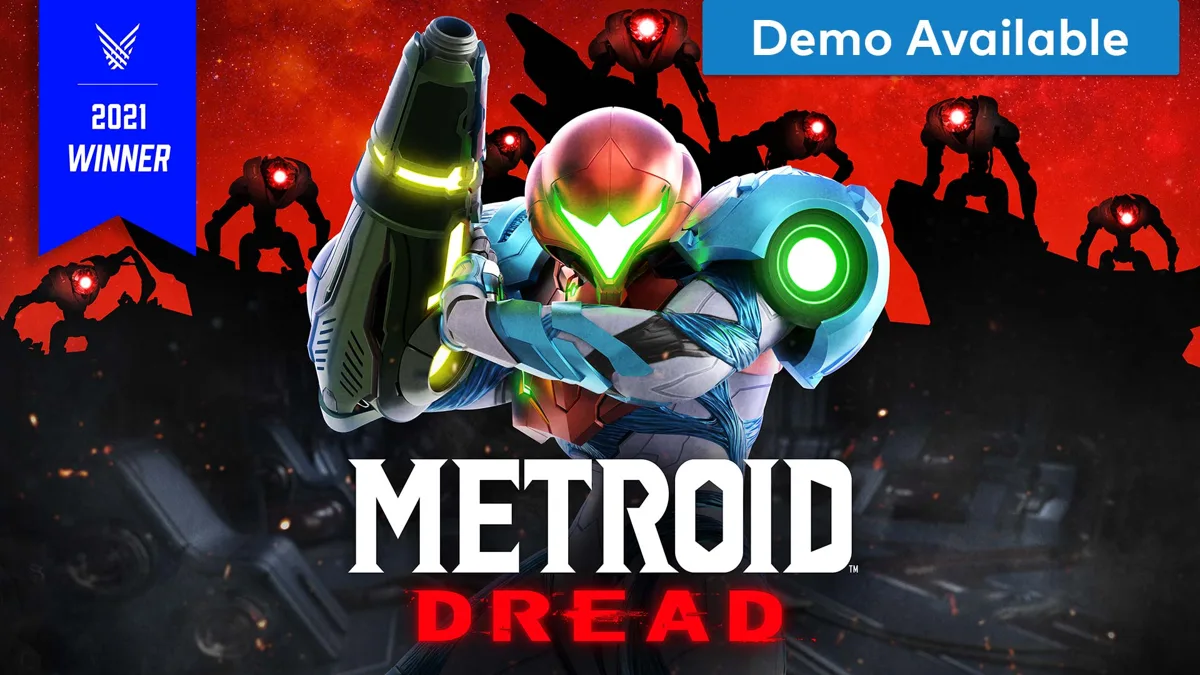
Hi everyone, Long Zhui Ri here. At ten in the evening on September 9, 2026, Nintendo ran a Direct so packed with news that it pinned the entire newsroom to the screen. Up front came the official announcement of Persona 4 Remake and Kirby: Leaping World’s jump to 3D — big stories both. But what made me sit up straight was the finale: a brand-new mainline Metroid, finally here.
The game is called Metroid: Ravenous, and Nintendo has chained it directly to the Switch 2, launching exclusively on January 28, 2027. Samus Aran is back — but this time, instead of slowly grinding enemies down from range with her iconic arm cannon, she’s cutting a blood path at arm’s length.
The desk erupted that same night. Chasun kept turning over the hit-detection logic behind that move set in the trailer, saying this is “the first time in Metroid history that melee has truly been made the core.” Zhanlan Yingren fell for the ruin aesthetics of the falling satellite and fired off three messages in a row gushing that “this lonely-space energy is exactly right.” I understand what hooked both of them, but as a longtime Souls player, what I care about more is something else: this time, Nintendo wants to rebuild Samus into “a bounty hunter who can kill up close.” Today we’ll take this announcement apart, line by line, along all of those threads.
1. The Announcement at a Glance: No Small Tune-Up#
First, the most valuable hard facts. Everything key from this Direct, gathered into one table for easy bookmarking:
| Item | Details |
|---|---|
| Full title | Metroid: Ravenous |
| Series standing | A new mainline entry in the Metroid series |
| Launch platform | Nintendo Switch 2 (exclusive) |
| Release date | January 28, 2027 |
| Setting | A crashed, falling satellite |
| Opening incident | Samus is attacked by space ninjas and falls into the satellite’s underground |
| Core gameplay | Enhanced melee, water running, air warp, executions |
| Survival mechanic | Absorbing enemy energy to survive |
A few details worth underlining first. One: the word exclusive carries real weight — Nintendo has locked Metroid: Ravenous to the Switch 2, which means the original Switch in your hands can essentially say goodbye to this new release. Two: the January 28, 2027 slot is a deliberate choice — it sits on the second wave after the holiday blockbuster crunch, sidestepping the December pile-up around Xenoblade Chronicles 3 and the Monster Hunter Wilds DLC, a window Nintendo opened for this first-party flagship alone. Three, and most crucial: the way Samus fights in the trailer barely resembles the Metroid I remember, the one that “solved everything from far away.”
Let’s take each piece apart.
2. The New Mechanics, One by One: What Exactly the Melee Revolution Changes#
I’ve played my share of Metroid games. From the earliest Metroid to Metroid Dread, Samus’s signature has always been that cannon on her right arm — charge at range, aim, one shot ends it. But the Metroid: Ravenous trailer flips that table entirely. Here are the core mechanics I pulled from the trailer and the official descriptions, arranged in a table:
| Mechanic | Description | Difference from earlier games |
|---|---|---|
| Enhanced melee | Samus has a full melee combat system that chains combos and finishers | Earlier melee was mostly triggered QTEs; here it’s an active attack option |
| Water running | Sprint at speed across the water’s surface, crossing waterways that were once impassable | Earlier games mostly meant slow swimming plus obstacle dodging |
| Air warp | Short-range teleport in mid-air, for dodging attacks and crossing gaps | An entirely new movement tool, sharpening mobility and positioning |
| Executions | Finisher moves against wounded enemies that end fights fast and restore resources | New finishing presentations, folding in the rhythm of character action games |
| Energy absorption | Enemies killed or executed drop energy, used to replenish health and power up | Survival shifts from passive collection to active predation |
Put these five together and they point at one very clear thing: what Nintendo wants is a Metroid with higher combat density and a meaner tempo. Water running and air warp solve “movement,” letting Samus flow through spaces more nimbly; melee and executions solve “interaction,” so players stop trading shots from behind cover; energy absorption solves “resources,” turning supplies that used to hang on walls into spoons of war taken off enemies. Read as one connected system, it has already pushed Metroid from a series weighted toward “exploration and puzzle-solving first, combat second” toward a genuine balance point where “exploration and combat carry equal weight.”
Melee: Why It’s a Revolution for Samus#
I especially want to dwell on the melee piece. You have to remember that Samus’s entire identity was constructed around being a “ranged bounty hunter” — she wears heavy armor, carries nuclear-grade weaponry, and solves problems calmly from a distance. That is the core temperament that separates her from other action heroes. Now Nintendo is having her fight at blade’s length, and that alone is an adventurous repositioning.
But think it through and the shift holds up. Samus was never a character who only hid in the back line — in Super Metroid, her point-blank collisions and morph ball were already part of exploration; in Dread, she learned to answer encroaching enemies with melee counters. So “enhanced melee” is not a new toy bolted on out of nowhere; it is the side of her that always existed but was suppressed in the past, formally invited onto the stage. As a player weaned on Souls games, I find this point especially promising — isn’t this exactly Samus moving from “elegant marksman” toward “grinding close-quarters brawler”?
The Degree of the Revolution: Could It Become a Souls-like?#
Some readers may worry: with melee this prominent, is Metroid about to be turned into a Souls-like? My answer is — almost certainly not, and I don’t think Nintendo is that foolish.
The reason is that Metroid and Souls-likes differ at the level of underlying design. The Souls appeal is built on a loop of “high punishment, frequent failure, repeated attempts at one boss,” with growth that comes down to memorizing patterns and accumulating experience. Metroid’s growth is “ability unlocks” — get the spider ball and you can roll across ceilings, get a new suit and you can smash through floors. That “ability-for-map” progression feels nothing like the Souls flavor of grinding through, step by measured step. So even if the combat becomes more action-heavy and more demanding, Metroid: Ravenous will almost certainly keep its signature “explore — unlock — explore again” skeleton, only with the meat on that frame made firmer and chewier.
What genuinely excites me is the combination of this melee system with Metroid’s existing kit. Samus doesn’t just have the arm cannon — she has the morph ball, plus all manner of missiles and equipment. If Nintendo can make melee, warp, and executions interlock with her transformations, jumps, and ability unlocks inside the levels, then this could become a hybrid work with “both metroidvania exploration depth and the burst feel of a character action game.” That is precisely the territory this series has rarely touched.
The Enemy “Space Ninjas”: A Mirror-Image Opponent#
One element in the trailer I marked out for special attention is the space ninjas who attack Samus. It’s a truly fascinating piece of setting — because they form a “mirror opposition” with Samus herself.
Samus is an armored ranged hunter, and these ninjas clearly walk the other road: close, silent, fast, masters of body technique and teleportation. Opening the game by having a “ranged marksman” knocked out of her element by a pack of “melee assassins” and driven underground is inherently dramatic — it throws Samus out of her familiar “ranged advantage zone” and forces her into the melee skills she never relied on. Nintendo has effectively used story and opponent design to provide a very natural narrative entry point for the “melee revolution.”
I personally hope this enemy design delivers a threat of “extreme mobility, close-range pressure.” If Ravenous’s space ninjas can produce that combat push-and-pull of “being closed on at high speed, forced to warp and reposition, answered with executions,” its combat depth could stand among first-rate action games. And that question will be settled by the gameplay footage to come.
“Absorb Energy to Survive”: Turning Survival into Active Predation#
One more mechanic deserves its own section: absorbing energy to survive. On the surface it looks like just a resource system, but I think it rewrites a fundamental of Metroid’s traditional play.
Survival resources in past Metroid games were mainly energy tanks and missile expansions scattered across the map — you survived essentially “by collecting.” You explored, spotted a supply point, and picked it up on the way. It was a passive, reflective mode of survival. Metroid: Ravenous changes the source of “energy” to “enemies” — to stay alive, you have to actively kill and execute, tearing the energy back off your enemies. It rhymes with today’s popular kill-to-heal action games, but placed inside a series “built on exploration,” the meaning is entirely different.
The potential impact is this: it may rebind “combat” and “survival” to each other. In the past, once wounded, you could skirt fights and hunt for supplies at your leisure; in Ravenous, if you don’t want to run yourself dry in the ruins, you may have to walk toward the enemy, trade blows up close, and use executions to refill your life from their bodies. Combat stops being “a side path that can be routed around on the way” and becomes “a necessity for staying alive.” If that design holds, it could fundamentally change the player’s rhythm inside a Metroid game.
That said, this is only my extrapolation from the announcement. Where the boundaries of this “energy absorption” system sit, whether it affects balance, whether it risks feeling like “forced combat” — all of it awaits verification from gameplay footage. But as a Souls player, I instinctively like this kind of design that binds survival pressure to combat appetite — it carries a built-in sense of “imminent threat.”
3. Setting Breakdown: The “Ruin Aesthetics” of a Crashed Satellite#
What grabbed me hardest in the trailer wasn’t the move set — it was the stage. For this section I’ve asked Zhanlan Yingren, our desk’s art specialist, to talk about these “ruins” from a visual angle:
Zhanlan Yingren’s take: My first reaction after the trailer was that this art direction stands. Metroid stages in the past were mostly “dark underground caverns” and “cold alien forests” — a carefully designed sense of the artificial. This time, the stage is a crashed satellite — meaning it was originally an artifact of human industrial civilization, now smashed onto an alien surface. That ruin quality of “the man-made colliding with the natural” carries more story than any natural cave. The severed cross-sections, torn bulkheads, and half-buried structures in the trailer all whisper the same thing: this was once a complete station, and now only wreckage remains. For players, probing an environment like this stirs more desire than probing a natural hollow — because you can’t help wanting to reconstruct what it looked like before the fall.
I fully agree with that read. A crashed satellite is itself a superb story vessel. It gives Nintendo room to exercise an “industrial ruin aesthetic,” and it fits the Metroid temperament of “solitary exploration” like a glove. Picture it: Samus alone, dropped into the underground structure of a dead satellite, surrounded by cold metal wreckage, malfunctioning bulkhead doors, and unknown creatures moving through the dark. That atmosphere of “extreme loneliness threaded with danger everywhere” is what Metroid does best, and what moves people most. Judging by the trailer’s lighting and materials, the scenes look a step beyond Dread in depth of light and shadow — cold-toned interiors set against the warm hues of the alien surface — and should give the Switch 2’s horsepower a decent stage to show itself.
The Other Side of the Lonely-Space Mood#
If “ruins” are this game’s skin, “loneliness” is its bone. Samus, by design, is a person who maintains almost no lasting bonds with anyone — no companions at her side, no resident voice assistant, and often nothing else alive under the entire sky. That loneliness isn’t announced by the plot; it seeps out through level design, musical silences, and the emptiness of the spaces. In the trailer I noticed how many passages keep the background audio pressed very low — only the sound of machinery turning, footsteps, and Samus’s breathing. That “manufacturing pressure through quiet” has always been a Metroid strength, and this time it looks like another step forward.
It reminds me of the immersion of playing the Prime games — that feeling of “surveying an unfamiliar planet completely alone.” But Ravenous’s loneliness seems layered with the heaviness of “ruins” — because what Samus has fallen into is a satellite that is already dead, already crashed. She isn’t just exploring unfamiliar terrain; she is, in a sense, combing through the wreckage of an abandoned civilization. Once that feeling lands, its narrative depth sits a full cut above simple “alien adventure.” I’d even venture that Nintendo wants a more “heavy” Samus story this time, one matched to her upgraded combat muscle.
One more layer on the art itself. Zhanlan Yingren pointed out that the satellite’s “industrial ruin aesthetic” is its biggest draw, and following that thread: the aesthetic quietly matches the series’ long-running “science-fiction realism” — not the flashy space-opera kind, but a cold, mechanical, weight-bearing kind of sci-fi. Torn bulkheads, exposed piping, steel frames half-sunk in alien soil, plus the occasional starlight cutting through — this visual language is mature and highly recognizable. If the Switch 2 can render that “cold, gorgeous industrial texture” properly, then “looks stunning” alone would be enough to carry its first-party price tag.
4. Metroid Across the Generations: How the Series Walked Itself Toward Melee#
To weigh how big Ravenous’s shift really is, you first have to see how the series walked here. I’ve lined up the key entries in one comparison table:
| Entry | Year | Core play | Combat emphasis |
|---|---|---|---|
| Metroid | 1986 | Side-scrolling exploration, morph ball, item unlocks | Primarily ranged shooting |
| Super Metroid | 1994 | Nonlinear map exploration and hidden systems | Ranged plus limited close quarters |
| Metroid Fusion | 2002 | Survival horror elements, collection threads | Ranged-weighted |
| Metroid Prime | 2002 | First-person exploration, scanning, multiple forms | First-person shooting |
| Metroid Dread | 2021 | Tense chases, melee counters, E.M.M.I. | Ranged plus triggered melee |
| Metroid: Ravenous | 2027 | Enhanced melee, water running, air warp, executions | Melee as the core |
The table shows a series that has always walked on the two legs of “ranged” and “exploration,” with melee as little more than garnish. The E.M.M.I. sequences in Dread were in fact already a small trial balloon — forcing players to think about how to counter and how to escape at extremely close range. With Ravenous, Nintendo promotes “melee” outright from “an occasional tool” to “a core gameplay pillar.” That is not a rupture; it is an upgrade arriving right on schedule.
If the Prime series explored “first-person immersion” and Dread explored “the emotional physiology of tense pursuit,” what Ravenous is betting on is “making combat itself feel as explosive as a character action game.” There’s also a very practical calculation underneath: Switch 2’s hardware gives Nintendo the chance to build, on an entirely new aesthetic stage, a Metroid whose combat presentation is turned all the way up. Melee, warp, executions, energy absorption — if that whole kit runs smoothly at Switch 2 frame rates, it may well become the series’ most breakthrough entry in the “combat” dimension.
From Item Hunter to Action Hunter: A Mid-Career Transformation#
The series has in fact been through several such “transformation moments” that people love to hold up for comparison. In nearly forty years, it has redefined itself roughly once per era: the 1986 original established the foundation of “side-scrolling exploration,” 1994’s Super Metroid made the “nonlinear map” the benchmark, and 2002’s Prime boldly turned first-person, pushing “immersive sci-fi” and “scan-hunting” to another peak. You could say every major entry in this series has tried to answer one question — “how else can Samus’s adventure be reimagined?”
And the answer Ravenous gives reads more like a pivot “from item hunter to action hunter.” The Samus we remember was, in large part, the huntress who “grabbed the bombs, grabbed the morph ball, and blasted the map open with items”; this trailer seems to tell us she can also be a combat specialist who “fights at arm’s length in the ruins and settles things in close-quarters blood and iron.” That turn picks up exactly where Dread left off in 2021 — those palm-sweating close-quarters chases — where the ember of “melee” had already been buried. Ravenous is very likely the game that sets that ember fully alight.
Why Switch 2 “Forced” It Into Being#
One angle may have been overlooked: this game dares such a sweeping overhaul of its action system partly because the Switch 2’s hardware “forced” it out. Think about it: Metroid Dread on the original Switch had already polished its run-slide-melee-counter kit to a fine edge, but the first Switch’s horsepower sharply limited its room to express action — combat presentation, scene scale, effect density, all of it.
What the Switch 2 brings is stronger processing, steadier frame rates, finer lighting and particle effects — the foundation a “true large-scale action spectacle” needs to exist. So Ravenous’s melee revolution is not just mechanical innovation; under the hardware dividend, it fully releases an “action ambition” that had been chained by hardware limits. For Nintendo, this is both a new-era standard-bearer for the Metroid series and a touchstone for the Switch 2’s first-party lineup — proof of “what this hardware can actually run.”
5. Open Questions Worth Watching#
For all the announcement carried, a batch of key details has yet to land. I’ve ranked them by how much they matter:
| Question | Current status | My guess |
|---|---|---|
| Does the map keep the “explore to unlock abilities” structure | Not clarified | Very likely kept — it’s Metroid’s soul; it can’t be dropped |
| How melee and ranged are balanced | Trailer leans melee | Arm cannon presumably stays, forming a ranged-melee combat loop |
| The exact boundaries of “energy absorption” | Not detailed | Likely ties resource upgrades to survival-pressure design |
| Any multiplayer or co-op content | Not mentioned | Presumably still pure single-player, devoted to the lonely experience |
| Price and editions | Not announced | Presumably in line with current first-party pricing (around $60) |
| Is an upgrade to Switch 2 required | Exclusive — explicitly yes | Playable only on Switch 2 |
The one I care about most is “map and ability unlocks.” Metroid’s soul was never just “combat” — it is “I got a new ability, and so I can now reach the place I couldn’t reach before.” That “ability-for-map” loop is the hallmark that separates it from ordinary action games. If Ravenous can harden its melee while guarding that exploratory spine, it has a shot at being a complete work that is “both great to look at and great to play”; conversely, if it sacrifices map design for combat thrills, that “revolution” cap starts to wobble. That question, too, will need the gameplay demos to answer.
6. Buy Decision Guide: Is It Worth Paying for a Switch 2?#
By now, some of you are certainly asking: is this game actually worth buying — worth buying a Switch 2 for? Let me answer by layers.
If You’re a Longtime Metroid Fan#
Verdict: go all in — priority pick. This may be the series’ most disruptive entry yet in the “combat” dimension. If the melee revolution, water running, air warp, and executions all deliver, you’re getting a Samus you’ve never seen — a bounty hunter who brawls up close, moves through ruins, and rips energy out of her enemies. For veterans, “a familiar character with entirely new play” is precisely the most exciting proposition. And it’s Switch 2 exclusive — if you don’t own a Switch 2 yet, this may be exactly the first-party reason that tips you into buying the console.
If You’re an Action Game Fan (Souls-like / The Witcher / God of War Players)#
Verdict: watch it closely, put it on the must-play list. If you love the rush of close-quarters scuffles, love execution animations, love dense combat rhythm, I’d bet this game lands squarely on your palate. Nintendo has clearly invested heavily in the expressiveness of its action system this time — melee chains, warp dodges, execution finishers; that action skeleton alone deserves an action fan’s anticipation. Of course, the premise is that its game feel and hit-detection quality reach the standard of its peers — and that can only be finally confirmed once the gameplay demos arrive.
If You’re an Exploration and Puzzle Fan (Metroidvania Players)#
Verdict: stay hopeful, wait for the follow-up demos. What you care about is Metroid’s lifeline: “abilities unlock the map.” The current announcement says little about map exploration, so I’d advise not getting carried away yet — wait for the upcoming gameplay footage to confirm its map structure and ability-unlock design, then decide whether to buy on day one. If it guards exploration depth while revolutionizing combat, the joy doubles for you.
If You Only Own the Original Switch#
Verdict: no rush; check your needs first. Metroid: Ravenous is Switch 2 exclusive and unplayable on your original Switch. Whether to upgrade therefore depends on whether other Switch 2 exclusives tempt you — say, November 2026’s The Legend of Zelda: Ocarina of Time Remake, or December 2026’s Xenoblade Chronicles 3 Switch 2 edition. If you want those too, upgrading to a Switch 2 becomes a worthwhile long-term investment; if only Ravenous interests you, you can wait until the hardware ecosystem matures — and by then there may even be a bundle.
When Waiting Is the Better Call#
- You prefer the classic “ranged plus puzzle-solving” Metroid feel and remain skeptical of melee taking the driver’s seat;
- Your budget is tight and your backlog is long, and you’d rather not pre-invest in an unreleased game;
- You want to see real footage of game feel, frame rates, and map structure before making the final call.
On balance, I consider Metroid: Ravenous one of the most anticipated first-party new releases opening 2027. It is not only a bold pivot for the Metroid series but Nintendo’s flagship card for demonstrating “first-party combat expressiveness” on the Switch 2. Time remains before January 28, 2027 — I will keep tracking the follow-up gameplay demos, pricing, and edition information, and fill in this preview the moment anything lands. Everyone — let’s sit tight and wait for Samus’s next battle.
7. FAQ Quick Answers#
Finally, here are the high-frequency questions the newsroom has received over the past few days, answered in one place for quick reference:
| Question | Quick answer |
|---|---|
| When does Metroid: Ravenous release? | January 28, 2027 |
| Which platforms? | Nintendo Switch 2 only, exclusive |
| Can the original Switch run it? | No — a Switch 2 is required |
| How does it relate to Metroid Dread? | Positioned as a new mainline entry, extending and renewing the series’ play |
| Biggest gameplay change? | Melee becomes the core, joined by water running, air warp, executions, and energy absorption |
| Is arm cannon ranged shooting still in? | The trailer leans melee; ranged is expected to remain, forming a melee-ranged mix |
| Will it have Chinese? | Nintendo first-party titles have mostly supported Chinese; this one is expected to follow — defer to official word |
| How much will it cost? | Not announced; expected to track current first-party pricing |
| Is it a Souls-like? | Presumably not — the “explore to unlock abilities” Metroid skeleton should remain |
| Is it worth buying? | Veterans and action fans can be excited; wait for further gameplay footage before deciding |
One thing to note: all of the “expected” conclusions above are reasonable extrapolations from the current announcement and series tradition — everything defers to Nintendo’s official gameplay demos, pricing, and edition documents to come. Once new official information arrives, I will update this preview for you first thing.
— Long Zhui Ri, NTGame Editor-in-Chief
This article is a pre-release preview of Metroid: Ravenous; certain items (marked above as “expected” or “speculation”) are subject to the official announcements to follow.