After Jun Maeda’s Pharyngeal Cancer Announcement: The Voice of the Key Era, and a Farewell#
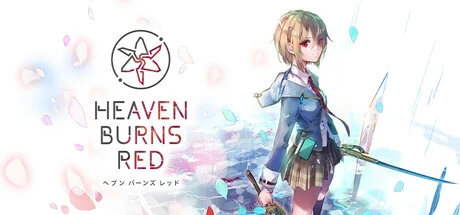
Hello everyone, Zhanlan Yingren here.
On Monday, October 19, Visual Arts and Key published an announcement through their official channels: their core creator Jun Maeda has been diagnosed with pharyngeal cancer. After weighing his condition and treatment outlook again and again, he has chosen not to undergo aggressive treatment and will focus primarily on palliative care — the aim being to preserve his strength and devote it to writing. He is currently hospitalized. In the words the officials quoted from him, he still strongly hopes to keep creating until the very last moment.
The night the news broke, our editorial group chat went quiet for a long time. Zixing typed “You’re joking, right,” and then nothing more; Wubian posted a screenshot of his Heaven Burns Red home screen and said he’d skip the stamina grind tonight. I stared at the screen for a long while and could only manage one line: the youth of our generation may truly be starting to say goodbye, one name at a time.
The Chinese player community felt much the same that night. Across forums and social platforms, what flooded the feeds wasn’t the noise of trending topics but old stories resurfacing one thread after another: someone dug up the semester they spent pulling all-nighters to finish CLANNAD, someone posted a playlist they had kept on repeat for years, and most people simply left two words — “Take care.” For a creator who spent his whole career hiding behind his works, that kind of closing applause is probably the most dignified one he could ask to hear.
When I took this assignment, editor-in-chief Long Zhui Ri had exactly one request: write it well, and don’t rush it. That is the heaviest thing I have ever heard him say about a single article in this newsroom.
This article hunts for curiosities in nothing and speculates about nothing; every detail about his condition and work arrangements follows the official announcement, full stop. What I want to do is put Jun Maeda the person, his body of work, and the most concrete information in this announcement in careful order — and then deliver the letter a player ought to write.
1. What the Announcement Says: Only the Official Statement#
First, the core of the announcement itself. According to the official explanation from Visual Arts and Key, here is how things stand:
- Diagnosis and choice: Jun Maeda has been diagnosed with pharyngeal cancer. After weighing his condition and treatment prospects repeatedly, he personally chose not to pursue aggressive treatment and to focus primarily on palliative care, preserving his strength to concentrate on creative work.
- Current status: He is hospitalized. The official statement quotes his condition as “still strongly hoping to keep creating until the very last moment.”
- What has not been disclosed: The officials have not published the cancer’s stage, its precise location, or any medical outlook. This article will not speculate on any of it, and we ask readers not to pass along “inside information” of unknown origin either.
The official timeline of how things progressed is clearly stated:
| Time | Situation |
|---|---|
| Early spring 2026 | Throat discomfort first appeared |
| After summer set in | Swelling and pain grew more pronounced |
| Thereafter | Detailed examination at a medical institution led to the diagnosis |
| Monday, October 19 | Visual Arts and Key issued the official announcement; he is now hospitalized |
From a vague discomfort in early spring, to symptoms that worsened over the summer, to diagnosis and announcement — the timeline reads simply, but with every line down, the heart sinks a little further. As one of the players who grew up with his work, I would rather fix my attention on the “certainties” in the announcement: the officials listed, item by item, what he can still deliver — a clear attitude, no evasion, and no milking sympathy either.
One more detail deserves its own paragraph: alongside the announcement, a fan support channel was opened, with a dedicated email address and a mailing address. The rules are spelled out in detail — letters only; gifts and other items are expressly declined; replies will not be sent individually, but every letter will be passed on to Maeda himself. Letters only is at once a protection and a form of dignity. If there is something you want to say, write it down — this is, after all, his own trade: he has spent his life putting words into letters for people to read.
One reminder along the way: for the original text of the announcement and the details of the support channel, defer to what Visual Arts and Key publish on their official channels. Secondhand retellings and translations inevitably drift, and on anything touching his condition, the official statement is the sole basis — that is the approach this entire article has taken.
To help readers grasp the whole picture quickly, here is a quick-reference table condensing the key points of the announcement:
| Item | Official statement |
|---|---|
| Announcement date | Monday, October 19, 2026 |
| Announced by | Visual Arts and Key, via official channels |
| Health status | Jun Maeda diagnosed with pharyngeal cancer; currently hospitalized |
| Treatment approach | No aggressive treatment; primarily palliative care, preserving strength to focus on writing |
| His own words | “Still strongly hoping to keep creating until the very last moment” |
| Fan support | Dedicated email and mailing address; letters only, gifts declined; letters forwarded to him |
A word here on “palliative care” itself. It refers to care focused on relieving symptoms and maintaining quality of life — a different path from “aggressive curative treatment.” Choosing it means reserving physical comfort and the strength that remains for the thing he most wants to do. The announcement makes that thing plain: what Jun Maeda most wants to do is create. This choice was his own, made after long deliberation, and all we as players can do is respect it — not press our own expectations upon it.
2. The Three-Tier Handover List That Hits Hardest#
The most concrete — and most bittersweet — part of the announcement is the completion report for Heaven Burns Red. The officials divided the current state into three tiers, quoted as follows:
| Tier | Official statement |
|---|---|
| Tier one | In the “first part” of Chapter 6, the main story’s final chapter, the scenario, lyrics, and music Maeda is responsible for are all complete |
| Tier two | The main story portions up through the end of Chapter 6 have also been fully written |
| Tier three | Beyond that content, depending on how his condition develops, Jun Maeda may be unable to continue participating |
Read through the three tiers and the list looks less like a status report than a handover document: what is finished, what is written up to which point, what may never be handed over — no vague wording anywhere, laid out flat for players. That candor is rare in this industry, and it is exactly why the document reads so heavy.
The reason behind it is not hard to grasp. A visual novel is a one-time delivery — script finished, game shipped, and the work stands complete forever after. Heaven Burns Red, by contrast, is a long-running mobile game launched in February 2022; its story must be written chapter by chapter and served piece by piece, with the creative cadence locked in step with the operational cadence for the long haul. The same man who wrote “stories told all at once” twenty-odd years ago now writes “stories serialized by the month.” The three-tier completion report in this announcement is precisely what happens when those two creative forms collide with reality.
Consider the context: the main story’s final chapter was only formally teased by the development team in August 2026, described at the time as Chapter 6 bringing “the ultimate final scenes.” Players were waiting for a grand send-off. Now the send-off has substance — the first part’s scenario and songs are fully complete, and the main story has been written — but to “what comes after the first part,” the announcement gives no answer: who will write the story beyond Chapter 6, and at what pace future content will be supplied, have both been left unpublished.
Facts and worries must be kept separate here. The facts are the three tiers above, in black and white. The worries belong to analysis: for a game whose main story is its lifeline, “the lead writer may be unable to continue” means genuine uncertainty in the content pipeline — the announcement does not shy away from this, and unease in the player community is entirely natural. This article sets the two side by side and makes no predictions.
Seen from another angle, the officials’ choice to disclose completion tier by tier is itself worth recording. The convention for long-running mobile games is to report only good news — version teasers go out on schedule, events keep getting scheduled, and trouble on the creative side tends to be admitted only at the last possible moment. This announcement itemizes what is “completed,” what is “written,” and what “may not be delivered,” handing the choice back to players: you can finish the chapters already written with peace of mind, or brace yourself early for the unknown parts. Putting the bad news up front is a scarce honesty in this industry — and the last dignity owed by a studio famous for “telling tears as stories.”
Setting the confirmed items against the undisclosed ones makes the picture sharper:
| Confirmed | Undisclosed |
|---|---|
| Scenario, lyrics, and music for Chapter 6 Part 1 are all complete | Cancer stage, precise location, and any medical outlook |
| Main story through the end of Chapter 6 has been fully written | Who will write the story beyond Chapter 6 |
| The new music project has been adjusted to finish the songs now in conception as soon as possible, releasing them on YouTube in succession | The music project’s track count and release schedule |
| The fan support channel is open; letters forwarded to him | The pace of future content supply |
3. From Tactics to Key: A Family Tree of Tearjerker Games#
To understand why this announcement broke so many players, you have to walk Jun Maeda’s body of work from the very beginning. His career path is, almost by itself, a chronicle of “nakige” visual novels.
Jun Maeda is a founding member of Key, working as scenario writer, lyricist, and composer all at once. But before Key came his debut era: in 1997-1998, at Tactics/NEXTON, he worked on MOON. and ONE Kagayaku Kisetsu e — the two titles where his visual novel career began. Afterward, the core team including him left Tactics and founded Key. That “exodus” is common knowledge among visual novel fans, and everything Visual Arts and Key have done since begins there.
Debuting on two titles and then striking out with his companions to build something new — that path still looks sharp even measured against today’s industry. It means that from Key’s very first day, the studio’s aesthetic baseline was set by this group themselves: which stories to write, what music to score, at which instant to make players cry — with no one to report to. The “Key flavor” players later spoke of traces back to exactly here.
In the Key era, his signature scenarios and music arrived one after another: Kanon, AIR, CLANNAD, Little Busters! — all of them adapted into anime. The first three — Kanon, AIR, and CLANNAD — are known among fans as the “family trilogy,” the defining works of Key’s 1999-2007 era and the entry point into visual novels for countless Chinese players.
Those nine years were slow and dense. Four signature titles shipped one after another, each digging one layer deeper into the theme of “family.” The waiting was part of the lineage too — there was no ready-made formula to copy in those days, and everyone walked through it title by title, so the reflex that the name “Jun Maeda” triggers is nine years of accumulated trust.
Laid out as a table, the timeline becomes even clearer:
| Period | Work | Maeda’s involvement |
|---|---|---|
| 1997-1998 | MOON., ONE |
Tactics/NEXTON era; visual novel debut works |
| 1999-2007 | Kanon, AIR, CLANNAD, Little Busters! | Signature Key-era scenarios and music; all adapted into anime |
| Anime era | Angel Beats!, Charlotte, The Day I Became a God | Original work / scenario |
| June 2018 | Summer Pockets | Provided the original concept; adapted into anime in June 2025 |
| February 2022 | Heaven Burns Red | Scenario, lyrics, and music; his first new game in 13 years |
The table tells you two things. First, his pen never stopped: from PC visual novels to TV anime to a mobile game, more than twenty years spanning three generations of players’ screens. Second, Heaven Burns Red is his first new game in 13 years — for a scenario writer and composer, a gap of 13 years says everything about how much this work weighed on him, and it happens to be a mobile game that demands long-term operation and a continuous story supply.
For Chinese players, this lineage carries one more layer of special meaning: the anime. The family trilogy and Little Busters! were all adapted into anime, which means even students with no way to play PC visual novels could meet these stories on television and video sites. Many met the characters through the anime first, went back to the original games years later, and then, at some scene in the ending, suddenly understood — so that lyric in the anime came from here. One creative lineage carrying players from the screen into the earphones and back to the screen again: that closed loop is rare anywhere in the industry.
Our own editorial desk took different “entry paths.” Zixing was first pulled in by the anime music of Angel Beats! and later worked through Key’s older titles; Wubian only seriously read a Maeda script after Heaven Burns Red launched, then circled back to the anime; I belong to the oldest cohort — back in the day I watched someone play Kanon in an internet cafe and memorized its theme from the opening alone. One body of work, three different doors for three generations of players — that is the most direct evidence of a “voice of an era.”
4. Why He Is Called the Soul of Key#
In the Chinese community, players’ nickname for Jun Maeda is “Demon King.” The handle is half awe, half teasing — awe for his mastery of nakige (tearjerker) writing, teasing for all the tears he has conned out of people. In the industry he is widely recognized as the founding father and great synthesizer of the nakige visual novel; since AIR, he has practically been synonymous with Key itself.
That “Demon King” nickname is itself a piece of collective memory for a generation. It spread in precisely the era when Chinese forum players were recommending the family trilogy to one another with the same one-line warning: “Bring tissues.” When a creator can make an entire community spontaneously agree to keep tissues ready, whatever title follows his name stops mattering; what matters is that people willingly handed him their most unguarded hours, and gladly.
The phrase “soul of Key” — I first heard it on those old forums, and later found it was near-consensus for a generation. Why? Let me pull it apart into three layers:
Layer one: the script and the music come from the same pair of hands. In most games, the person writing the story and the person writing the songs are two different trades, even two separate teams. In Maeda’s tearjerker scenes, which word the script lands on and which bar the theme song enters are coordinated by one person. The imagery seeded in the opening is cashed in by the lyrics at the end; what the lyrics cannot fully say lands in the script’s final scene. This structure — script and songs planted as each other’s foreshadowing — is the most signature experience of Key’s works, and the hardest thing for anyone who came later to imitate.
Layer two: he writes about “the loss of the everyday.” The family trilogy earned its name because they all work the same theme: a group of people first builds a home, and then the story makes that home face farewell. “Nakige” sounds like a cheap word, but what it demands is precisely that you genuinely love the everyday first — only then does the loss carry any weight. That is not technique; it is a value system. And Maeda is the person who carried that value through most thoroughly.
Worth noting is what “founding father” actually weighs. The techniques for making players cry existed long before Key, but turning “tears” from an occasional effect into a category that could be recognized, retroactively celebrated, and traced as its own lineage — that was accomplished by Maeda’s generation. Countless later works flying the nakige flag lead back, root and branch, to the family trilogy. Founding father means: the road everyone else walks is the one he waded through first.
Layer three: those songs walk on their own. Tori no Uta, with lyrics and music by him, is regarded by many players as a landmark of ACG music — someone who has never played AIR can still be struck by that melody on some idle afternoon. Chiisana Te no Hira and My Soul, Your Beats! from the same lineage long ago outgrew the games themselves and became permanent residents of a generation’s playlists. Works age; melodies do not. That is the extra life a composer has over a scenario writer.
Stack the three layers together and the assessment “since AIR he was practically Key itself” becomes easy to understand. A studio’s signature works written — script and music — by one man, who then walked with the studio all the way to today: when players say “the sound of Key,” they mean both that unmistakable opening style and the man who wrote the stories. A person’s name overlapping a studio’s voice to this degree is uncommon in the industry — and it is exactly why so many players read this announcement as “the voice of an era may be changing key.”
I am an art editor by trade, and by rights I should be more attuned to visuals — yet what I still remember is that summer in the dorm, looping Tori no Uta on single repeat. Years later on Bilibili I scrolled past countless covers and arrangements, and the bullet comments kept repeating one line: the intro starts, and the tears come. When a craft reaches that point, calling it a “soul” is not an exaggeration.
5. Heaven Burns Red and CN-Server Players: The Reality of What Comes Next#
Back to the present. For players still in Heaven Burns Red, the most concrete impact of this announcement lands on the game’s ongoing operations. First, the basics of the three versions:
| Version | Launch | Notes |
|---|---|---|
| Japanese | February 2022 | The original collection RPG from Visual Arts with WFS (Wright Flyer Studios) |
| Chinese (CN) | 2024 | Published by Bilibili Games; per Chinese media reports, the main story is currently updated through the second half of Chapter 5, with a TapTap rating of 8.2 |
| English | November 2024 | Published by Yostar, covering more than 50 countries and regions (per Chinese media reports) |
Incidentally, on October 8 the CN and international servers launched the Persona 5 Royal collaboration on the same day, and players in both markets spent that same week eagerly debating progression plans for the collab banner. Set that liveliness against the weight of the announcement and you feel it all the more: the game itself sits at a high point of content heat, while its lead writer has reached the moment of saying goodbye.
The game’s setting, viewed now, carries an added weight: young girls wield the decisive weapon “Seraph” against a mysterious enemy named “Cancer.” The enemy is literally called that — it is a fact of the game’s worldview from the beginning and has nothing to do with this announcement. I write it here only because it happens to be the story this work tells: facing something named cancer, the story’s answer is a group of girls who refuse to give up. After launch, Heaven Burns Red won Google Play Japan’s Best Game of 2022 — hard recognition for a category that lives on its story.
As for where operations go from here, the confirmable facts are these: the scenario, lyrics, and music of Chapter 6 Part 1 are all complete, and the main story through the end of Chapter 6 has been fully written; beyond Chapter 6, the officials have not said who writes next or at what pace content will come. There is also one arrangement running parallel to the game: the music project Maeda originally planned to run long-term on YouTube as a brand-new endeavor has had its direction adjusted to “finish the songs currently in conception as soon as possible,” and per his own strong wishes they will be released on YouTube one after another; the track count and schedule have not been announced.
The adjustment of that music project deserves a pause of its own. The original plan was long-term operation — write slowly, release slowly. The new direction is: finish the songs currently in his head as fast as possible, then put them out one by one. In plain words: rescue the melodies still left in his mind, one at a time, and hand them to the world. For a composer who has spent thirty years making his name in melody, that may come closer to his wish right now than any honor — songs wait for no one, and neither does inspiration.
If I may be allowed a little analysis (note: none of the following is official): for CN-server players, the main story still sits at the second half of Chapter 5, a real content distance from the Japanese server’s completed Chapter 6 Part 1. That buffer is a normal feature of CN-server pacing, and it objectively means CN players stand one layer of time away from the uncertainty that begins after Chapter 6. For the two Chinese publishers — Bilibili and Yostar — the English and CN versions have long depended on Jun Maeda’s personal output, and after this announcement that is a reality to face head-on. Balancing “get the finished material into the game promptly” against “respect the creative process and leave the author alone” will test the steadiness of both operations teams.
So what can CN-server players actually do right now? Going strictly by confirmed facts, the options are clear: the second half of Chapter 5 is still rolling out, the collaboration that opened on October 8 is running, and the content of Chapter 6 Part 1 is already written — play the current version properly and finish the collaboration properly, and that is the right posture for this stage. As for the future, wait for the officials’ next announcement. Following a game whose life is its story means following its rhythm, not your own anxiety.
In the hours since the announcement, this is exactly where the community’s real concern has gathered. In CN-server group chats, some are reluctant to step away from the collaboration that just opened on October 8, some have started calculating how much longer the main story’s current pace will last, and many more are discussing one thing: if a new writer must take over after Chapter 6, can we accept “a story not written by Jun Maeda”? None of these discussions has an answer, and no one should rush to give one — the officials themselves chose not to publish a succession plan. What players can do is leave the creative side its dignity, and finish the chapters already written with care.
6. A Creator Lives On Through His Work#
While writing this piece, I went back through Maeda’s earlier history. In 2016, he was hospitalized for 5 months with idiopathic dilated cardiomyopathy, and later that year disclosed that the heart condition would require a transplant. He told fans at the time that he still had a long way to go, and would keep writing stories.
That time, he did. What followed was the original concept for Summer Pockets, a return after 13 years with Heaven Burns Red, a finished Chapter 6 scenario, and song after song still coming off the assembly line of his mind. A man whose heart had already failed him once kept the promise of “continuing” for nearly a decade with nothing but a pen and sheet music. In this announcement he again chooses to leave his strength to creation — that quoted line, “still strongly hoping to keep creating until the very last moment,” is the same stubbornness from the same person as his words back in 2016.
The newsroom chatted late into the night. Wubian said he only fell into Heaven Burns Red last year, expecting “a mobile game to grind for months,” and discovered instead “a story told seriously to its end.” Chasun said that from a systems-analysis angle, the most remarkable thing about the game is that “the story itself is the core gameplay,” so the three-tier completion report amounts to the game’s lifeline laid out in plain sight. Zixing, uncharacteristically, skipped the technical talk and said only: “From now on, whenever the intro of Tori no Uta plays, I suspect everyone will remember today.” And I thought about the folder on my drive that has sat there for years — the family trilogy inside, every entry complete. There are many people to thank, and today the first line of that list is unusually clear.
I do not want to rule on whether this choice is worth it. Everyone’s rights over their own illness belong to them alone; outsiders have no standing to judge. I will only say this: for a man who has written stories for twenty years and composed music for just as long, the destination he chose for himself is not a hospital bed but a manuscript page — and that may be the most true-to-himself curtain call a creator can have.
Now, the officials have put the letters address out there, put the songs soon to surface on YouTube out there, and put the finished scenario and music of Chapter 6 Part 1 out there. That is everything we can confirm — and, as it happens, the best part of it: those who want to write back can write; those who want to hear the songs can wait for them to go live; those who want to see his last stretch of story through can play Chapter 6 properly.
In whose hard drive, among players of our generation, are there not a few late nights filled with Key games? What those late nights taught us was never how to cry, but that farewells deserve to be taken seriously — and that what remains after a serious farewell goes on living in your place. In that sense, Jun Maeda has written every part of his script that could be written, brought his songs to wherever they could reach, and the rest will be told by the works themselves.
Having worked in content for a long time, I often think about one question: how long can a person’s voice last? Throats wear out, paper yellows, servers shut down — but every time the intro of Tori no Uta plays, the wind of that summer comes back right on schedule. A work is the only echo of a creator that never goes out. He has written himself into the memory of millions, and memory, as a medium, outlasts nearly everything.
Someday, when those songs surface on YouTube one by one, when Chapter 6 Part 1 arrives on the CN server, when some new player opens the family trilogy for the first time — Jun Maeda is still creating. That is not a comforting line; it is the truest rule of this trade: wherever the work reaches, the creator lives.
The song ends, but no one leaves. That, roughly, is what it means.
— Zhanlan Yingren, NTGame Editorial