GTA6 Gets an ESRB M Rating and a New “In-Game Purchases” Tag: The Clash With Rockstar’s “No Microtransactions” Pledge, and Two Ways to Read It#
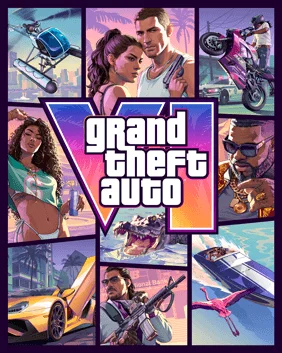
Hello everyone, Long Zhuiri here. With less than fifty days until November 19, the marketing heat around Grand Theft Auto VI keeps stacking layer by layer — and what blew up first wasn’t a new trailer, but a line of small print.
The facts aren’t complicated: Rockstar recently updated the rating information on its official site, and the page now reads ESRB “M” (Mature 17+) — which carries zero suspense; series veterans could recite those descriptors in their sleep. What detonated the newsroom was the tag sitting next to it: “In-Game Purchases.”
That’s where the problem lies. Rockstar previously said publicly that the game ships with no microtransactions and no in-game monetization at launch. Now the rating page carries an “In-Game Purchases” tag, and the studio hasn’t said one word about how the two relate. The moment that combo landed, the community caught fire. Today, we’re walking through the whole thing from the top: what the tag actually means, the reasoning behind the two explanations on offer, and what it means for you if you’re planning to pre-order.
1. The Facts: What Exactly Changed on the Rating Page#
First, the facts. This site update actually contains three layers of information, and each layer deserves its own look.
1.1 The Rating Itself: M and the Full Descriptor List#
Grand Theft Auto VI received an ESRB rating of “M” (Mature 17+), aimed at players aged 17 and up. The content descriptors listed this time include:
| Descriptor | Meaning |
|---|---|
| Blood and gore | Bloody imagery and violent acts |
| Intense violence | High-intensity depictions of violence |
| Mature humor | Humor aimed at adults |
| Nudity | Contains nude imagery |
| Strong sexual content | High-intensity sexual content |
| Strong language | Heavy profanity |
| Use of drugs and alcohol | Storylines involving drugs and alcohol |
None of this is a surprise to series players — the Grand Theft Auto formula has been this recipe since day one. The genuinely new information isn’t “what was rated”; it’s what comes next.
1.2 The New Tag: “In-Game Purchases”#
The official rating page now shows an “In-Game Purchases” tag. The key point: the tag itself says nothing about which paid content is involved. It won’t tell you whether it’s edition price gaps, add-on downloadable content, or virtual currency — it only signals “payment is possible inside the game.”
And Rockstar previously said publicly that the game launches with no microtransactions and no in-game monetization. A broad tag that only says “payment may exist” colliding with a specific pledge of “no microtransactions at launch,” with the studio refusing to explain the relationship between the two — that information vacuum is exactly where it appeared, and the community’s theories grew out of it.
1.3 Timeline: This Update Didn’t Happen in a Vacuum#
Lay out the relevant dates and you’ll see this site refresh is really the closing move of a longer process:
| Time | Event |
|---|---|
| May 2026 | Sony PlayStation marketing materials had already disclosed GTA6’s ESRB Mature 17+ rating and content descriptors (blood, intense violence, nudity, strong sexual content, strong language, use of drugs and alcohol) |
| September 23, 2026 | Per GTA Intel records, neither the ESRB nor PEGI official databases yet listed GTA6, the Rockstar site still read “Rating Pending,” and the PlayStation Store listed RP17 |
| Between late September and October 1, 2026 | The Rockstar site updated to ESRB M, and the “In-Game Purchases” tag appeared |
| October 2, 2026 | Chinese media picked up the story; the community debate over “In-Game Purchases” vs. the “no microtransactions” pledge erupted |
| November 19, 2026 | Launch day, on PS5 and Xbox Series X|S |
So the site’s switch to M happened after late September and before early October; at the time of the rating update, launch was under 50 days away. Sony had already disclosed the rating through marketing materials back in May, meaning the ratings process was long underway — this site update looks more like “hanging everything that needs hanging.” The trouble is precisely that one item nobody expected got hung up along with the rest.
2. A Quick Primer: What the “In-Game Purchases” Tag Actually Means in the Ratings System#
A lot of the community shouting comes from misreading how this tag works. Here’s the rulebook, laid out clearly.
2.1 It Flags “Exists,” Not “What It Is”#
In the ESRB system, “In-Game Purchases” is an advisory tag: as long as any in-game payment possibility exists, it goes on. It is deliberately broad — it does not distinguish the specific form of payment. Any of the following can trigger it:
- Price gaps between editions (higher editions bundling extra content beyond the standard version);
- Paid downloadable content added after launch;
- Direct purchase of in-game virtual currency or items;
- Payment gateways for subscription services.
In other words, a game wearing this tag might just have “a deluxe edition,” or it might be “waiting to sell you currency” — the tag itself cannot tell those two things apart. That is exactly the root of the interpretive space between it and the “no microtransactions at launch” pledge: the tag is broad, the pledge is specific, the two are not necessarily in conflict — but with the studio saying nothing, nobody can prove they aren’t.
2.2 How the M Rating Actually Bites in Different Regions#
While we’re at it, the rating’s practical force varies by region, and that directly shapes the buying experience for players in each:
| Region | Rating | Enforcement |
|---|---|---|
| United States, Canada | ESRB M | Retailer enforcement is voluntary; console parental controls block child accounts from buying or launching M-rated games |
| UK and most of Europe | PEGI 18 | A legal restriction in some European countries |
| Australia | MA 15+ | Consumer advice: strong violence, strong sexual innuendo, sexualised imagery, strong nudity, strong sex scenes, strong coarse language, strong crude humour |
Australia’s rating carries a detail worth savoring: MA 15+ sits below the R 18+ Grand Theft Auto V received there back in the day, in the same tier as Grand Theft Auto IV, Vice City, and San Andreas. The Classification Board’s consumer advice is written with unusual specificity, but the exact rating date varies between reports, so we won’t assert one here.
3. Two Explanations: Deluxe Edition Pricing, or a Reserve for the Online Mode#
The studio has said nothing about what the tag specifically covers; the two main explanations in circulation are both media speculation, and neither can be treated as a verdict.
3.1 Explanation One: The Paid Content Gap Between Deluxe and Standard Editions#
GameRant’s first explanation: the tag may relate to paid content that the deluxe edition carries and the standard edition doesn’t. The Gamer Couch takes a similar line, calling the “standard edition upgraded to a higher edition” scenario the most likely match.
What holds up: edition price gaps are among the most common trigger scenarios for an “In-Game Purchases” tag. Rockstar keeping the standard-plus-higher-editions publishing structure would surprise no one, and the extra content bundled with a deluxe edition is enough to trip the tag — a technical compliance move, nothing more.
The weak spot: if it really is just edition pricing, this explanation cannot answer a more direct question — why not simply publish the edition structure while you’re at it? The closer to launch and the less explained, the wider the player speculation grows. It’s possible the edition announcement schedule simply hasn’t arrived yet; only follow-up information can verify that.
3.2 Explanation Two: Reserving Space for Future Online-Mode Purchases#
GameRant’s second explanation: the tag may point toward purchase items in a future online mode.
What holds up: GTA Online’s successor is the core of the series’ long-tail business, and Rockstar built a years-long in-game purchase model on the last game’s online mode — which is precisely why the community is so sensitive to the four words “In-Game Purchases.” Hanging the tag early to reserve a compliance slot for future monetization is logically sound.
The weak spot: the online mode hasn’t been shown in full, and foreign media broadly expect it won’t launch alongside the game. If there are no online purchase items at launch, hanging the tag now genuinely looks premature — unless the officials planned all along to reveal the online mode’s commercial design gradually after launch.
3.3 The Two Explanations Side by Side#
| Dimension | Explanation One: Deluxe Edition Price Gap | Explanation Two: Reserved for Online Mode |
|---|---|---|
| Put forward by | GameRant; The Gamer Couch sees edition upgrades as the most likely match | GameRant |
| Trigger scenario | Higher editions beyond the standard one carrying extra content | Purchase items in a future online mode |
| Plausibility | Edition pricing is the most common trigger for this kind of tag | Fits Rockstar’s historical path of online live-service revenue |
| Weak spot | Doesn’t explain why the edition structure remains unpublished | Online mode not fully shown; not expected to ship at launch |
| Status | Both are media speculation; officials have said nothing | Same as left |
My personal lean goes in section six, but first, one more emphasis: the studio has not said a single word to date; everything above is outside speculation. Anyone who treats this as settled fact is writing their own extra scenes.
4. Why the Community Reaction Is This Big: Rockstar’s Business-Model Inertia#
To see this fight clearly, you have to understand where the player memory of “Rockstar plus in-game purchases” comes from.
Grand Theft Auto V’s live service since its 2013 launch is the sample no one in the industry can route around: through continuously updated content and in-game purchases, GTA Online has kept a game from over a decade ago retaining astonishing commercial vitality to this day. For publishers, it’s a textbook-level success; for players, that history means one thing — Rockstar understands better than anyone how in-game purchases make money.
That is exactly why, when Rockstar publicly pledged “no microtransactions at launch,” many veterans’ first instinct was to read the wording: the two words “at launch” left a door open by themselves. Now the rating page carries “In-Game Purchases,” and the suspense flips from “whether” to “which kind” — deluxe edition price gaps are harmless enough, while reserving space for the online mode means the familiar formula returns sooner or later. The more silent the officials stay, the more those two possibilities seesaw in players’ heads.
There is one more easily missed time dimension: this rating update lands under 50 days from launch. If it’s deluxe edition pricing, the edition announcement is overdue by convention; if it’s reserved for the online mode, then the boundary between launch and post-launch operations deserves early thought from players. In an information vacuum, the pre-order decision rests entirely on the player’s own weighing — that is why community feeling runs this hot. What everyone is arguing about is not really that tag; it’s “whether we can still take official statements at face value.”
5. Why Officials Need to Clarify, the Closer Launch Gets#
From an information-management standpoint, Rockstar is facing a situation where the longer this drags, the higher the cost.
- The window is shrinking: under 50 days to the November 19 launch, and the pre-order window is exactly the stage where monetization expectations matter most — any ambiguity can hit conversion directly.
- The contradiction is now public: the “In-Game Purchases” tag and the “no microtransactions at launch” pledge sit side by side in plain view; after Chinese media picked the story up on October 2, the argument spread beyond the core-player circle.
- The two explanations carry asymmetric costs: if the truth is deluxe edition pricing, one version breakdown dissolves every theory; if it involves the online mode, saying so early beats players discovering it after pre-ordering. Either way, silence is not the optimal play.
- Rating tags are compliance-rigid: once hung, the tag almost certainly won’t come down; the only move left is to explain — which kicks the ball entirely back to Rockstar’s feet.
For players, the rational move is not guessing — it is folding “wait for clarification” into your own purchase decision.
6. Pre-Order or Wait: Practical Advice for Two Kinds of Players#
Finally, the practical question: should you pre-order right now? The newsroom split into two camps on this; I’ll lay out both sides’ logic and you can pick your own seat.
6.1 Story-Only Watchers#
If your goal is the single-player campaign alone, the “In-Game Purchases” mystery touches your core experience relatively lightly — whether the tag maps to edition pricing or an online reserve, the campaign itself doesn’t change. But if what you care about is “what exactly ships in the launch version,” two moves are worth making:
- Wait for Rockstar’s formal explanation of the tag, or for the edition-structure announcement that inevitably arrives as launch day approaches;
- Watch launch reviews for verdicts on the campaign’s size and completeness, confirming whether it’s worth the standard edition’s price.
6.2 Day-One Buyers#
If you have already decided to buy in at launch, the task is picking the right edition — and that is exactly where the information vacuum bites:
- Until the edition structure is officially published, don’t rush to lock in the deluxe edition — if the “In-Game Purchases” tag really maps to edition pricing, ordering a few days later costs you nothing in content;
- The currently public platform lineup is PS5 and Xbox Series X|S; pick based on the hardware you own;
- Launch day is November 19 — leave plenty of time for preloading and day-one updates.
6.3 The One-Line Advice#
Until the officials clarify, keeping your money in your pocket costs you nothing. This game won’t rise in price or sell out because you waited one more week — but the information gap on edition structure can absolutely make you overpay. Pre-ordering is, at its core, paying a premium for certainty — and right now, the certainty isn’t there yet.
Final Words#
Honestly, the most interesting part of this story isn’t the tag itself — it’s how it struck that eternal nerve between players and publishers: sure, we understand AAA games need business models to stand on, and we watched Rockstar run one title into a permanent evergreen through its online mode; but when the “no microtransactions” pledge and the “In-Game Purchases” tag sit on the same website and the studio chooses silence, players are left with guesswork — and guesswork only ever ferments in the bad direction.
Under fifty days to November 19, this question will get an answer sooner or later. False alarm or the familiar formula — it depends on when Rockstar decides to speak. Until then, hold your wallet a little tighter and your expectations a little looser — because whatever the payment structure turns out to be, the sun over Vice City rises all the same.
— Long Zhuiri, NTGame Editor-in-Chief