Bloomberg Goes Inside GTA6’s Development: A 4,711-Person Operation, a Dedicated NPC Studio, and the Leak Endgame#
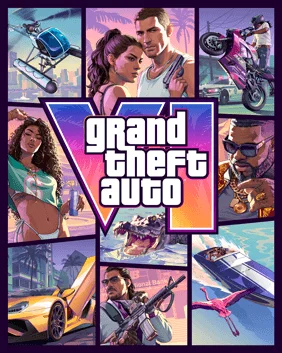
Hello everyone, Chasun here. October 14 delivered two major industry events in a single day: on one side, Bloomberg’s Jason Schreier published his long-form inside report on Grand Theft Auto VI development — he had visited Rockstar North’s Edinburgh studio back in late September and interviewed senior leadership; on the other, the leaker Cyberleek posted a three-part final statement titled “End of the road” on his personal site, declaring the two-plus-month leak saga over “for now,” and the site went dark shortly after.
One piece is the most systematic organizational reporting on GTA6’s development to date; the other is the full stop on this leak cycle — and they landed the same day. As someone who spends their time taking game systems and industry structures apart, I’d argue what really deserves a close read here is not “what got dug up this time” but three numbers and decisions that had never been put on the table before: how a 4,711-person company makes one game at a time, a studio built specifically for NPCs, and a promise to “never wait eight years again.”
First, the ground rules — these three points frame how to read the whole piece:
- Every fact in this article comes from the Bloomberg report and cross-reporting by multiple outlets; anything that is rumor or one-sided self-description gets flagged explicitly;
- There is no official development-cost figure. Any specific dollar amount is an estimate, and anything officially denied will be marked “denied”;
- Cyberleek’s claims about “complete engineering files” and “ending assets” are his own unverified statements — this article records them as one participant’s assertions, not established fact.
1. The Report’s Skeleton: A Long-Planned Editorial Strike#
Start with the shape of the report itself. This is not a breaking-news item but a deep feature that was over a month in the making, with access reaching the very top of the company:
| Key Point | Detail |
|---|---|
| Publisher and writer | Bloomberg, Jason Schreier |
| Publish date | October 14, 2026 |
| Reporting basis | Schreier visited Rockstar North in Edinburgh in late September and interviewed senior executives |
| Executives involved | Development head Rob Nelson, technology head Phil Hooker, art head Aaron Garbut, Take-Two executive Jennifer Kolbe, among others |
| Core topics | Headcount expansion, the dedicated NPC studio, delay reasons, leak prevention, cost figures, the next game’s development cycle |
| Same-day counterpoint | Leaker Cyberleek posted the “End of the road” final statement, declaring the leaks paused |
One detail worth noting is the timing: studio visit in late September, story on October 14 — squared precisely inside the five-week window before the November 19 launch. Rockstar opening its top brass to a reporter famous for investigative work at exactly this node is itself a carefully staged pre-launch communications move: put the delay reasons, the crunch controversy, and the security policies on the table once, all at once, and seize control of the narrative.
2. 4,711 People: The Operation Nearly Doubled in Eight Years#
The most eye-catching number in the report is headcount. Bloomberg’s figures:
| Metric | Value |
|---|---|
| 2018 headcount (the RDR2 launch year) | 2,441 |
| 2026 headcount | 4,711 |
| Eight-year growth | Roughly 1.9x |
| Office footprint | 12 offices |
| Industry comparison | Larger than every direct competitor |
Put the numbers side by side and the picture completes itself: Rockstar now runs the largest workforce of any game studio operation in the industry, and the expansion happened after Red Dead Redemption 2 shipped. 2,441 people made RDR2 in 2018; today the company sits at nearly double that.
The cost of that expansion is just as clear in the report. Rapid headcount growth is named directly as a drag on internal communication — which corroborates the descriptions of the project’s early stretch, when “the overall vision stayed unclear” for a long time: more people means the cost of meetings, alignment, and decision chains all climbs. From the experience of decomposing large-scale systems, every time an organization of this type doubles, its communication structure doesn’t get linearly more complicated — it gets closer to exponentially so. That is the organizational root of the “dark period” complaints and the “too many cooks” grumbling that follow.
Another easily missed frame is the industry context: the report stresses that this headcount “exceeds every direct competitor.” In other words, Rockstar chose to put the industry’s largest full-time development workforce behind a single product. That approach has all but vanished among top-tier publishers; section 5 picks this up.
3. The Dedicated NPC Studio: An Organizational Fix for a Throughput Bottleneck#
This may be the least conventional organizational story in the whole report: after discovering it could not produce enough NPCs on schedule, Rockstar rapidly stood up a dedicated NPC studio in Los Angeles and staffed it with writers, producers, and directors — note, this is not an outsourced skunkworks but a full-fledged unit with its own narrative and production staff, existing to manufacture crowds for one game.
Put it back inside the game’s scale and the decision makes sense. Rockstar has previously confirmed officially that GTA6’s single playthrough can run past 80 hours, set in Vice City and its surroundings, modeled on Miami. An 80-plus-hour, two-protagonist (Jason and Lucia) open world with density benchmarked against its predecessor makes NPC count, schedule behavior, and dialogue volume the hardest part of the content pipeline to fix by “throwing bodies and overtime” at it — every NPC needs behavior logic, lines, and hooks into the mission system. Once the throughput bottleneck appears, the whole city’s sense of being alive collapses.
The report also confirms: NPC workload was one of the real reasons behind the schedule pressure and the delays. That causal chain is worth remembering — games get delayed for many external reasons, but this report names one very specific production component (NPCs) as a primary cause, and that is a first in Rockstar’s reporting history.
For industry watchers, the value of this item is the response pattern it demonstrates: when an existing organization cannot cover a content pipeline’s throughput gap, the answer isn’t company-wide overtime — it’s building a dedicated unit for that component. The cost (a new office, a new team) versus the benefit (an NPC pipeline running independently) will be a standard case study in mega-scale open-world project management for a long time to come.
4. Three Directors in Charge: The “Too Many Cooks” Complaint and the Response#
After Dan Houser and other core members left, GTA6’s development passed into the hands of three people: development head Rob Nelson, art head Aaron Garbut, and technology head Phil Hooker. The report presents this structure with unusual frankness — some employees complain there are “too many cooks,” that decisions are slow and ideas collide; Nelson acknowledges knowing about the complaints.
Stack the pieces and the structure of the situation is clear:
- Rockstar’s signature “creative core plus execution machine” model lost its top slot when Dan Houser departed;
- The succession plan was not to find another creative lead, but to have three domain heads share power;
- The cost of that arrangement was said out loud by employees: slow decisions, conflicting ideas;
- Management did not deny it — Nelson’s response was to acknowledge the complaints, not to call them false.
Combine that with the headcount doubling from section 2 and the weight of the job comes into focus: 4,711 people across 12 offices, and three leads have to align a vision across all of it. The report has Nelson himself admitting the project’s early stretch was a “dark period” — unclear vision, systems that wouldn’t cohere, until 2022 when more systems finally began consolidating. The pandemic shut the motion-capture stages, arriving just as the team was expanding fast, and communication strained further.
My read: the triumvirate isn’t necessarily “a problem” — it’s more likely Rockstar’s realistic choice after losing a single creative core, a stabilizer for the transition. Whether it actually works will be judged by the decision speed on the next product, and section 5’s timeline shows exactly how high the time-cost of that breaking-in period has been for this game.
5. From “Project Americas” to Vice City: A Vision Shrinks and the Model Flips#
The report reconstructs the project’s early shape, and this history is essential to understanding Rockstar’s organizational model today. The early codename was “Project Americas,” originally planned to cover huge swaths of North and South America, later cut down to Vice City (modeled on Miami) and its surroundings. The research itself started remarkably early — the first research trip reached Miami in 2015.
Linking the report’s key dates produces a history of Rockstar’s organizational model:
| Time | Event |
|---|---|
| 2015 | The first research trip begins in Miami; the “Project Americas” phase kicks off |
| 2018 | Red Dead Redemption 2 launches; most of the company’s manpower had been pulled onto that game, pushing GTA6 back by years |
| 2018 | Headcount stands at 2,441 |
| Late 2019 | The story outline for Jason and Lucia takes shape, but the overall vision stays unclear for a long stretch |
| 2022 | More systems finally consolidate; that same year, hackers phish their way into Slack and dozens of in-development clips leak |
| 2024 | The five-days-a-week office policy takes effect |
| Late 2025 | The original release window (before the first delay) |
| May 2026 | The target after the first delay (followed by a second delay) |
| November 19, 2026 | Final launch date, on PlayStation 5 and Xbox Series X/S |
Two storylines run through that table. The first is the project line contracting: from a grand vision spanning two continents, down to one city and its surroundings — per the report, the pragmatic choice after the vision stayed unclear too long. The second is the organizational line flipping: after pulling most of its manpower onto RDR2 and pushing GTA6 back by years, the company switched to concentrating its main strength on one flagship at a time. That is what the 4,711-person operation from section 2 is actually for — not four projects with a thousand people each, but the whole company betting on one product.
The official account of both delays is in the report too: management says there was nothing dramatic, just large numbers of components not landing on time. Take-Two executive Jennifer Kolbe offered one detail: CEO Strauss Zelnick was startled by the second delay, then accepted it once he heard the reasoning. From the original late-2025 window to the final November 19, 2026, this operation paid roughly a year of time-cost to “get all the pieces done.”
6. The Control Trade-Offs: Five Days On-Site, No Remote Access, and the 34-Employee Firing Dispute#
Leak prevention is the most organizationally expensive part of this report. Two layers of control are confirmed:
- Starting in 2024, employees are required on-site five days a week;
- GTA6 developers are barred from accessing servers and tools from outside the office.
Management’s phrasing is measured: the policy will be revisited after launch, but there is no plan to move to hybrid work. In other words, this high-control setup does not loosen before launch.
Two labor-side items come attached. First, crunch: Rockstar says it did not rely on overtime to finish, and that compensatory-leave and overtime-pay policies have been revised, but concedes the system is “not perfect” and does not claim forced crunch is fully gone. Second, and most contentious: the firing of 34 employees is still boiling — most of them belonged to the union-organizing group; the company says they were dismissed for sharing confidential information on Discord, which former employees dispute. The Glasgow employment tribunal is expected to conclude by the end of October; the union has demanded voluntary recognition of bargaining rights and holds weekly talks with management.
Put all that together and you can see the third cost Rockstar is paying for “the biggest game on the planet”: after two leaks (the 2022 Slack phishing breach, and the August 2026 mass leak ahead of the Netflix showcase program), the company traded for information security with physical concentration — five days on-site, no remote access — essentially making “servers reachable only from inside the network” the bottom line. The price is severely strained employee relations: the dismissal dispute, the union drive, and the tribunal proceedings will keep draining the company’s public image before and after launch. The late-October Glasgow ruling is worth watching closely; its timing lands almost exactly on top of launch.
7. Cost and Revenue Expectations: Three Sets of Numbers, Three Trust Levels#
Development cost is rumor-infested territory, yet this report actually draws the cleanest boundary lines yet. I’ll keep the three sets of figures separate:
| Source | Claim | Nature |
|---|---|---|
| Rockstar officially | Development costs not disclosed | Official line: no number |
| Take-Two executive Jennifer Kolbe | Denied rumors that costs exceeded $1.5 billion (roughly the construction cost of the Burj Khalifa) | Official denial of a rumor |
| Jason Schreier (Bloomberg) | Development costs may exceed $1 billion | Veteran reporter’s estimate |
| Bloomberg report | GTA6 is almost certainly the most expensive game ever made | Media judgment |
The right way to read that table: “most expensive game ever” is a report-backed judgment, “over $1 billion” is a reporter’s estimate, and “$1.5 billion” is an officially denied rumor — three levels of credibility, in descending order. Any claim that treats a concrete budget figure as an official announcement can be recalibrated against this table.
Revenue expectations need the same labeling — the following are secondhand figures via LibertyCity, relaying Bloomberg:
| Expectation | Figure |
|---|---|
| Console sales in the first 4 months (analyst expectation) | 40 million units |
| Console revenue in the first 4 months (analyst expectation) | Over $3 billion |
| Online mode launch (expected) | 2027 |
| Current GTA Online annual revenue (relayed figure) | About $500 million |
Even fully tagged as “expectations,” this scale explains why Take-Two is so sensitive about the second delay: for a product expected to book revenue in the billions of dollars in its first months, every month of slippage moves an astronomical amount of cash flow. And Kolbe’s “heard the reasons and accepted” framing cuts the other way too — the delay reasons must have been solid enough at the time.
8. “Never Another Eight Years”: The Engine and Tools Promise#
For players, the most energizing passage in the report comes from technology head Phil Hooker. He states plainly: “the engine, tools, and team built for this project will let us move faster,” and that he is “confident we’ll keep building on it, expanding horizontally rather than tearing it all down and starting over.” Aaron Garbut’s account corroborates: the studio “fundamentally” rebuilt many things and won’t “rip it apart.”
Bloomberg’s report also cites a Rockstar precedent from its own history: the roughly one-year gap between GTA3 and Vice City — building a sequel on the same technical foundation can absolutely run an order of magnitude faster. Hooker and Garbut’s statements to media land on a conclusion: the next Rockstar game will not be another eight-year wait.
The report also carries one easily missed line with enormous weight. Hooker, on the original schedule: “We can make that schedule, but it wouldn’t be the game we want to make.” That single quote sets the nature of both delays — not a production collapse, but a deliberate quality trade. Set it against section 5’s timeline: the late-2025 window was reachable, and Rockstar chose to trade it for completeness.
From an industry standpoint, the weight of this “horizontal expansion” promise lies here: for eight years Rockstar’s organizational model has been “the whole company on one game, then tear it down and start over,” with each generation’s technical foundation effectively uninheritable. If engine and tools genuinely carry into the next title, Rockstar’s output rhythm shifts from “one generation every eight years” to “iterating the foundation plus expanding content” — a rewrite of the entire industry’s content arms race. Of course, promises get recorded; verification waits for the day the next game is announced.
9. The Leak Endgame: The “End of the Road” Statement and the Information-Control Picture#
The other half of October 14 belongs to Cyberleek. He posted the three-part final statement “End of the road” on his personal site, declared the leaks over “for now,” and the site went dark shortly after. We have previously broken down the leak timeline piece by piece on this site, so rather than re-listing leaked details, here are the statement’s key positions:
- The complete engineering files are not coming: his stated reason is that his linked token’s market cap missed the $30 million target, and he claims anonymously uploading 200GB-plus of files is too risky;
- Ending assets claimed in hand, but withheld: his phrasing says he chose not to publish them so as not to ruin the experience for ordinary players;
- The “dead man’s switch” is armed: tied only to story-spoiler content, triggering only if he himself is “taken out”;
- He denies a rug pull: the token was a donation, not an investment, he says;
- After the statement published, his token’s market cap fell sharply;
- As of the time of checking, Rockstar has given no official response of any kind to the retirement statement.
Compress Cyberleek’s moves into one table and the full arc of the affair appears:
| Time | Action |
|---|---|
| August 2026 | Begins leaking GTA6 gameplay clips |
| September 2026 | Pauses after Take-Two announces legal action |
| Early October 2026 | Returns, posting clips involving Jason and Lucia nude |
| October 10, 2026 | Issues an “ultimatum,” conditioned on token market cap and a public apology |
| October 14, 2026 | Posts the “End of the road” statement, announces he is done; site goes offline |
Worth repeating: everything above about “engineering files” and “ending assets” is the leaker’s own one-sided account with no independent verification. But true or not, measured on the information-control landscape this is a genuine de-escalation of the threat: the two biggest suspense items (the complete engineering files, the ending spoilers) were shelved by the man himself, and the dead man’s switch trigger (his own “elimination”) should not fire under normal circumstances. The pre-launch spoiler defense has shifted from “could be breached at any moment” to “the other side declared a ceasefire” — though that “for now” reminds everyone this is not a treaty, only a unilateral pause.
For reference, our earlier breakdowns of the leak timeline:
- GTA6 Leaker’s “Ultimatum” Escalation: The Memecoin Extortion Circus and Pre-Launch Security Watch (October 12)
- GTA6 Leaked Again: A Section-by-Section Breakdown of Cyberleek’s 25-Minute Gameplay Dump (October 9)
- GTA6 Leak Recap and Forward Look (August 20)
- Our leak retrospective special: GTA 6 Leak Full Recap
10. What It All Means for the November 19 Runway#
Finally, put the two events against the launch countdown. Today marks 35 days to November 19, and here is what the report and the retirement statement mean for the release runway:
| Dimension | Status | Basis |
|---|---|---|
| Spoiler threat: the ending | Shelved for now | Leaker claims to hold ending assets but chose not to publish |
| Spoiler threat: engineering files | Shelved for now | He says the token missed its target and anonymous large-file uploads are too risky, so they won’t be released |
| The “dead man’s switch” | Conditional trigger | Fires only if he himself is “taken out”; no active threat otherwise |
| Leaker’s next move | Watch and wait | The statement’s wording is “for now” — a unilateral pause, not a permanent stop |
| Official stance | No response | As of the October 14 check, Rockstar had not commented on the retirement statement |
| Ongoing PR risk | Still live | The 34-employee dismissal dispute concludes at the Glasgow employment tribunal at the end of October, right against launch |
| Platform plan | Locked | Console launch November 19, on PlayStation 5 and Xbox Series X/S |
| PC version | Rumor, unverified | Media reports suggest the first three months of 2027; not officially confirmed — see our dedicated piece |
My assessment in three layers:
- Short term, this is a positive. The Bloomberg report let Rockstar settle the three sensitive topics — delays, crunch, costs — with one official pass, textbook pre-launch narrative groundwork; the leaker standing down the same day means the biggest source of runaway chaos during the marketing window has gone quiet for now. Narrative control is back in the publisher’s hands.
- Medium term, two watchpoints. First, the Glasgow tribunal ruling at the end of October — if it goes against the company, it manufactures a round of negative headlines in the final two weeks before launch. Second, the durability of “for now” — as long as the engineering-files claim is never disproven, it stays a sword hanging overhead.
- Long term, it’s about delivery. Whether “never another eight years” holds, whether organizational innovations like the NPC studio become the norm, and how the 4,711-person operation gets deployed on the next product — all of that waits on the game after this one, following the Online mode’s launch in 2027 (expected).
Closing Thoughts#
Having taken the whole report apart, what sticks with me isn’t any single number but the way they combine: a 4,711-person company across 12 offices, betting eight years on one product — building a new studio for it, rewriting its entire office policy, postponing launch twice — and then promising the outside world “next time won’t take so long.”
The essence of this playbook is internalizing all of the organizational complexity: employee grievances, courtroom disputes, communication costs — the company absorbs all of it in exchange for the single “finished product” the outside world sees. Viewed as systems design, this is extreme coupling: every resource concentrated on a single output, enormous upside and enormous fragility. The one-year gap between GTA3 and Vice City proved the power of reusing a technical foundation, and this time Hooker and Garbut put that same logic back on the table.
As for whether the promise holds, November 19 is only the opening bell of the first exam. The real graded submission comes the day the next Rockstar game gets a release date.
— Chasun, NTGame Editor-in-Chief