The Stellar Blade: Blood Rain AI-Generated MV Controversy: Kim Hyung-tae’s Apology and the Boundaries of AI Content#
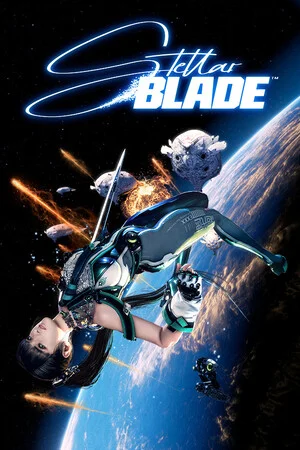
Hello everyone, I’m Zixing. The most intriguing recent event at the intersection of gaming and industry has been the player backlash that Korean developer Shift Up triggered with an AI-generated MV ahead of Stellar Blade: Blood Rain’s release, followed by the public apology from founder and game director Kim Hyung-tae during Tokyo Game Show. As a programmer who has long written technical content, I don’t intend to take sides in condemnation or defense this time; instead, I want to treat this episode as a case study of “the boundary question for AI content in game IP communication,” and take it apart with layered technical and ethical analysis.
First, the factual boundaries: all specific facts in this piece come from verified intelligence cards, and wherever the company has not disclosed something (such as the specific AI tools/models used), I will mark it clearly as “not disclosed,” without speculation. This piece divides labor clearly with the site’s Stellar Blade guides, popularity analysis, and the earlier “AI game-making tools” overview — it focuses on the specific controversy of “AI content ethics boundaries + a corporate apology,” not a general AI tool roundup.
1. Reconstructing the Event: The Chain Reaction Set Off by One MV#
1.1 An Experiment Released as Official Content#
Stellar Blade: Blood Rain is the sequel to the 2024 action game Stellar Blade, developed by Korean studio Shift Up; the sequel was announced in June 2026, with its release date not yet announced.
On July 31, 2026, Shift Up’s official YouTube channel released an AI-generated MV: new heroine EVIE, styled as a K-Pop star, performs the original song “Wanna be in Love” (alternate spelling “WannabeinLOVE”), with an opening card reading Stellar Blade: Blood Rain. The MV was produced by Shift Up’s AI Labs division, and was seen externally as the beginning of the series’ “AI experimental content” outward-facing marketing.
The problem is that this MV was not released under the banner of an “experimental result”; it was pushed to players as official, formal marketing material.
1.2 Negative Reception: Branded “AI Slop” With Visible Visual Flaws#
After release, the MV quickly drew strong negative reactions. Player criticism concentrated on several observable levels:
- Lyrics nonsensical in places: as an original song, the lyrics were flagged for multiple semantic breakdowns, exposing generative content’s weakness in textual coherence.
- Some frames distorted: some frames in the MV showed warping, a typical structural-instability problem of generative video.
- A bad soft-focus blur filter: the whole piece was covered in a soft-focus blur layer, which players read as a “cover-up” to hide visual defects.
- The “AI slop” verdict: players directly used the term “AI slop” to define the MV.
Piled together, these visible flaws turned an MV meant to be “marketing material” into “negative proof of AI generation.”
1.3 Misreading Spreads: From One MV to “The Game Itself Is AI-Generated”#
The fallout did not stay with the MV itself. The path of negative sentiment is worth examining separately:
- Some players inferred from it that “the game itself will be AI-generated too,” projecting their MV dissatisfaction onto the unreleased main game.
- The MV contained details unrelated to Stellar Blade, such as a K-Pop Demon Hunters keychain, further deepening the misreading — players get pulled off course by these “immersive-breaking” elements, believing that even in-game assets are starting to mix in irrelevant generative material.
From a communication-studies angle, this is the classic chain of “one flaw amplified into a wholesale question”: once players take a dislike to one AI artifact of a brand, it easily extrapolates into a verdict on the brand’s overall quality, even its core product.
1.4 Kim Hyung-tae’s First Response and Formal Apology#
As the event fermented, Kim Hyung-tae responded at two different levels at two different times, and the difference between them is precisely the pivot of this whole episode.
In August 2026, Kim Hyung-tae first responded on X (account @jamm3rd). His position: the character EVIE was created “from head to toe by our talented artists and modelers through more than a year of dedicated work,” that AI did not create her from scratch, and that it merely “renders and presents based on the data, designs, and craftsmanship our team created.”
That response tried to clarify “the character was human-made,” but it did not quell the controversy. The key point — the players’ real concern was not “who drew the character,” but “why the final cut had to be AI-generated.” Multiple outlets’ later retrospectives made this same point: players were not questioning whether the character was drawn by humans; they were questioning why an entire MV was generated with AI.
Then, during Tokyo Game Show (TGS) 2026, Kim Hyung-tae sat for an interview with the Korean outlet INVEN and issued a formal apology. His words (as compiled by Chinese-language media):
“We have been running various AI application experiments and research through AI Labs, and along the way we felt some of the results were pretty good, so we released content that should have stayed at the experimental stage in the form of official content… Releasing it this way through official channels before the game is even out appears to have disappointed players… I am very sorry that we failed to distinguish official content from internal experiments.”
The most revealing line in that apology is “failed to distinguish official content from internal experiments” — it points the root of the event directly at a missing “tiering/classification” step, not at “whether AI was used” itself. We will expand this in the technical breakdown section.
Kim Hyung-tae also promised that the team would no longer release such experimental results through official channels, would focus on delivering high-quality game content, and would attract players primarily through pure actual gameplay footage.
| Time point | Event | Nature |
|---|---|---|
| 2026-06 | Sequel Stellar Blade: Blood Rain announced | Pre-launch marketing period |
| 2026-07-31 | Official YouTube releases the AI-generated MV “Wanna be in Love” | Controversy erupts |
| 2026-08 | Kim Hyung-tae’s first response on X | Clarifies the character was human-created |
| TGS 2026 | Kim Hyung-tae formally apologizes in an INVEN interview | Admits “failure to distinguish official from experimental” |
2. Technical Breakdown: Drawing the Boundaries of AI Content Application#
2.1 The Essential Difference Between “AI in the Pipeline” and “AI in the Deliverable”#
To understand the controversy, two easily conflated layers must be separated first. This is the analytical framework I most want to emphasize as a technical writer.
“AI in the pipeline” means: using AI as an assist at some intermediate step of content production — e.g., AI to accelerate sketches, produce reference images, assist facial-capture cleanup, or generate temporary stand-in models for testing. In this mode, AI is a tool serving human creators, and the final deliverable is human-led.
“AI in the deliverable” means: AI directly produced the final content presented to players — for example, this MV itself was an AI-generated finished piece, with AI-generated lyrics and AI-generated footage. In this mode, AI is the direct producer of the final content, and humans mostly set initial conditions and do the gatekeeping.
Kim Hyung-tae’s first response actually pointed partially at the “AI in the pipeline” side — he stressed the character was human-crafted over “more than a year” by artists and modelers, with AI merely “rendering and presenting” from team data. But from the players’ actual perception, the MV (lyrics, visuals, the finished piece as a whole) already sat on the “AI in the deliverable” side.
This is exactly the core of player dissatisfaction: what players mind is not “whether AI is in your pipeline,” but “why the finished piece you use for official marketing was directly AI-generated.” A line saying “the character was human-drawn” cannot dissolve the perception problem created by “the entire finished piece is AI-generated.”
2.2 The Tiering Lens: The Boundary Between Experimental and Official Content#
The core formulation of Kim Hyung-tae’s apology is “failure to distinguish official content from internal experiments.” We can treat “content tiering” as an actionable criterion framework:
| Content attribute | How AI is applied | Player acceptance | Typical case |
|---|---|---|---|
| Internal experiments / research | Unrestricted, fully AI | High (not public) | Various AI Labs experiments |
| Technical publications / white papers | AI-assisted presentation | Medium-high | Tech demos, AI application cases |
| Official marketing assets (MV, CG) | Handle with care | Low (controversy-prone) | This “Wanna be in Love” |
| Core game content | A principled red line | Extremely sensitive | Players will extrapolate directly |
From this framework, the essence of the problem is not “whether AI can be used,” but “at which tier AI was used, and how.” In scenarios that don’t directly face players — internal experiments, technical sharing — tolerance for AI is high; once an AI artifact gets the label “official marketing,” players’ threshold for criticism rises sharply.
2.3 The Contested Points: Artistic Integrity, Attribution, and Copyright#
Beyond the technical judgment of “whether AI was used,” AI-generated content carries three unavoidable ethical disputes, and this event dragged all of them out:
- Artistic integrity: when an MV has nonsensical lyrics, distorted visuals, and relies on a soft-focus filter to hide defects, does it meet the quality expectations of an IP whose core selling points are art and character portrayal? Players calling it “AI slop” is itself an expression of this “integrity gap.”
- Creator attribution: Kim Hyung-tae stressed the character was the result of “artists and modelers working over a year,” but in the finished piece’s credits, does that result belong to human artists or to the AI generation pipeline? This fueled the discussion of “whether human labor is being diluted by AI output.”
- Copyright ownership: questions over AI-generated content’s training-data provenance and the final piece’s copyright get amplified on publicly released marketing material like an MV — because it is a genuine externally distributed content asset, not an internally used experimental material.
One note: the company did not disclose the specific AI tools and models used for this MV; officially only the “AI Labs” division was mentioned. The discussion above therefore stays at the level of “mechanism/criteria” analysis and does not target any undisclosed specific technical implementation.
2.4 A Post-Mortem of a “Boundary-Setting” Failure#
If we treat this episode as a failed case of “boundary setting,” we can reconstruct the pits the company may have hit on “whether to release, and how.” To be clear, the following is a mechanized breakdown of the event’s logic, not a definitive reconstruction of internal decision-making:
- Step 1 - Production: AI Labs produced an AI-generated MV, and “felt the result was pretty good” — the company’s original judgment.
- Step 2 - Classification: the company promoted what should have been positioned as “internal experiment/research” output to the tier of “official content” and released it.
- Step 3 - Verification: before formal release to players, there was no gatekeeping over items affecting perception and misreading, such as “visual flaws,” “lyric coherence,” or “element relevance (e.g., the K-Pop Demon Hunters keychain).”
- Step 4 - Distribution: released through a formal channel (official YouTube), turning it into a publicly circulating marketing asset rather than an experiment report.
From this post-mortem, the gap between Step 2 and Step 3 is precisely the disease Kim Hyung-tae’s apology pointed at: “failure to distinguish official content from internal experiments.” Had the Step 2 tiering of “experiments don’t mix with official” held, or had Step 3 gated visual and text quality, the event’s trajectory would have been different.
2.5 How Far Generative Content Still Is From “Marketing-Grade Quality”#
From a technical-capability angle, we can decompose “an MV fit to serve as a formal marketing asset” into several hard indicators, then set today’s generative shortcomings against them to gauge the difficulty of meeting the bar:
| Indicator | Marketing-grade requirement | Current generative shortcoming | Difficulty |
|---|---|---|---|
| Text semantics | Coherent, unambiguous lyrics | Long-text semantic drift, meaningless sentences | Relatively high |
| Frame stability | Stable across frames, no warping or deformation | Insufficient temporal consistency, structural jitter | High |
| Detail fidelity | Accurate materials, lighting, expressions | Blurred details, reliance on stylized masking | High |
| Element consistency | Fits the IP’s world; no off-key props | Irrelevant generated elements mixed in | Medium |
| Overall impression | Meets “craftsmanship” and “quality” expectations | Directly read by players as “AI-flavored” | Subjective but sensitive |
This table is not meant to deny the value of generative technology; it is meant to show: when a company forces a technology that still cannot reliably meet “marketing-grade quality” out as a finished product, a rift opens between the reasonableness of technical iteration and player expectations. Such a rift is especially fatal for an action game and an IP whose selling point is art, because players’ pickiness threshold is extremely high.
3. Why Players Recoil: The Gap Between Emotional Expectations and Technical Iteration#
3.1 The Expectation of “Craftsmanship” vs. Sensitivity to “Generation”#
The audience profile of the Stellar Blade IP makes its sensitivity to AI content naturally higher than average. As an action game whose core selling points are visual presentation and character portrayal, its marketing assets carry players’ expectation of “hand-polished high quality.” When that expectation collides with “an AI-directly-generated finished piece,” the result is not perceived as “technical iteration” but as “a downgrade in quality.”
One set of frequently quoted player voices from comment sections is worth noting (player comments compiled by 17173): “Hand-crafted plus AI is acceptable, but all-AI is going too far,” and “The publisher is apparently so broke it uses AI for marketing.” The former matches my Section 2.1 analysis — players can accept “AI assisting humans” but not “all AI”; the latter reflects the associative mechanism by which players link “using AI for marketing” with “insufficient publisher investment.”
3.2 Why Detail Flaws Became the “Fuse”#
From a technical angle, the several flaws this MV exposed are precisely the typical shortcomings of generative video at the current stage:
- Poor textual coherence (meaningless lyrics) → generative models’ limits in long-text semantic consistency.
- Unstable visual structure (some warped frames) → video generation models’ limits in temporal consistency.
- Reliance on a soft-focus filter to cover up → generative pipelines’ insufficiency in detail fidelity, often masked by “stylized blur.”
These shortcomings objectively exist in today’s generative models, but the crux is not the fact that “the model’s capability is insufficient” — it is that the company placed an experimental result still carrying obvious generation artifacts directly in a formal marketing position. What players saw was not “a technology still in the lab,” but “a half-finished product already being used to market our game.”
3.3 The Transmission of Misreading: How “One Event” Becomes a “Wholesale Judgment” in IP Communication#
As Section 1.3 described, players extrapolated from “one MV is AI-generated” to “the game itself is AI-generated.” This amplification of misreading has both an emotional driver and the boost of “immersive-breaking” irrelevant details in the MV (like the K-Pop Demon Hunters keychain). It points to an industry-level problem: during an IP’s warm-up period, any AI-generated marketing asset is not just “one asset” — it is a barometer of players’ judgment of “the overall quality and sincerity of this project.”
4. The Industry Signal: A Cautious but Non-Withdrawing “AI-ization” Reality#
4.1 After the Apology, No Plan to Abandon AI#
Alongside the apology, Kim Hyung-tae made clear he would not give up AI entirely. He reportedly believes that “realistically it is hard to never use AI; in whatever form, we will still make use of it,” with the key being explaining to players how AI is used, and clearly separating official content from experimental research.
This formulation constitutes the episode’s most intriguing “industry signal”: companies show caution in applying AI content, but almost none will withdraw. The apology targeted failures of “distinction” and “release timing,” not AI application itself.
4.2 The Logic of “AI Necessity” Under Cost and Competitive Pressure#
Kim Hyung-tae has publicly stated his AI position many times before, and its core is tying AI directly to competitiveness. Two data points he offered deserve attention:
- AI is essential to the future growth of the Korean game industry — his macro positioning of AI.
- About 80% of the company’s revenue comes from overseas — the real background forcing competition with the global market and especially Chinese developers.
- R&D investment comparison: he said, “We invest about 150 people in one game, but China puts in 1,000 to 2,000; we lack competitiveness in content quality or quantity.”
That “150 people vs. 1,000–2,000 people” comparison almost explains why the company’s reliance on AI feels so urgent: when the manpower gap is of a different order of magnitude, AI is seen as the tool to close the “content quantity and efficiency” gap. The logic holds commercially, but between it and players’ expectation of “craftsmanship quality” there is a gap that must be crossed.
Let’s set this “cost-efficiency” pressure against player expectations in one table:
| Dimension | Publisher view (cost/efficiency) | Player view (quality/sincerity) |
|---|---|---|
| The value of AI | Closes the manpower gap, raises capacity | May dilute human craftsmanship |
| The position of AI | A key production tool | A risk item needing strict gatekeeping |
| Tolerance for “AI output” | Experimental results deserve release | Official products must not be half-finished |
| The ideal balance | Separate official from experimental, explain the usage | Finished products led by humans, stable quality |
4.3 The Long-Term Impact: AI-ization Boundaries Become a New Industry Subject#
From a longer view, what this episode leaves the industry is not the isolated case of “one company’s misfire,” but a universal subject of “AI-ization boundaries”: how can companies hold the line on player-facing content quality and emotional expectations while using AI to raise efficiency?
Kim Hyung-tae’s answer is “separate official content from experimental content, and explain to players how AI is used.” It is a governance approach of “transparency + tiering”; while it does not settle the ultimate question of “whether AI-generated finished pieces should enter official marketing at all,” it at least establishes an actionable boundary that “experimental results are not released as official content.”
(Note: reports differ on whether Kim Hyung-tae’s apology was made on stage during a presentation or in an interview; this piece adopts the more reliable formulation “apologized in the INVEN interview” and does not assert an on-stage public apology. As for the exact release date of Stellar Blade: Blood Rain, the developer has not announced it; foreign media have floated 2027 or 2028 and other guesses, all of which are rumors; this article does not state them as fact.)
4.4 The Same Company’s Next Move: A Separate Clue From the Switch 2 Version#
Beyond the event, Shift Up has since confirmed another IP-related development (not core to this episode, but a useful reference for the company’s overall direction): Stellar Blade: Complete Edition will come to Nintendo Switch 2 on November 6, 2026; it adopts NVIDIA DLSS + AMD FSR dual upscaling, targeting 60fps in both handheld and docked modes; and a collaboration with PlatinumGames’ Bayonetta was announced (4 free outfits).
From a technical angle, that “DLSS + FSR dual upscaling” configuration is likewise a signal worth noting — it shows Shift Up will pay more attention to balancing presentation across hardware platforms, and it side-reflects the company’s consistent “pragmatic, willing to embrace new technology” orientation in technology adoption. It resonates with the “cautious but will use it” stance on AI content application.
5. Conclusion: Boundaries Matter More Than Refusal#
Time to pull the conclusion together. On the surface, this Stellar Blade: Blood Rain AI MV episode is a PR event — “a company released one piece of content wrongly, players got angry, the CEO apologized.” But seen more deeply, what it truly touches is the industry-level question of “where AI content should stand in game IP communication.”
- The line between “AI in the pipeline” and “AI in the deliverable” determines whether players see AI as a “tool” or a “replacement.”
- The tiering between “official content” and “experimental content” determines players’ acceptance threshold.
- The balance between “using AI well” and “respecting player expectations” determines whether a company can stand firm between efficiency and quality.
From the angle of technical evolution, AI’s penetration of game marketing and content-asset production is nearly unavoidable and hard to fully reverse. But this episode suggests that what players really demand may not be “no AI at all,” but “don’t put an unpolished experimental piece in front of me as official content.” Behind that plain request lies a broader judgment: in the AI era, managing content boundaries deserves the industry’s investment more than the technology of content production itself.
All specific facts in this piece are drawn from a verified intelligence scope; any technical details the company has not disclosed (such as the specific AI model) are marked as not disclosed, with no inference or speculation beyond the facts. The analysis above is for readers’ reference only, as a technology-perspective interpretation, and constitutes no siding with or judgment of any party.