Phantom Blade Zero Level Design & Exploration#
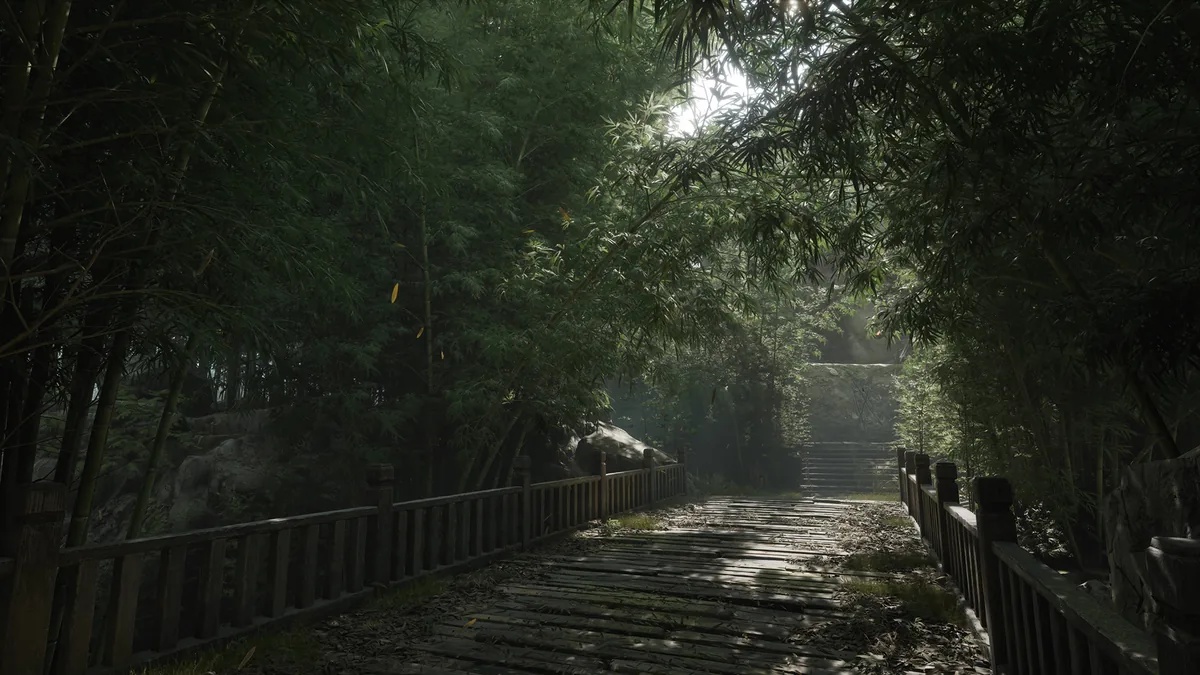
The world of Phantom Blade Zero carries the kungfu-punk aesthetic to its full extent. Mechanism passages hide between the ruined alleys of an ancient capital; dark palettes run thick with jianghu blood-and-storm. Level scenes are not merely a stage for combat — they are the carrier of exploration, side quests, and the conspiracy. This article unpacks the levels and exploration from three angles: scene mood, exploration gameplay, and design craft.
The Kungfu-Punk Foundation of the Scenes#
The Clash of Old and New#
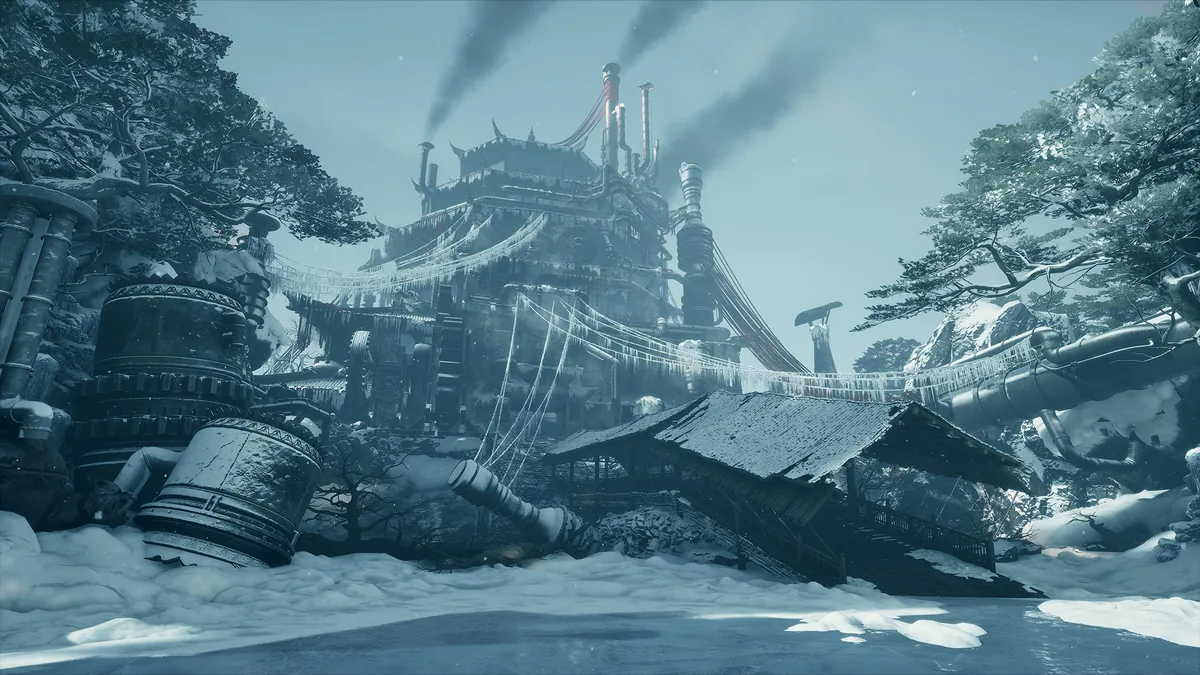
What makes Phantom Blade Zero’s scenes special is the collision of “ancient” and “new” — the weathered base of classical wuxia overlaid with mechanical, gadget-laden, metallic kungfu-punk elements. The contrast is visually unmistakable.
| Scene poles | Visual temper |
|---|---|
| Classical desolation | Old-capital alleys, sect halls |
| Mechanical frontier | Hidden mechanism roads, steel devices |
| Where they merge | Kungfu-punk’s unique look |
| Unified whole | Dark-wuxia atmosphere |
Scenes Serve Story and Combat#
Good scenes are not set dressing; they serve fighting and narrative at once. A mechanism can be combat terrain or a clue to the plot; a dark alley can host a chase or a side story.
| Scene function | Notes |
|---|---|
| Combat stage | Terrain and mechanisms shape fights |
| Narrative carrier | The environment tells the plot |
| Exploration space | Hidden arts and secret passages |
| Mood work | Blood-and-storm atmosphere |
What Exploration Contains#
Exploration Should Not Come Up Empty#
The most important trait of good exploration is payoff. Phantom Blade Zero’s exploration was expected to deliver tangible gains so that every dive into danger means something.
| Exploration reward | Value |
|---|---|
| Hidden arts | Expand weapons and Phantom Edges |
| Mechanism passages | Unlock shortcuts and battle zones |
| Strong-enemy leads | Lead to weapon-seizing chances |
| Side events | Trigger setup choices |
| World intel | Piece together the conspiracy |
How Exploration Interlocks with Combat#
Exploration and combat are deeply linked. Which corner you push into may decide which enemies you meet and whether you can seize a given art — exploration gains clear purpose.
| Exploration goal | Combat link |
|---|---|
| Hunt arts | Defeat guardian strongmen en route |
| Push passages | Meet mechanisms and ambushes |
| Chase leads | Draw out elite encounters |
| Probe danger zones | High reward, high risk |
Variety in Level Design#
The Expected Range of Scene Types#
Reading the worldview as a whole, the desk expected rich scene variety matching the layers of combat and exploration:
| Scene type | Flavor |
|---|---|
| Wuxia city | Chases through ancient streets |
| Mechanism chambers | Puzzle-stealth |
| Palaces and sects | Oppressive boss fights |
| Wilderness wastes | Wide-area engagements |
| Mechanic dungeons | Multi-level exploration |
Specific scenes defer to official announcements.
Scenes Meet “Choices Change Levels”#
Remember: side-quest choices directly change the level experience — meaning the same scene can look different under different player choices: a saved NPC may make a region safe, an enraged faction may fill an alley with ambushers.
| Choice | Scene change |
|---|---|
| Rescue an NPC | Their stronghold becomes a safe zone |
| Enrage a faction | Their turf bristles with enemies |
| Uncover secrets | Hidden areas unlock |
| Complete rituals | Scene events trigger |
Thinking About Exploration Design#
Structured vs Free Exploration#
Judging by positioning, Phantom Blade Zero more likely adopts “structured exploration” — optional hidden paths and branches inside a designed level skeleton, rather than a boundless sandbox. Exploration keeps direction without losing freedom.
| Type | Trait | This game’s lean |
|---|---|---|
| Structured exploration | Freedom within a skeleton | Leans yes |
| Open sandbox | Unlimited freedom | Unclear |
| Purely linear | One road to the end | No |
| Zonal open | Large-area free roaming | Possible |
Exploration Meets Mechanism Puzzles#
Mechanisms are not just visual flavor but part of level mechanics. Solving devices, finding switches, triggering hidden compartments adds puzzle flavor to exploration and gives scenes a playable layer.
| Mechanism play | Exploration flavor |
|---|---|
| Hunt switches | Observation and association |
| Open caches | A sense of achievement |
| Solve puzzles | Adds thinking |
| Trip triggers | Also combat traps |
Exploration and the Sixty-Six-Day Trade-Off#
The 66-day premise gives exploration a time cost. Decide: spend hours digging every corner and mechanism, or push the main line? The trade-off is itself part of the exploration design.
| Choice | Cost and reward |
|---|---|
| Dig deep | Arts gained, time burned |
| Rush ahead | Plot advances, gains missed |
| Find balance | Walk between the two |
Advice for Explorer-Type Players#
Facing a jianghu full of mechanisms and dark corners, the desk offered a few pointers:
| Advice | Why |
|---|---|
| Read the environment | Clues hide in details |
| Fear no danger zones | High rewards live in risky places |
| Use mechanisms | Make terrain work for you |
| Keep notes | Remember the corners you couldn’t open |
The “Collector’s Satisfaction” of Exploration#
The final test of good exploration is that “I finally found it” feeling. Completing a set of Phantom Edges or folding a hidden art into your blade library — that accumulation and payback is what makes exploration addictive.
| Collection target | Satisfaction source |
|---|---|
| Arts collected | The blade library fills out |
| Secrets uncovered | The map grows clearer |
| Leads pieced | Conspiracy fragments become a picture |
| Events completed | A richer jianghu résumé |
From Art to Scenes: Visuals and Levels as One#
Talk about scenes and you must talk about art. Under kungfu punk, the palette, lighting, and architectural details directly decide an area’s mood and pull. Art and level design are two faces of one thing in Phantom Blade Zero.
| Art element | Effect on scenes |
|---|---|
| Palette | Sets the dark base |
| Lighting | Paints blood-and-storm |
| Architecture | Provides combat terrain |
| Mechanism forms | Boost the kungfu-punk feel |
Scene Landmarks That Stick#
Great scenes have unforgeable memory points — a palace rebuilt by machinery, an alley soaked in blood-red, a tower bristling with mechanisms. These are anchors for plot and landmarks for navigation alike.
| Landmark | Role |
|---|---|
| Signature structures | Navigation and plot anchors |
| Distinctive mechanisms | Memory and crisis-making |
| Blood-red environments | Amplify the theme |
| Unique visuals | Impossible to forget |
The Challenges Exploration May Face#
Objectively, exploration design has potential pain points; the desk lists them for a fair reading:
| Challenge | Notes |
|---|---|
| Map-walking tedium | Thin rewards breed fatigue |
| Mechanism overload | Too many puzzles can chafe |
| Getting lost | Complex scenes need guidance |
| Reward imbalance | Density of payoffs must hold |
Actual performance rests with the shipped game.
Beating Exploration Fatigue#
Good exploration design fights fatigue with “frequent small payoffs” — a little secret, a small story, or an interactive mechanism every few steps, keeping the rhythm fresh.
| Anti-fatigue device | Effect |
|---|---|
| Frequent payoffs | Sustains drive |
| Fragment storytelling | Assemble tales as you roam |
| Rhythm swings | Tension alternates with relief |
| Map feedback | Clear progress signal |
Exploration Advice by Player Type#
Players differ widely in exploration appetite; matching advice:
| Player type | Exploration advice |
|---|---|
| Completionists | Carpet-search, miss no corner |
| Story-first | Chase environmental narrative clues |
| Action-first | Let fights carry you through danger zones |
| Rhythm-first | Balance exploring and advancing |
Exploration and the Second Run#
Pairing with the second-run boss extra phases, completion-minded players can slow down on run two, cover what run one skipped, and face the new challenges at the same time. Exploration and replay thus mesh naturally.
| Run | Exploration focus |
|---|---|
| First run | Main line + exploring in passing |
| Second run | Fill hidden areas + face extra phases |
| Completionists | Full carpet search fused with challenges |
Editorial: This Jianghu Rewards Slow Walking#
What this desk looks forward to most in Phantom Blade Zero is exactly the care of treating level scenes as “a breathing world.” When mechanisms, dark alleys, blood color, and faint threads of conspiracy interweave, exploration stops being map-walking and becomes a swordsman’s walk into danger, again and again. The jianghu of October 29, 2026 rewards slowing down and seeing it inch by inch.
| What to savor | Why |
|---|---|
| Scene craft | Old-meets-new with identity |
| Substantial exploration | Arts and passages hidden throughout |
| Braided narrative | The environment tells the plot |
| Gameplay mesh | Choices change levels |
FAQ#
| Question | Answer |
|---|---|
| Are scenes an open world | Leans structured exploration; defer to officials |
| Does exploration pay off | Hidden arts and more; expected to be rich |
| Are there mechanism puzzles | Kungfu-punk setting; expected yes |
| Do scenes change with choices | Yes — side quests directly change levels |
| Hidden areas | Expected; mechanism passages hide arts |
| Does exploration take long | It trades off against the 66-day premise |
| Are scenes varied | Expected rich; defer to officials |
| Does exploring get tiring | Needs frequent payoffs; the shipped game decides |
Closing Thoughts#
The level scenes of Phantom Blade Zero carry kungfu punk’s full imagination of “ancient meets new.” They stage fast-paced combat, feed mechanism puzzles and hidden-art exploration, and interlock deeply with the choice-driven level system. For players who love to fight and dig in the same breath, this dark jianghu rewards walking it slowly, from end to end.