PBZ State of Play Deep Dive#
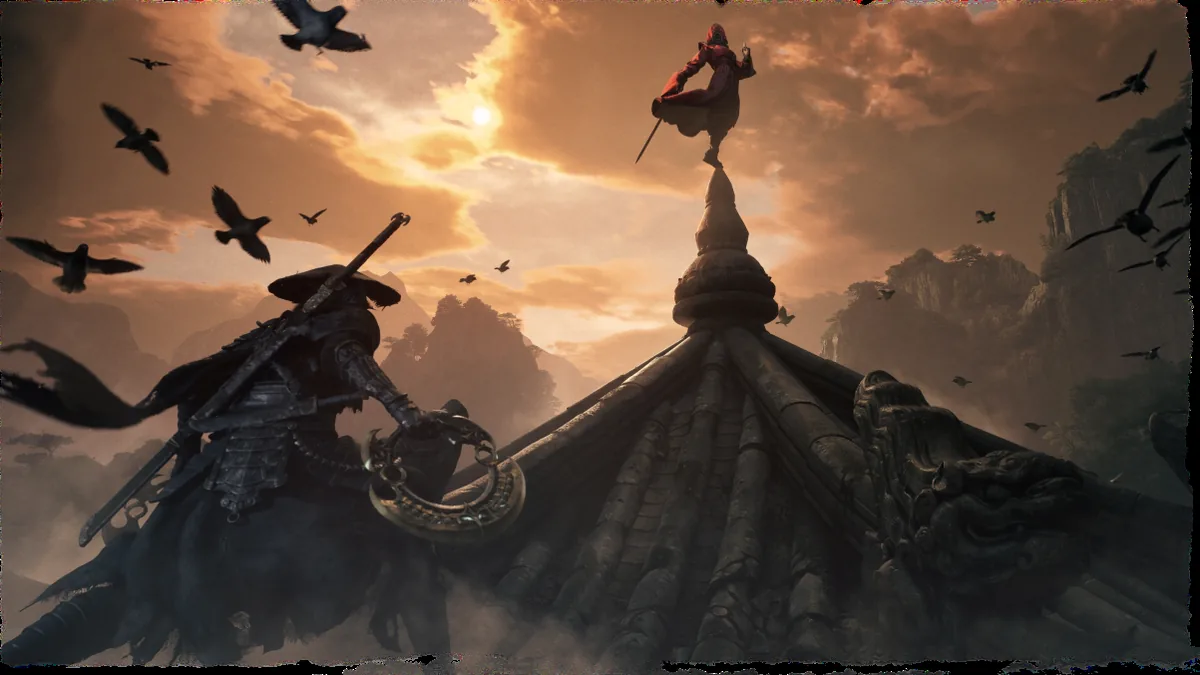
Hello everyone — the editor’s desk here. During Sony’s State of Play broadcast at 10:00 on August 18, 2026, Phantom Blade Zero took the stage alongside Donnie Yen with a dedicated demo running over 18 minutes. Within an hour of the broadcast, pre-orders topped the Steam charts in China and globally, with the game set to launch on October 29, 2026 (PC and PS5) — it shipped on that date, on schedule.
This page is the editorial desk’s consolidated deep dive into that 18-minute demo. Building on the base coverage, it adds a frame-by-frame breakdown, a three-pillar model of the combat system, a longitudinal comparison of the art’s evolution, predicted ray tracing performance tiers, and a full replay of the pre-order chart run. It is written for hardcore players who have already watched the basic coverage and want to go deeper.
1. What This Page Is and How to Read It#
This page is the deep-extension layer of the State of Play Broadcast Hub. Its relationship to the section’s existing pages runs both ways — hub to detail, and detail back to hub:
| Reading goal | Read first | Then this page |
|---|---|---|
| Quick catch-up on what was shown | Full Broadcast Timeline | Chapters 3–4 for the systematic breakdown |
| The combat system | Combat System Deep Breakdown | Chapter 4’s three-pillar model, Chapter 7’s boss deconstruction |
| Visuals and art | Ink-Wash Art, Frame by Frame | Chapter 6’s longitudinal art comparison |
| Hardware and settings | Ray Tracing Config Analysis | Chapter 5’s performance tier predictions |
| Hype and reception | Reactions & Pre-Order Report | Chapter 9’s pre-order replay |
| Compare with the reveal | Vs. the Reveal PV | Chapter 8’s side-by-side summary |
If you are new to Phantom Blade Zero’s world and story, reading Story & Worldview Preview and the Characters hub first will make this page land better.
2. The Overall Shape of the 18-Minute Demo#
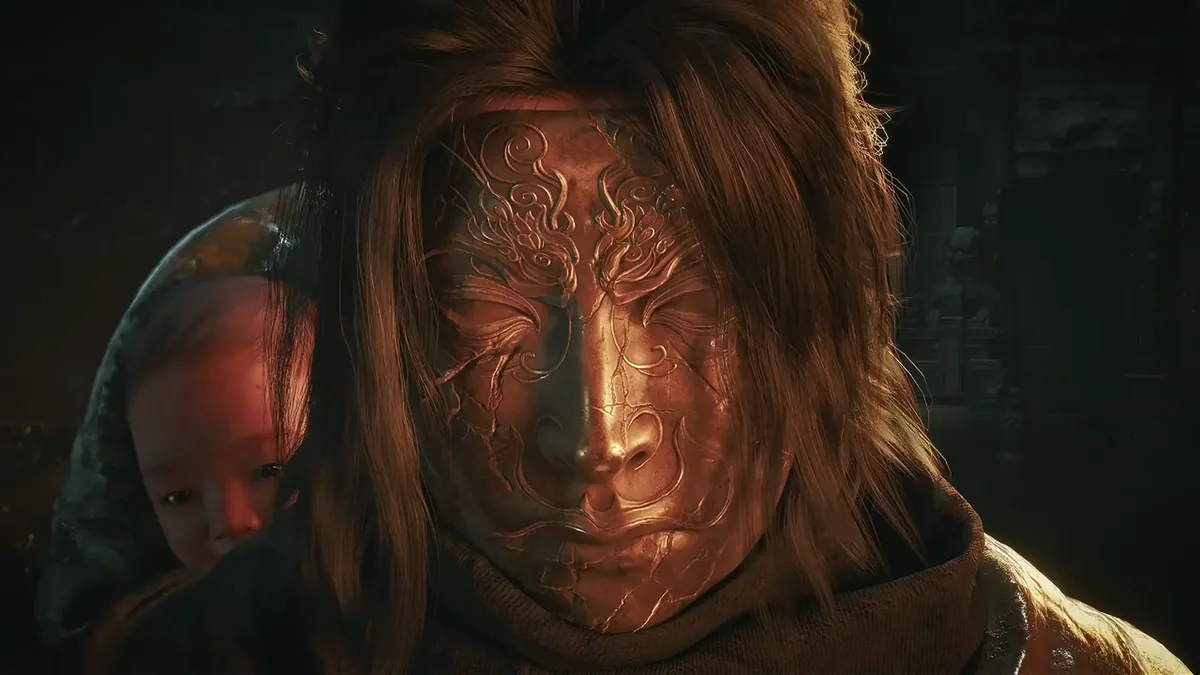
Read analytically, the 18-minute demo splits into three layers: information, systems, and aesthetics. The information layer answers “what was announced,” the systems layer answers “how does combat work,” and the aesthetics layer answers “why does it look this good.” The three are interlocked, and S-GAME deliberately alternates between them across the demo’s segments.
2.1 Time Distribution Across Eight Natural Segments#
| Segment | Window (approx.) | Content focus | Info layer | Systems layer | Aesthetic layer |
|---|---|---|---|---|---|
| Opening mood piece | 0:00–1:40 | Ink-wash scroll unfolds, the 66-day countdown | Story hook | None | Strong |
| Worldbuilding setup | 1:40–3:10 | Mountain gate, old house, ruined town | Lore | None | Strong-ish |
| Story staging | 3:10–5:00 | Key NPC dialogue, conspiracy threads | Story | None | Moderate |
| First combat | 5:00–8:20 | Mob fight, chains, stance switching | Light | Strong | Moderate |
| Elite enemy | 8:20–10:30 | Dual-blade elite, weapon-seizing | Medium | Strong | Moderate |
| Boss fight deconstruction | 10:30–14:20 | Moyuan fight, Donnie Yen performance | Medium | Very strong | Strong-ish |
| Art and environments | 14:20–16:00 | Scene cross-cuts, lighting showcase | Light | None | Very strong |
| Closing information | 16:00–18:00 | Release date, pre-order info | Strong | None | Moderate |
2.2 The Rhythm of Information Density#
The information release has a visible rhythm: a long-take mood piece opens the show to establish brand quality, three consecutive combat sequences in the middle build trust that the game “feels right,” and the closing release info harvests purchase intent. This “mood — feel — transaction” three-act structure is the mature playbook of AAA single-player marketing.
| Phase | Purpose | Audience emotion |
|---|---|---|
| Opening mood piece | Set quality expectations | Anticipation |
| Mid-show combat | Prove gameplay chops | Trust |
| Closing release info | Convert to pre-orders | Impulse |
3. The Three-Pillar Model of the Combat System#
This is the page’s core original analysis. We abstract Phantom Blade Zero’s combat into three pillars: Chain (combos), Stance, and Disarm (weapon-seizing). Together they form a closed loop of attack, variation, and counterplay.
3.1 Chain-Led Offense#
Unlike the “defense-first” loop of Soulslikes, Phantom Blade Zero’s combat loop is chain-led. The protagonist’s action density in the demo outpaces the genre: light attacks chain into multi-hit flourishes, heavy attacks carry charged variants, and airborne and grounded attacks link into one combo tree.
| Base action | Demo showing | Branching |
|---|---|---|
| Light chain | Three-hit string, cancellable | Weave in heavies or dodges |
| Heavy attack | Clear wind-up, high commitment | Follow-up strike when fully charged |
| Air attack | Leaping downward strike | Links from a launcher |
| Dodge | I-frame repositioning | Cancels recovery frames |
| Execution | High-damage finisher | Triggers when guard is broken |
3.2 Stance as a Bounded Resource#
Stance is a finite movement resource; players constantly trade between spending it on offense and banking it for defense. In the demo the protagonist oscillates between burning stance to pressure enemies and holding stance to answer dodges — the core source of the system’s depth.
| Stance state | Spent on | Payoff |
|---|---|---|
| Offensive stance | Active attacking | Fast breaks, pressure |
| Balanced stance | Default defense | Stable, controllable |
| Burst stance | Opened with full resource | High damage, high risk |
3.3 Disarm as Counterplay#
The weapon-seize is Phantom Blade Zero’s signature: when an enemy’s guard breaks, a specific action strips their weapon and flips the fight’s momentum. The dual-blade elite fight in the demo is the disarm system’s showcase.
| Element | Mechanic detail | Practical meaning |
|---|---|---|
| Guard-break condition | Repeated hits or an execution | Opens the seize window |
| Seize action | A cinematic special execution | Breaks the enemy’s rhythm |
| Post-seize effect | Enemy loses main weapon, player gains a buff | Battlefield initiative changes hands |
4. Frame by Frame: Technical Detail in Three Fights#
4.1 The Mob Fight: A Chain Textbook#
The first fight is a mob-clear demo focused on the chain system. The protagonist’s straight sword strings attacks with no visible stiffness between moves; kills trigger executions where ink-wash VFX and blood spatter merge — Kungfupunk aesthetics at full concentration.
| Frame range | Action | What to watch |
|---|---|---|
| Startup frames | Straight-sword slash | Short wind-up, fast draw |
| Mid-frames | Chain extensions | Even spacing between hits |
| Recovery frames | Dodge into charged attack | Smooth recovery cancel |
| Execution frames | Ink-stained finisher | Stylized damage beat |
4.2 The Dual-Blade Elite: Disarm, Fully Demonstrated#
The second fight, against a dual-blade elite, is the disarm system’s first complete showing. The elite has legible behavior: dash attacks, parries, and sword-beam releases. The loop is to build guard damage with chains, seize the weapon in the window, then turn the stolen blade back on its owner.
| Enemy behavior | Answer | Value toward disarm |
|---|---|---|
| Dash slash | Side-dodge | Builds guard damage |
| Parry counter | Heavy attack to break guard | Creates the window |
| Sword beam | Reposition to open distance | Avoids damage |
4.3 The Moyuan Fight: Donnie Yen’s Martial Texture#
The third fight is the core boss “Moyuan,” performed and motion-captured by Donnie Yen. Moyuan’s movement design carries clear international Wing Chun and Hung Ga signatures: distinct rhythm, compact frames. His signature moves in the demo — the “Cloud Hands Slam” and the “Chain Inch Punch” — carry real performative pressure.
| Move | Motion signature | How to answer |
|---|---|---|
| Cloud Hands Slam | Rotating charge into a downward smash | Sidestep and bait |
| Chain Inch Punch | Fast, short-ranged string | Parry or open distance |
| Wing Chun bridge hands | Defensive counters | Read the gap, punish |
5. Performance Tier Predictions#
Based on the officially confirmed Ray Tracing and Path Tracing support, the desk predicts performance tiers for mainstream GPUs. Emphasis: these are predictions — final verdicts belong to media benchmarks.
5.1 Tier Predictions#
| GPU tier | 1080p | 1440p | 4K |
|---|---|---|---|
| RTX 4060 | High, 60 fps | Med-high, 50 fps | Medium, 30 fps |
| RTX 4070 Super | High, 90 fps | High, 60 fps | Med-high, 45 fps |
| RTX 5080 | Ultra, 144 fps | Ultra, 90 fps | High, 60+ fps |
| RX 7800 XT | High, 75 fps | Med-high, 55 fps | Medium, 32 fps |
5.2 Ray Tracing Preset Advice#
| Goal | Recommended preset | Note |
|---|---|---|
| Frame rate first | RT off | Highest fps gain |
| Balanced | RT medium | Quality/fps equilibrium |
| Max visuals | Path tracing | High-end cards only |
6. The Art’s Longitudinal Evolution#
6.1 From Reveal PV to This Demo#
Placing the reveal PV, the early August 2026 gameplay capture, and this State of Play demo side by side, the technical iteration is obvious:
| Dimension | Reveal PV | Early gameplay | SoP demo |
|---|---|---|---|
| Lighting | Mostly baked | Dynamic GI present | Full RTGI |
| Character detail | Stylized-leaning | Material refinement | Micro-expressions on skin |
| Combat VFX | Plain | Ink-wash VFX prototype | Full ink-stain system |
| Scene scale | Small setups | Mid-scale staging | Large-set choreography |
6.2 Kungfupunk’s Three Primary Colors#
Phantom Blade Zero’s aesthetic core compresses into one word: Kungfupunk — the expressive motion of Chinese kung fu, the kernel design of punk, and the visual language of ink-wash painting. In this game the three are not stacked but meshed.
| Element | Kung fu | Punk | Ink wash |
|---|---|---|---|
| Origin | Chinese martial arts | Dystopia | Classical Chinese painting |
| Expression | Move design | Character modification, mechanical prosthetics | Rendering style |
| Function | Soul of combat | Worldview tension | Visual identity |
7. Boss Fight Deconstruction#
7.1 Moyuan’s Two-Phase Design#
The Moyuan fight is a two-phase design. Phase one is fists and short weapons — fast rhythm, controlled damage. Phase two goes berserk: attack range and damage spike, and ranged qi blasts join the kit.
7.2 Move Table by Phase#
| Phase | Move | Frequency | Counter |
|---|---|---|---|
| Phase 1 | Chain Inch Punch | High | Parry or dodge |
| Phase 1 | Cloud Hands Slam | Medium | Circle to the back |
| Phase 1 | Wing Chun bridge hands | Medium | Read and punish |
| Phase 2 | Berserk flurries | High | Open distance |
| Phase 2 | Ranged qi blasts | Medium | Position around them |
8. Vs. the Reveal PV: The Summary Table#
| Compare item | Reveal PV | SoP demo | Verdict |
|---|---|---|---|
| Setting | Single rainy alley | Multi-scene staging | Clear step up |
| Enemies | Single mob types | Elite + boss | More vertical depth |
| Combat | Basic chains | Three pillars complete | System deepened |
| Visuals | Static light | Dynamic lighting | Tech iteration |
| Staging | Short and tight | Full 18 minutes | Richer layers |
9. The Pre-Order Chart Run, Replayed#
9.1 Numbers at a Glance#
| Metric | Data | Meaning |
|---|---|---|
| Pre-order chart top | Within 1 hour | Very fast conversion |
| Steam China | No. 1 | Strong domestic support |
| Steam Global | No. 1 | High worldwide attention |
| Platforms | PC + PS5 | Dual-platform coverage |
9.2 The Structure of the Heat#
The pre-order heat is structurally healthy: domestic passion from Chinese players plus international attention from the global audience. This “domestic + global” twin-engine structure is a strong setup for word-of-mouth on a Chinese AAA action title.
| Market | Showing | Driver |
|---|---|---|
| China | Topped best-seller | Wuxia resonance at home |
| Global | Topped best-seller | Donnie Yen + Kungfupunk |
| Console | Active PS5 pre-orders | Sony ecosystem backing |
10. Key Questions Before Launch#
| Question | The desk’s answer |
|---|---|
| Did it ship on October 29? | Officially confirmed, no delays announced — it shipped on that date |
| Was there a demo? | At the time none was announced; rumors pointed to a Gamescom playable |
| Controller or keyboard? | An action game — controller recommended |
| How hard? | Above a standard action game, below the Soulslike ceiling |
11. Closing Thoughts#
The 18-minute State of Play demo was a high-quality global debut for Phantom Blade Zero. The systemization of the three combat pillars, the complete rendering of Kungfupunk aesthetics, and the martial texture Donnie Yen brought to the boss built a real foundation of confidence for this Chinese action epic. The game launched on October 29, 2026, and this section will keep following post-launch media reception and hands-on testing, adding practical coverage as it lands.
12. Update Log#
| Date | Update |
|---|---|
| 2026-08-28 | First publication: consolidated demo deep dive, three-pillar model, longitudinal comparison, pre-order replay |
| 2026-09-XX | Planned: demo hands-on impressions, media review feedback |
| 2026-10-XX | Planned: launch-week combat guides, full boss walkthrough |