PBZ State of Play: Full Broadcast Timeline#
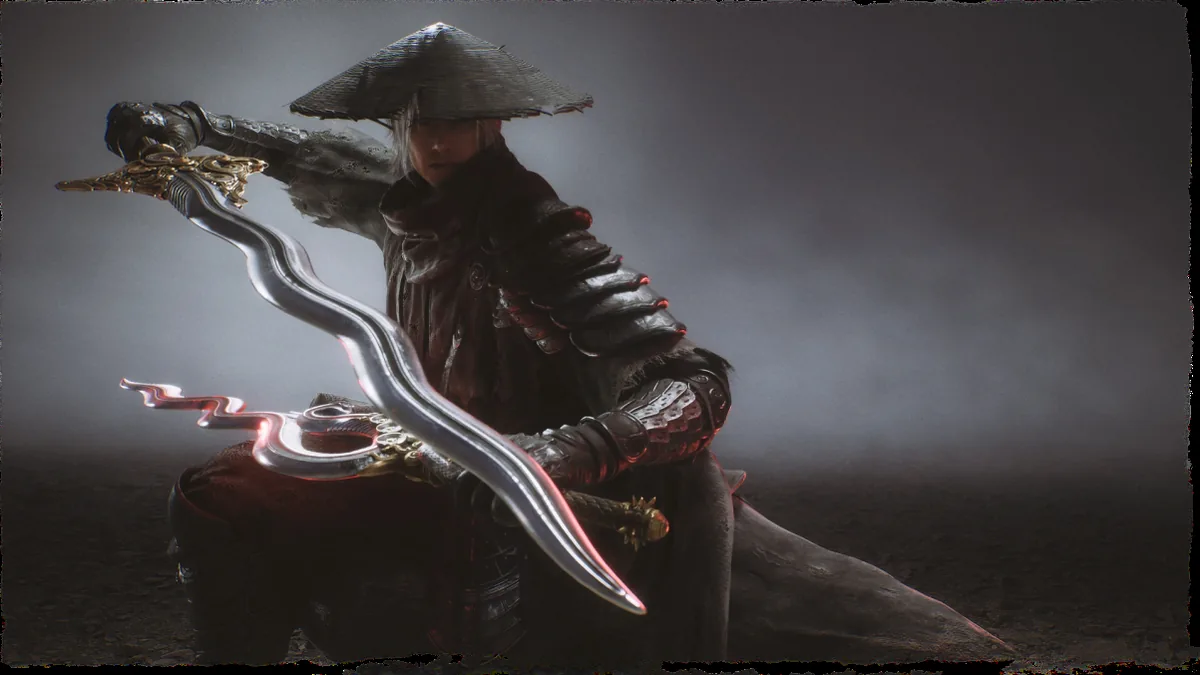
In Sony’s State of Play broadcast at 10:00 on August 18, 2026, Phantom Blade Zero took the stage as a headline act, co-presented by Donnie Yen, with a demo running over 18 minutes. This article records the whole presentation as a segment-by-segment timeline — a catch-up map for anyone who missed the stream, and full background for the deep dives that follow. All segment descriptions are drawn from the public broadcast; the official replay is the word on details.
The Broadcast’s Overall Frame#
Before the segment walk, here is the shape of the whole thing: the 18 minutes divide into “opening worldview,” “story staging,” “standard combat,” “elites and seizing,” “boss fight,” and “art and release” — each flowing into the next to form a complete narrative-gameplay-showcase loop.
| Block | Role in the stream | Function |
|---|---|---|
| Opening & worldview | Sets the 66-day countdown and the plot | Builds the narrative hook |
| Story staging | Cutscenes, dialogue, mood | Deepens character and emotion |
| Standard combat | Multi-weapon combos, stances | Shows the combat feel |
| Elites & seizing | Elite design, weapon-seizing | Shows system depth |
| Boss fight | Moyuan in gameplay | Shows the peak experience |
| Art & release | Ink light, config, release news | Closes and announces |
The Segment-by-Segment Timeline#
In playback order, with key points and editorial observations for each segment, so you can locate them against the replay.
Segment 1: Opening and Donnie Yen#
The demo opens with Donnie Yen, whose star presence pulls the audience straight into the wuxia world. He is not only creative supervisor but also the core boss Moyuan, with full face and body capture. The opening’s job is to set the worldview’s tone.
| Key point | Content |
|---|---|
| The opener | Yen greets a global audience |
| His credentials | Creative supervisor + the boss Moyuan |
| Worldview tone | Dark wuxia, blood and storm, the 66-day countdown |
| Technique | A wuxia-cinema-style monologue |
Editorial note: using Yen’s on-camera appearance as the opening “token” is both star endorsement and a re-assertion of the “Hong Kong action bloodline” aesthetic label — a contrast with the reveal PV’s pure-gameplay opening, and a nod to the global broadcast’s PR mission.
Segment 2: The 66-Day Worldview#
The demo then lays down the protagonist’s core premise — a shattered heart, 66 days to live. This is the engine of the entire narrative and the first worldview fact the broadcast reinforced.
| Element | Notes |
|---|---|
| The protagonist | A swordsman framed for his master’s murder (Soul) |
| Core premise | A broken heart; 66 days left |
| Theme | “Prove the way with this body; find the heart with this life” |
| Narrative drive | The countdown’s urgency pushes everything |
Editorial note: the 66-day frame gives the revenge story a tension beyond the usual — not “I will have my vengeance” but “how do I prove my way before I die.” It underpins both pacing and level design downstream.
Segment 3: The Conspiracy and Factions#
Through cutscenes and dialogue, the demo sketches the conspiracy hanging over the martial world and the faction grudges around the protagonist — a high-information segment that sets up the story staging to come.
| Content | Role |
|---|---|
| The frame-up | Why the hero is the jianghu’s public enemy |
| Hunted by his school | The immediate external pressure |
| The grand plot | The hidden hand behind it all |
| The faction map | Major sects and their grudges surface |
Editorial note: compared with our story and worldview preview, the broadcast’s faction exposition is more three-dimensional — delivered through staging rather than narration, a more cinematic choice.
Segment 4: Story Staging and Dialogue#
A story scene follows, with the protagonist and key characters exchanging dialogue that advances motive and emotion. The staging is meticulous with light and shadow — a concentrated display of the ink-wash art.
| Element | Presentation |
|---|---|
| Format | Real-time cutscene staging |
| Dialogue | Motives, grudges, and choices collide |
| Mood | Ink light and scene palette carry emotion |
| Art | Guofeng imagery under the Kungfupunk lens |
Editorial note: the lighting in this scene deserves its own breakdown — see the ink-wash art analysis. The pacing keeps the restraint and negative space typical of Chinese wuxia cinema; no melodrama.
Segment 5: Standard Combat Demo#
Then the combat. The hero faces packs of enemies in an open scene, showing multi-weapon swaps, combos, stance switching, and Phantom Edges linking — the densest combat information of the day.
| System | Demo behavior |
|---|---|
| Weapon swaps | Real-time switching mid-fight |
| Combo rhythm | Fast starts, smooth derivatives, decisive recoveries |
| Stances | Offense-defense weighting shifts in combat |
| Phantom Edges | Skills insert into combos for bursts |
Editorial note: this segment shows the non-soulslike, fast-tempo combat identity in full — the opposite of soulslike reactive patience. Full depth in the combat deep dive.
Segment 6: Elites and Weapon-Seizing#
After the packs, an elite fight showcases “weapon-seizing” — defeat a strong enemy, take its weapon and signature moves. One of the game’s signature systems.
| Element | Presentation |
|---|---|
| Elite design | Distinct builds, motions, attack patterns |
| Seizing | Defeat yields weapon and moves |
| Skill growth | Seized moves join your library |
| Strategy | Different elites, different build choices |
Editorial note: seizing gives every elite fight a “collection” stake, which does a lot for replay value — every hard fight on the road can become part of your build.
Segment 7: The Boss Fight (Moyuan)#
The demo’s finale: Donnie Yen’s boss Moyuan in actual gameplay. A multi-phase fight showing the combat system’s peak experience and staging.
| Element | Presentation |
|---|---|
| The boss | Moyuan, performed by Donnie Yen |
| The moves | Real martial arts plus top-tier capture |
| Phases | Offense-defense rhythm shifts by stage |
| Staging | Moves and camera in cinematic sync |
Editorial note: the Moyuan fight is the demo’s emotional and kinetic double climax. Yen’s martial grounding gives the boss real “force” — hard to fake with pure CG, and the strongest argument for the capture pipeline. More in the combat deep dive.
Segment 8: Art and Scene Showcase#
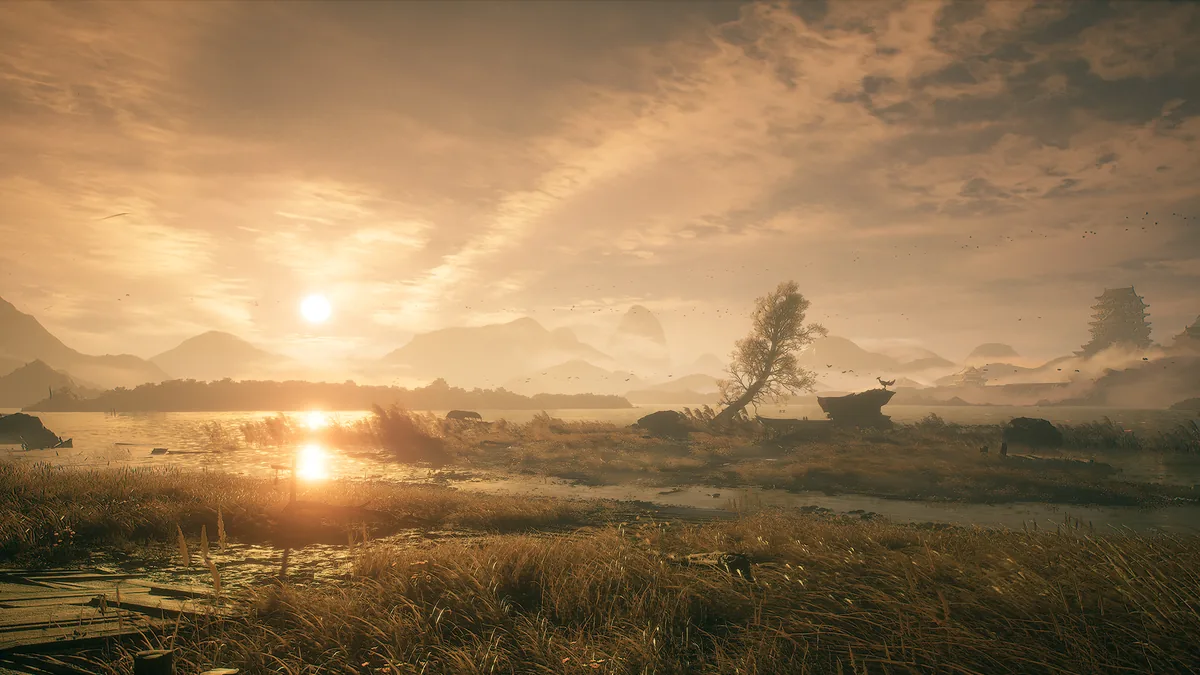
Between fights, the stream paraded several ink-wash scenes and lighting setups — underlining the art ambitions and laying ground for the ray-tracing features.
| Showcase | Role |
|---|---|
| Scene shifts | Different terrains and architecture |
| Ink light | Ray-traced mood on display |
| Weather and time | Mood instruments |
| Kungfupunk details | Martial-mechanical fusion up close |
Editorial note: these scenes are both art objects and the stage where ray tracing and path tracing show their worth — see the config analysis.
Segment 9: Config, Pre-Orders, Release#
The demo closes on release facts: ray-tracing config revealed (with the RTX 5080 4K60 mention), pre-orders open, and the October 29, 2026 date locked for PC and PS5.
| Info | Content |
|---|---|
| Ray tracing | Ray Tracing and Path Tracing supported |
| 4K performance | RTX 5080 cited for 4K60 |
| Pre-orders | Opened right after the stream |
| Release date | October 29, 2026 |
| Platforms | PC (Steam), PS5 |
Editorial note: pairing the tech selling point with the commercial beat is classic blockbuster cadence. Config details in the config analysis; pre-order numbers in the reactions report.
The Broadcast’s Key Facts, Summarized#
One table for quick reference:
| Item | What the stream revealed |
|---|---|
| Broadcaster | Sony State of Play |
| Co-presenter | Donnie Yen |
| Demo length | 18-plus minutes |
| Coverage | Story, worldview, combat |
| Yen’s role | Creative supervisor + the boss Moyuan |
| Core story | The 66-day countdown; the jianghu conspiracy |
| Combat | Multi-weapon, combos, stances, Phantom Edges, seizing |
| Ray tracing | RT and PT supported |
| 4K performance | RTX 5080 cited for 4K60 |
| Pre-orders | Opened after the stream |
| Pre-order heat | Topped Steam China and global within 1 hour |
| Release date | October 29, 2026 |
| Platforms | PC, PS5 |
How It Follows the Reveal PV#
The broadcast picks up cleanly from the reveal PV. The full comparison does the line-by-line; the headline: clear evolution in story depth, combat completeness, art maturity, and tech features.
| Dimension | Reveal PV stage | Broadcast stage |
|---|---|---|
| Story | Concept showcase | Full staged narrative |
| Combat | Fragments | Systematic deep demo |
| Art | Style established | Lighting tech deepened |
| Tech | Basic showing | Ray tracing debuts |
The Broadcast’s Key Presentation Moments#
Several segments deserve a second viewing on presentation merit alone.
Highlight 1: Yen’s Monologue and Entrance#
The opening monologue sets the emotional key. With Hong Kong-cinema cadence, Yen turns “sixty-six days” into a jianghu sentence, dropping the audience into the wuxia register immediately — a device serving both PR and worldview-building.
| Design | Effect |
|---|---|
| Live monologue | Builds trust and recognition |
| Wuxia cadence | Instant mood entry |
| The countdown | Names the core premise |
Highlight 2: Restraint in the Cutscenes#
The story scenes hold back — no dialogue-stuffing; emotion travels through imagery, light, and faces. Closer to cinema than to game exposition, and true to the wuxia literary tradition of negative space.
| Device | Effect |
|---|---|
| Light as narration | Emotion through changing light |
| Negative space | Room for imagination |
| Faces | Interior life on display |
Highlight 3: The Moyuan Fight’s Staging Burst#
The finale is the double climax. Yen’s martial motion fused with capture gives every boss move real “force,” and the camera rides the move changes into a highly watchable set piece.
| Element | Presentation |
|---|---|
| Martial force | The live-martial-arts flavor |
| Camera sync | Moves and framing locked |
| Phases | Staging escalates layer by layer |
How Story and Gameplay Interlock#
The broadcast’s weave of narrative and gameplay deserves its own note: the two support rather than interrupt each other.
| Device | Presentation |
|---|---|
| Story drives combat | The conspiracy explains why you fight |
| Combat feeds story | Seizing mirrors growth and choices |
| Alternating staging | Cutscenes and fights hand off cleanly |
| Unified mood | Ink light runs through everything |
Editorial note: this “story as prelude, gameplay as body, presentation as flourish” arrangement is how mature blockbusters stage their reveals — and hints at the shipped game’s narrative rhythm.
A Data Postscript#
Beyond content, the immediate market response is worth recording: pre-orders topped Steam China and global within an hour — a key data point for the game’s heat.
| Observation | Data | Reading |
|---|---|---|
| Chart top | Within 1 hour | Fast heat conversion |
| China top | Domestic chart | Strong local support |
| Global top | Worldwide chart | High international attention |
| Date locked | October 29 | The slot was set |
The deep analysis lives in the reactions report.
Where to Go Next#
This page is the full-flow record; the other pages go deep on one dimension each:
| Your need | Jump to |
|---|---|
| Combat detail | Combat System Deep Dive |
| Hardware questions | Ray Tracing Config Analysis |
| The visuals | Ink-Wash Art, Frame by Frame |
| Compare with the reveal | Vs. the Reveal PV |
| The heat | Reactions & Pre-Order Report |
Closing Thoughts#
Those 18 minutes were Phantom Blade Zero’s most complete global appearance to date — worldview setup, story staging, combat demo, art and tech showcase, then pre-orders and the release date, a full product-launch narrative in one sitting. For those who missed it, the timeline above is the catch-up map; for those who want more, the relay pages take each dimension apart in depth.