PBZ State of Play: Ink-Wash Art, Frame by Frame#
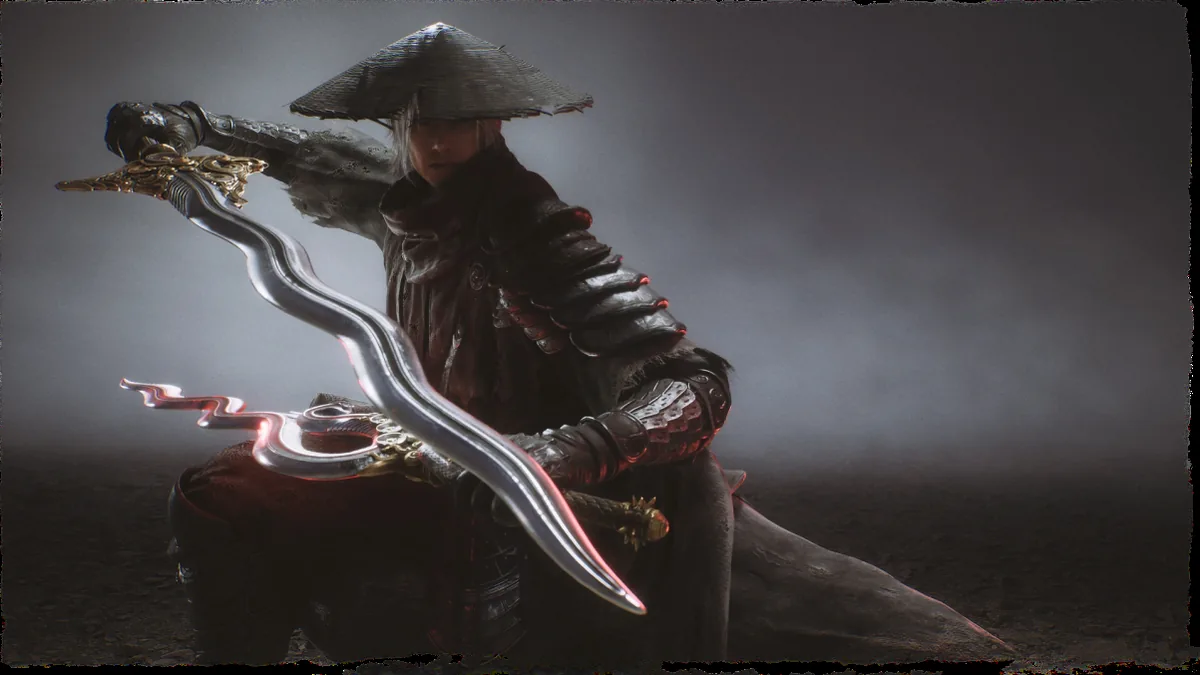
Beyond the combat and the hardware, the day’s State of Play was a visual feast of ink-wash wuxia. As the relay’s art piece, this article reads the footage frame by frame from the art editor’s chair: how S-GAME turns ink technique — brushwork, ink gradients, negative space — through the Kungfupunk lens, under Unreal Engine 5’s real-time lighting, into a visual language that could not be mistaken for anyone else’s. Beauty needs eyes to savor it and words to take it apart.
The Art in Overview: Ink Meets Kung Fu#
Phantom Blade Zero’s art is fundamentally a dialogue between “ink” and “kung fu.” Ink supplies the skeleton of the visual language — negative space, gradients, mood; Kungfupunk supplies the content symbols — blades, mechanisms, force. Fused under UE5’s real-time lighting, the result is classical and modern at once, expressive yet grounded.
| Art element | Ink source | Kungfupunk source |
|---|---|---|
| Negative space | Traditional ink painting | Cinematic framing |
| Gradient wash | Ink technique | Light spilling away |
| Force | Calligraphic power | Martial energy release |
| Mechanisms | Classical artifact forms | Punk machinery |
Ink Technique at Work#
The most striking feat of the broadcast: classical ink vocabulary translated into real-time imagery.
Brushwork Translated#
Ink brushwork is about force, rhythm, and variation — in-game, it becomes blade-light trajectories, the drift of robes, the arc of motion.
| Brush method | Ink expression | Game translation |
|---|---|---|
| Center tip | Round, upright strokes | Blade-light arcs |
| Side tip | Paused, angled strokes | Move redirections |
| Flying white | Broken, streaking marks | Speed after-images |
| Dry brush | Rough, forceful texture | Ruined-scene surfaces |
The Layers of Ink#
Ink holds five colors — its density and wetness map to the image’s depth and light layers.
| Ink method | Ink layer | Game expression |
|---|---|---|
| Thick ink | Heavy, solid | Near subjects, shadows |
| Light ink | Soft, vague | Distance, mist |
| Broken ink | Bleeding blends | Light effects into fog |
| Scorched ink | Darkest accents | Key focal points |
Composition (Zhangfa)#
Classical composition governs the placing of things — in-game, framing, negative space, and subject placement.
| Principle | Ink layout | Game expression |
|---|---|---|
| Negative space | Emptiness breathes | Sky, scene gaps |
| Density rhythm | Sparse versus dense | Element distribution |
| Open and close | Echoing forms | Framing and camera moves |
| Solid-void pairing | Subject against ground | Hero versus background |
Kungfupunk on Screen#
Kungfupunk is the game’s core aesthetic label, and the broadcast stages it deliberately.
Where Martial Meets Machine#
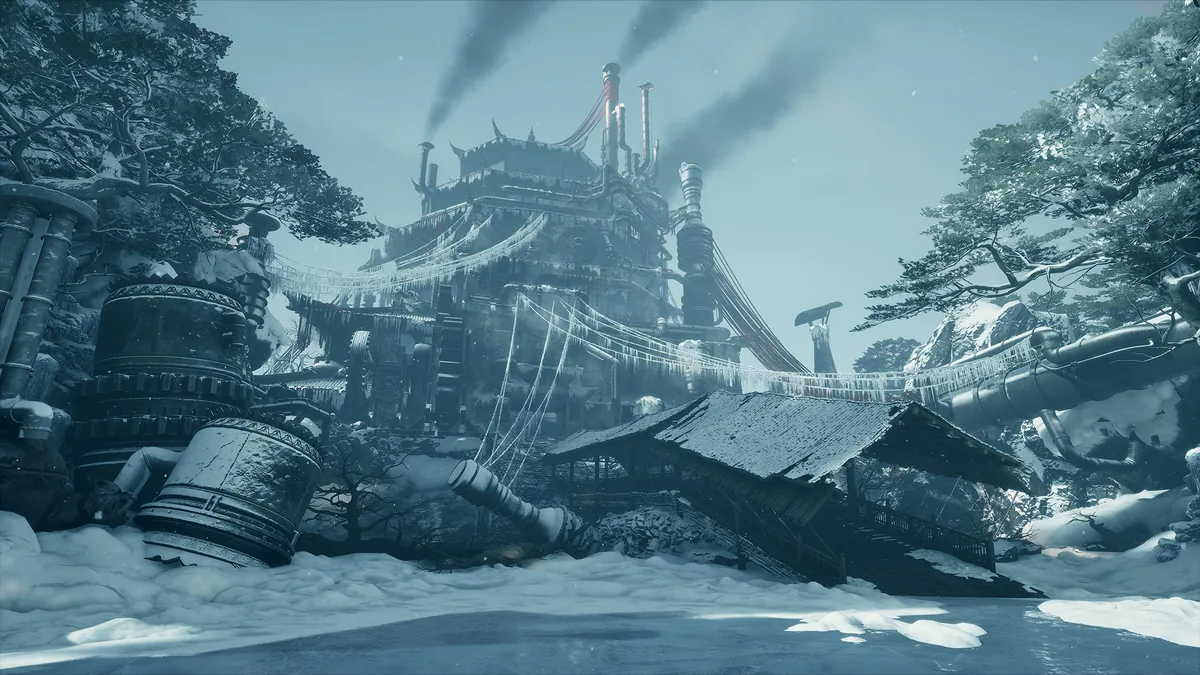
The heart of Kungfupunk is fusing martial arts with machinery — the footage puts classical wuxia elements beside mechanical ones, blended.
| Element | Wuxia property | Punk property |
|---|---|---|
| Weapons | Traditional blades | Mechanical structures |
| Clothing | Classical robes | Hard plating |
| Scenes | Ancient gardens and halls | Mechanism devices |
| Mechanism arts | Classical devices | Punk-grade power |
A Symbol System of Its Own#
The game builds a visual symbol set to speak Kungfupunk:
| Symbol | Meaning | Presentation |
|---|---|---|
| Blade and mechanism | Martial and machine | Weapons fused with devices |
| Ink and mechanism | Old and new | Machines inside ink landscapes |
| Force trails | Martial power | Motion after-images |
| Spilling light | Mood | Light-effect language |
Light and Color#
UE5’s real-time lighting gives the ink-wash wuxia a modern luminosity — the broadcast’s light work is layered.
Light as Narration#
Light is not just tech; it narrates — carrying both emotion and environmental storytelling.
| Light use | Visual effect | Narrative role |
|---|---|---|
| Warm-cold contrast | The scene’s emotional key | Chill or warmth |
| Backlit silhouettes | Crisp subject outlines | Heroic stature |
| Diffuse mist | Softened layers | Mystery |
| Scattered light spots | Living frames | A sense of breath |
The Color Zones#
The palette is restrained: a dark base with pointed accents, building strong contrast.
| Color lean | Where | Emotion |
|---|---|---|
| Cold gray-blue | The jianghu’s nights | Chill, oppression |
| Ink black | Subjects and shadow | Mystery, weight |
| Blood red | Fights and killing intent | Violence, tension |
| Warm gold | Devices and light effects | Power, hope |
Scenes and Mood#
The broadcast paraded several ink-wash scenes, each built with mood discipline.
Scene Types#
| Scene type | Mood | Aesthetic key |
|---|---|---|
| Jiangnan water towns | Damp, misty | Gradient-wash texture |
| Mountain temples | Deep, solemn | Negative space and layers |
| Mechanism dungeons | Mysterious, trapped | Kungfupunk elements |
| Battlefield ruins | Desolate, tragic | Dry-brush texture |
Mood Instruments#
| Device | Role |
|---|---|
| Mist | Layers and mystery |
| Rain | Wet texture and emotion |
| Wind | Motion and life |
| Light shifts | Time and emotion flowing |
Selected Frames#
A few representative shots from the broadcast, read one by one — the art bar of the whole game in miniature.
Frame 1: The Backlit Entrance#
The hero enters against the light, rim-lit and clear, with light spilling through the background — instant stature. The backlit silhouette sells the resolve of a man proving his way on borrowed time.
| Element | Reading |
|---|---|
| Backlit silhouette | Subject and stature amplified |
| Ink-dark background | Negative space and mood |
| Drifting robes | Living motion |
| Centered framing | The hero’s centrality |
Frame 2: Blade-Light as Brushstroke#
In combat, blade-light crosses the frame like an ink brushstroke — martial force with ink-wash expressiveness in one motion.
| Element | Reading |
|---|---|
| Blade arc | Center-tip brush energy |
| After-images | Flying-white streaks |
| Solid and void | Realism meets expression |
| Rhythm | Brushwork’s stops and turns |
Frame 3: Jiangnan Rain-Night Wash#
A rainy Jiangnan night — mist and rain weaving into a wet, gradient-washed texture. The best single representative of the ink aesthetic.
| Element | Reading |
|---|---|
| Mist gradients | Broken-ink bleeding |
| Rain texture | Wet atmosphere |
| Warm-cold light | Emotional layers |
| Voided distance | Depth |
Frame 4: The Moyuan Fight’s Force Burst#
The boss fight frames channel martial force through fist, foot, and light — combat tension made visible.
| Element | Reading |
|---|---|
| Force trails | Martial energy visualized |
| Light bursts | Combat tension |
| Camera sync | Staging rhythm |
| Ink bleeds | Emotional shading |
The Visual Evolution from the Reveal PV#
The day’s footage is a clear step up from the reveal PV — the full comparison has the complete table; the art-desk verdict: more mature imagery, finer light, more unified mood.
| Art dimension | Reveal PV stage | Broadcast stage |
|---|---|---|
| Light precision | Basic | Finer |
| Ink expression | Style set | Technique deepened |
| Scene density | Concept shots | Rich detail |
| Mood unity | Fragments | Coherent whole |
What Makes the Style Distinct#
Among Chinese wuxia games — and action games worldwide — this art is unusually recognizable. The distinctiveness comes from the rare ink-plus-Kungfupunk pairing.
| Distinctiveness | Notes |
|---|---|
| Rare pairing | Ink-wash wuxia + Kungfupunk |
| Unified language | Ink runs through everything |
| Tech backbone | UE5 ray tracing |
| Cultural voice | Eastern aesthetics, modernized |
Editorial note: where others chase realism or spectacle-stacking, Phantom Blade Zero builds its world with restrained Eastern aesthetics — that “painted with restraint” choice reads as distinctive in an era of ever-fuller frames.
The Cultural Layer#
The art is not just pretty; it carries cultural expression — traditional ink art meeting modern game technology, Eastern aesthetics translated for the present.
| Cultural element | Art presentation | Modern translation |
|---|---|---|
| Ink mood | Negative space, gradients | Lighting technology |
| Wuxia spirit | Chivalry, force | Action staging |
| Mechanism arts | Classical devices | Punk machinery |
| Jianghu feeling | Desolation, solitude | Mood building |
Closing Thoughts#
The day’s State of Play was a visual feast of ink-wash wuxia. With its double genome of “ink + Kungfupunk” under UE5’s real-time lighting, Phantom Blade Zero built a guofeng visual language of rare identity — from brushwork, ink layers, and composition, through light, color, and scene mood, down to individual frames. Every image carries S-GAME’s fidelity to Eastern aesthetics and its probing of technical edges. For players who love wuxia and guofeng beauty, this was more than an October blade-storm — it was a poetic journey for the eyes.