PBZ Lion Dance Boss: Difficulty Design Explained#
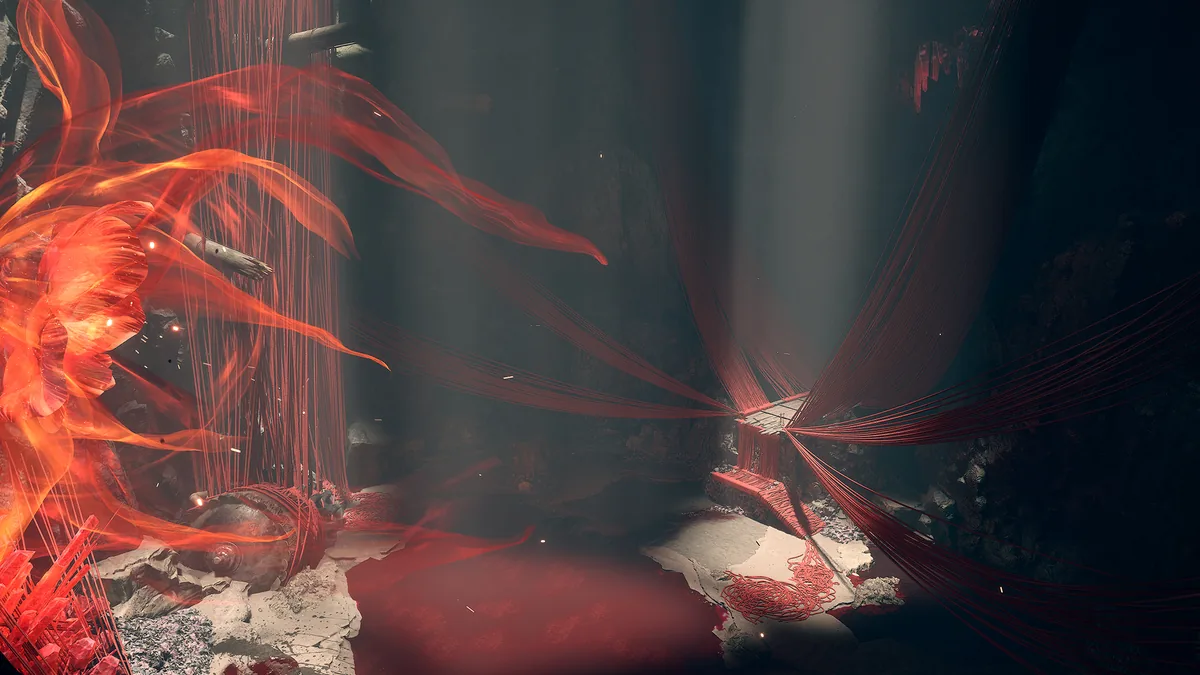
Beyond its spectacle, the lion dance boss revealed at the August 18 State of Play has a difficulty design worth chewing on. The design thinking disclosed in the broadcast and follow-up explainers, plus a systems read of the fight’s mechanics, can reconstruct its full logic within the game’s combat balance. This article analyzes the difficulty curve, the first-try-kill traps and the forgiveness mechanics from a systems perspective, as mechanism-level reference for the real fight.
The Overall Design Idea#
First, the frame. The disclosed difficulty design follows a “set the rhythm, raise the pressure, test the system” progression — closely aligned with Phantom Blade Zero’s fast, non-soulslike identity.
| Design stage | Approach | Purpose |
|---|---|---|
| Set the rhythm | Probing small moves | Let players learn the wind-ups |
| Raise the pressure | Feints and chains escalate | Increase difficulty |
| Test the system | First-try kills, dense phases | Verify mastery |
The key is that players progress inside growing familiarity rather than facing an alien high-intensity threat at second one — the difficulty is designed and traceable, not number-stacking.
The Difficulty Curve#
The curve is not a gentle line but a staircase. Stage by stage:
Stage One: a Low-Difficulty Start#
The fight opens with probing small moves — low density, obvious wind-ups, ample time to observe. Difficulty is low; the purpose is building your sense of the rhythm.
| Difficulty factor | Stage-one behavior |
|---|---|
| Attack density | Sparse |
| Wind-ups | Obvious |
| Difficulty | Low; observable |
| Purpose | Building rhythm sense |
The Middle: the Climb#
Mid-fight, feint-and-real play and the first pressure chains appear — density up, tempo faster, and you must start reading moves and telling fake from real. The curve’s first visible climb, where the challenge registers.
| Difficulty factor | Mid-fight behavior |
|---|---|
| Attack density | Rising |
| Core challenge | Reading feints, judging wind-ups |
| Difficulty | Medium; requires focus |
| Purpose | Testing read ability |
Stage Two: the Peak#
After the phase shift, pressure chains and point-blank pursuit arrive — speed and range jump, the drums turn urgent, breathing room compresses to the limit. This is the curve’s peak and the highest first-try-kill risk.
| Difficulty factor | Stage-two behavior |
|---|---|
| Attack density | High-density continuous |
| Core challenge | High-density response |
| Difficulty | High; strong pressure |
| Purpose | Testing overall mastery |
The Curve’s Shape#
Overall: a slow start, a fast climb, a peak. It avoids an early wall while guaranteeing end-stage pressure — a relatively mature difficulty design.
| Stage | Level | Curve shape |
|---|---|---|
| Stage one | Low | Gentle start |
| Middle | Medium | Visible climb |
| Stage two | High | Reaches the peak |
The First-Try-Kill Traps#
A “first-try kill” is dying on first sight because the mechanics are unknown. The lion boss’s traps concentrate in two places:
The Feint Trap#
Feint-and-real play is the classic first-try-kill source here: on first sight the feint baits an early move and the real strike lands. “Tricked first, taught second” is the most common shape of a fair first-try kill.
| Trap element | Presentation | First-try impact |
|---|---|---|
| The feint | Small head sway | Baits an early move |
| The real strike | Weight forward, true attack | Hits the baited player |
| The lesson | Learn the weight signals | Handle it on later tries |
The Chain Squeeze#
Stage two’s pressure chains are the other trap cluster: without a response rhythm or reserved stamina, the chains knock you down in seconds.
| Trap element | Presentation | First-try impact |
|---|---|---|
| Pressure chains | Pounce into sweep into pursuit | No breathing room |
| Stamina | Not reserved | Cannot sustain dodging |
| The lesson | Keep reserve; listen to drums | Handle it on later tries |
Are the Traps Fair?#
From a design view these traps are not meant to bully — they teach mechanics through failure. Feints teach weight-reading; chains teach reserve and drum-listening. Each first-try kill is a mechanics lesson, a common and legitimate difficulty tool across action games.
| Trap | What it teaches | Design verdict |
|---|---|---|
| The feint trap | Read weight; tell fake from real | Fair teaching |
| The chain squeeze | Keep reserve; listen to drums | Fair teaching |
The Forgiveness Mechanics#
Forgiveness decides how much room you have after a mistake. The lion boss’s design gives it through several channels:
Readable Wind-Ups#
Every major move carries a wind-up, and feint versus real differ detectably in weight and amplitude. That readability buys reaction and judgment time — the core source of forgiveness.
| Forgiveness source | Presentation | Function |
|---|---|---|
| Readable wind-ups | Moves telegraph clearly | Reaction time |
| Distinguishable feints | Weight and amplitude differ | A basis for judgment |
The Phase-Shift Buffer#
The phase shift is a relatively safe node: the upgrade comes with a brief pause where you can breathe, reset, and prepare for the new phase.
| Forgiveness source | Presentation | Function |
|---|---|---|
| Shift pause | A short stop at upgrade | Breathing room |
| State reset | Use the pause to adjust | Recover your rhythm |
Dodge and Stamina Management#
Dense phases lean heavily on dodging, and dodging is stamina-gated. Managing stamina is the forgiveness keystone — reserve enables sustained dodging, exhaustion collapses your margin.
| Forgiveness source | Presentation | Function |
|---|---|---|
| Stamina management | Keep a reserve | Sustains dodging |
| Over-consumption | Stamina drained | Margin collapses |
How It Fits Phantom Blade Zero’s Combat System#
The lion boss’s difficulty does not stand alone — it interlocks with the game’s overall combat system:
Matched to the Fast Identity#
The whole fight builds on “fast and dense”, consistent with the game’s non-soulslike, fast-tempo positioning — pressure from rhythm and mechanics, not soulslike stat walls.
| System dimension | Lion boss behavior | Fit with identity |
|---|---|---|
| Rhythm | On-beat chains with rises and falls | Matches fast tempo |
| Mechanics | Feints and reads | Emphasizes free response |
| Difficulty | Staircase climb | Not number-stacking |
The NG+ Connection#
Per earlier disclosures, New Game Plus unlocks extra boss phases. The lion boss may well gain a higher-intensity extra phase in NG+, extending this curve for veterans.
| Item | Detail |
|---|---|
| NG+ mechanic | Extra boss combat phases unlock |
| Lion boss expectation | Possibly a stronger extra phase (prediction) |
| Difficulty impact | The curve extends into NG+ |
Whether the lion boss gets a new NG+ phase is not officially confirmed — this is a reasonable inference from the existing mechanic, reference only.
Mechanism-Level Strategy#
From the analysis, a targeted strategy set:
| Strategy | Principle | Targets |
|---|---|---|
| Learn the rhythm first | Use the easy stage to build tempo sense | Stage one |
| Focus on the feints | Weight signals are the core judgment | The middle |
| Reserve stamina | Sustains high-density dodging | Stage two |
| Listen to the drums | Drum speed tracks attack intensity | All stages |
| Use the shift pause | Reset your state at phase transitions | Phase shifts |
The set is a systems read of the mechanics; real results depend on the shipped game’s feel.
Reading the Official Explainers#
A supplementary read of the difficulty information officials disclosed:
“Shallow to Deep”, Not a Wall#
The demo’s curve is a “shallow to deep” design — a low-difficulty start that builds rhythm, then steps up to the peak. It is the opposite of an opening-wall design, prioritizing gradual mastery.
| Design orientation | Presentation | Verdict |
|---|---|---|
| Shallow to deep | Easy start, stepping pressure | A friendlier challenge |
| Opening wall | Max pressure at second one (hypothetical) | Harder, more gatekeeping |
Teaching Difficulty, Not Stat Difficulty#
The fight’s difficulty is “mechanics-teaching” rather than “stat-crushing”: the tests concentrate in learnable systems — feint recognition, rhythm prediction, stamina management — where study visibly improves your performance.
| Difficulty type | Presentation | Room to learn |
|---|---|---|
| Mechanics-teaching | Feints, rhythm, stamina | Clear gains with study |
| Stat-crushing | High damage, high HP (hypothetical) | Gains gated by gear |
Adjusting Your Expectations#
A few expectation adjustments for a better experience against this fight:
| Adjustment | Why |
|---|---|
| Accept first-try kills | They are mechanics lessons, not insults |
| Learn actively | Read your deaths for tells and rhythm |
| Pace yourself | Adapt along the curve, stage by stage |
| Stay realistic | The shipped game’s feel is the final word |
Understanding the difficulty as “a mechanics lesson” rather than “a wall” makes the path to victory much easier to find.
Where to Go Next#
With the difficulty picture in hand, the fight’s other faces:
- The moves themselves and the counter windows: moveset and combo logic.
- How the demo builds rhythm and pressure: frame-by-frame demo breakdown.
- The visual and cultural roots of the lion’s presentation: art and cultural reading.
- The overall buying picture: purchase and platform guide.
Phantom Blade Zero Closing Note#
The lion dance boss’s difficulty design is a mature piece of combat balancing: a “shallow to deep” curve, feint traps and pressure chains for first-try kills and a high-difficulty peak, with readable wind-ups, phase buffers and stamina management providing the forgiveness — a complete system with teaching, challenge and room to maneuver. The game released on October 29, 2026 — for the complete picture of this fight, the in-game experience is the final word.