PBZ Lion Dance Boss: Frame-by-Frame Demo Breakdown#
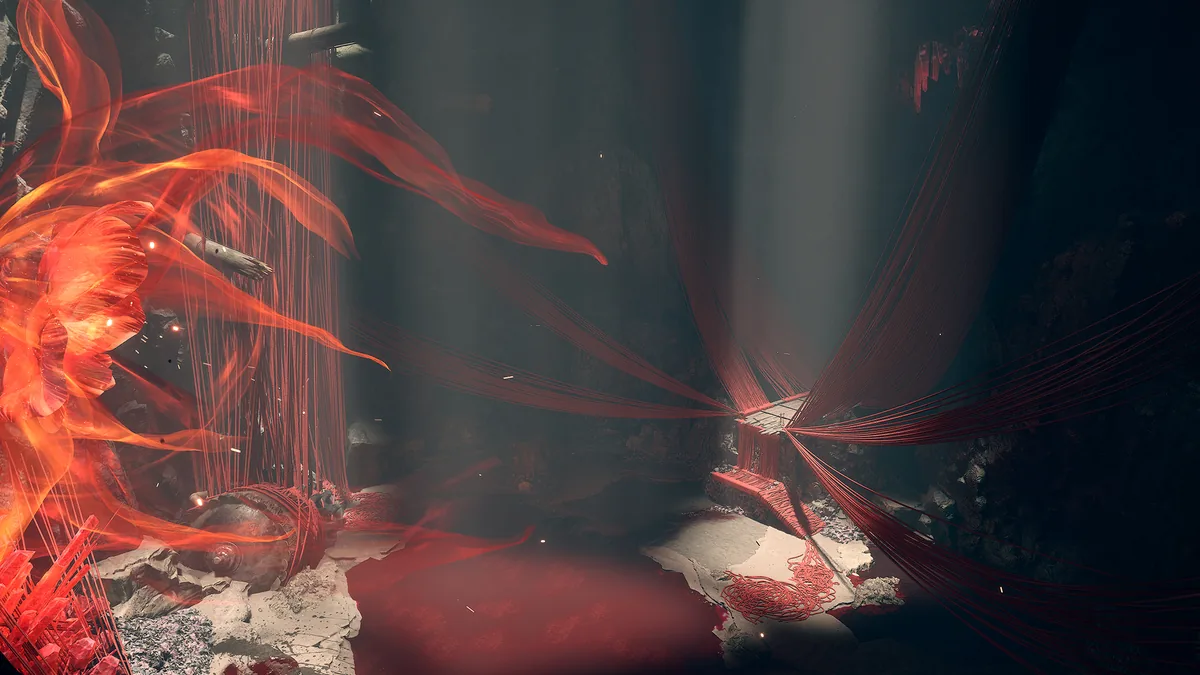
At Sony’s State of Play on August 18, 2026, Phantom Blade Zero revealed this never-before-shown lion dance boss fight as a complete gameplay demo. As a player who has lived in action games for years, I finished my first watch and immediately rewound to rewatch it frame by frame, several times over. From that veteran-action-player perspective, this article takes the demo apart along its timeline — segment by segment — through its animation design, moves logic, rhythm and pressure, and phase changes. All segment descriptions are compiled from the public broadcast; for exact details, the official replay prevails.
Overall Impression Before the Breakdown#
Before the segment-by-segment walk, the overall impression. The lion dance boss’s defining trait is how it stitches the ceremony of folk lion dance onto the pressure of a hard boss fight — a rhythm experience with strong cultural identity that never loses action-game tension.
| Dimension | First impression | Verdict |
|---|---|---|
| Visual | Ornate lion head, flowing costume | Highly distinctive; strongly Chinese |
| Movement | Feints and footwork, drumbeat pressure | More layered than pure-strength bosses |
| Pressure | Relentless chains, point-blank pursuit | Sustained, high-intensity |
| Phases | At least two, escalating | Complete performance design |
More than “fighting a monster”, it reads as “dancing against a lion dancer” — that fusion of folk ceremony into combat choreography is what grabs you.
The Timeline, Segment by Segment#
In playback order, each segment with its key points and the editorial observations, so you can line them up against the replay.
Segment One: Entrance and Pose#
The demo opens with a staged entrance. The lion boss leaps out from deep in the arena — head swaying, costume rolling, drums rising. The camera holds a close-up of the lion head, then pulls back to the full body: a “main character on arrival” aura.
| Key point | Detail |
|---|---|
| Entrance | A leap from the arena’s depth |
| Core props | Lion head, costume, drums |
| Camera | Head close-up first, then full body |
| Atmosphere | Ceremonial; pressure starting to build |
This segment’s most important job is establishing the boss as a “performer” — not a beast, but an opponent whose combat language is the lion dance. That identity runs through the whole fight.
Segment Two: Probing#
After the entrance comes a restrained, probing exchange. Protagonist and boss keep distance, both reading the other’s tempo; the boss sways the head, makes small footwork moves, while the protagonist throws testing pokes for openings.
| Key point | Detail |
|---|---|
| Tempo | Restrained; both sides feel each other out |
| Boss moves | Small footwork, head sways |
| Protagonist | Testing pokes, watching for openings |
| Purpose | Setting the fight’s tempo baseline |
Short as it is, this window matters — it is your chance to learn the boss’s tells. Our advice: watch the head’s pre-sway here and get ready for the pressure chains that follow.
Segment Three: First Pressure Chain#
The probing ends and the boss launches its first pressure chain: head lunges, aerial pounces, on-beat strikes in succession, forcing dodges and blocks — with one protagonist counter-combo spliced in to show the counter window.
| Key point | Detail |
|---|---|
| Attacks | Head lunge, aerial pounce |
| Tempo | Chains locked to the drumbeat |
| Answers | Dodge, block, counter-combo |
| Windows | Counter chances inside the chain gaps |
This is the demo’s first high point, and where the “rhythm” registered for me — the pressure is not mindless mashing, but weighted, on-beat pressing with light and heavy beats.
Segment Four: Feint and Real#
Mid-demo, the boss shows its feint-and-real footwork: the head fakes a strike to bait a reaction, then the real attack comes from the side. Feints and real strikes alternate, making pure blocking unreliable — you have to read the tells.
| Key point | Detail |
|---|---|
| Core mechanic | Feint-and-real footwork |
| The feint | Head sway to bait an early move |
| The real strike | A true attack from the side |
| The test | Read the wind-up, tell fake from real |
This is what truly separates the lion boss from ordinary strength bosses, and the difficulty curve’s first visible climb — combat upgrades from “hitting marks” to “reading minds”, spectacle and pressure rising together.
Segment Five: Chains and the Chase#
After the feints comes the high-intensity chain phase: pounces, sweeps and point-blank pursuit strung together, the protagonist rolling and dodging for air, fast cutting amplifying the suffocating pressure.
| Key point | Detail |
|---|---|
| Tempo | High-intensity continuous chains |
| Boss moves | Pounce, sweep, point-blank pursuit |
| Answers | Rolls, dodges, grabbing air |
| Editing | Fast cuts that amplify the pressure |
This is the demo’s pressure peak and the highest first-try-kill risk: the chains leave almost no breathing room, and once your tempo collapses you can be knocked down in seconds.
Segment Six: the Phase Shift#
Late in the demo, the boss shifts phases into a stronger state — the head’s presentation, the drum tempo, the attack speed and range all change visibly, and the protagonist must re-adapt.
| Key point | Detail |
|---|---|
| The shift | Phase upgrade, presentation intensifies |
| Lion head | More active; stronger presence |
| Drums | Faster, more urgent |
| Attacks | Speed and range up |
The phase shift shows how complete the fight’s design is — not one flat curve but visible intensity stairs, from probing to chains to the phase-two chase, each step rising.
Segment Seven: the Closing Beat#
The demo closes on a finishing performance: the protagonist’s key counter lands, the boss’s offense is briefly broken, and the camera gives the lion head close-ups and atmosphere shots — a period on the performance, space left for what comes next.
| Key point | Detail |
|---|---|
| The close | A key counter interrupts the offense |
| Camera | Head close-ups, atmosphere shots |
| Function | Wraps the performance; leaves room |
| Information | More to come from officials |
Brief as it is, the closing beat lifts the whole thing from “a demo clip” to “a performance with a beginning, middle and end” — Phantom Blade Zero’s consistent standard for boss presentation.
Frame-Level Details Worth Watching#
Beyond the macro timeline, several frame-level details deserve their own attention:
The Weight of the Lion Head#
The lion head is no floaty ornament — it carries visible weight. Every lunge and pounce shows a wind-up, a downward press and a rebound, and with the costume’s flow the boss feels ceremonial and physically real at once.
| Detail | Presentation | Function |
|---|---|---|
| Wind-up | The head draws back before striking | Readable attack tells |
| Press | The head bears down on the strike | Selling the weight |
| Rebound | The head springs back after | Layering the motion |
The Drums Drive the Tempo#
Drums accompany nearly the whole fight — not background music but attack-tempo signals: pressure chains land on the beat, so the drums let you anticipate the rhythm.
| Detail | Presentation | Function |
|---|---|---|
| Beat landing | Attacks fall on the drumbeat | Rhythm anticipation |
| Tempo shifts | Drum speed tracks attacks | Intensity cues |
| Phase two | Drums turn urgent | Amplified pressure |
Telling Feint from Real#
The feint-and-real game is the fight’s core difficulty. The wind-ups are similar but not identical — read the head’s sway amplitude and the body’s weight transfer.
| Detail | Feint wind-up | Real wind-up |
|---|---|---|
| Head | Smaller sway | Larger sway |
| Weight | Backward, recovering | Forward, pressing down |
| Tempo | Slower, with a pause | Faster, more connected |
Rhythm and Pressure Analysis#
The two most important experiential dimensions of this fight, taken separately:
Rhythm: Striking on the Beat#
The boss’s tempo is not uniform — it has light and heavy “on-beat” moments: small probing moves in the troughs, pressure chains at the peaks, feint-and-real tempo shifts in between. The fight breathes without losing tension.
| Phase | Tempo trait | Player experience |
|---|---|---|
| Probing | Relaxed, small moves | Comfortable, observable |
| Chains | Tight, continuous | Tense, must respond |
| Feints | Shifting, alternating | Must read |
| Phase two | Urgent, dense | High pressure |
Pressure: the Point-Blank Chase#
The pressure comes mainly from point-blank continuity: the boss rarely lets you open distance, pounce to sweep to pursuit with almost no gaps, your breathing room compressed to the limit.
| Pressure source | Presentation | Player stress |
|---|---|---|
| Continuous chains | Pounce into sweep | No breathing room |
| Point-blank pursuit | The chase stays on you | Cannot open distance |
| Urgent drums | Tempo quickens | Psychological pressure |
| Feint ambiguity | Must read | Cognitive load |
Reading the Phase Changes#
Phase design is one of the fight’s core highlights. From the demo, at least two visible intensity shifts:
Phase One: Probing and Feints#
Phase one is probing and feint-and-real play at a controllable tempo — your window to learn the boss’s tells. The difficulty here is telling fake from real so the feints don’t bait you.
Phase Two: Chains and the Chase#
Phase two brings continuous chains and point-blank pursuit — attack speed and range climb, the drums turn urgent, and the challenge upgrades from “reading” to “dense response”.
| Dimension | Phase one | Phase two |
|---|---|---|
| Tempo | Probing, feints | Chains, pursuit |
| Attack density | Relatively sparse | High-density continuous |
| Drums | Measured | Urgent |
| The test | Telling feint from real | High-density response |
Practical Takeaways#
From this demo, a few pieces of advice with real-fight value:
| Advice | Why |
|---|---|
| Listen to the drums first | They telegraph the attack rhythm |
| Tell feint from real | Watch sway amplitude and weight transfer |
| Dodge well | In dense phases, dodge over block |
| Grab the windows | Chain gaps are counter chances |
| Keep stamina in reserve | Phase two demands sustained dodging |
These are drawn from the demo; the shipped game’s feel prevails. For deeper moves logic and counter windows, see moveset and combo logic; for the difficulty curve and forgiveness mechanics, see difficulty design explained.
Against the Other Bosses#
Setting the lion dance boss beside Phantom Blade Zero’s other shown boss — Donnie Yen’s Demon Abyss — clarifies its differentiated identity:
| Dimension | Demon Abyss | Lion dance boss |
|---|---|---|
| Cultural core | Live-action wuxia, Donnie Yen | Folk lion dance tradition |
| Movement character | Sharp, explosive | Footwork, feints |
| Tempo | Fast, direct | On-beat, with rises and falls |
| Visual | Live-action motion capture | Lion head, costume, drums |
Demon Abyss is “the sharpness of a man”; the lion boss is “the rhythm of a ceremony” — together they cover two different faces of Phantom Blade Zero’s action system.
Phantom Blade Zero Closing Note#
The lion dance boss is one of Phantom Blade Zero’s most distinctive pieces of action choreography: folk ceremony stitched onto boss-fight pressure, with on-beat rhythm, feint-and-real variation and stepped intensity delivering a fight that is culturally flavored without losing action tension. The game released on October 29, 2026 — for the complete picture of this fight, the in-game experience itself is the final word.