PBZ Lion Dance Boss: Art and Cultural Reading#
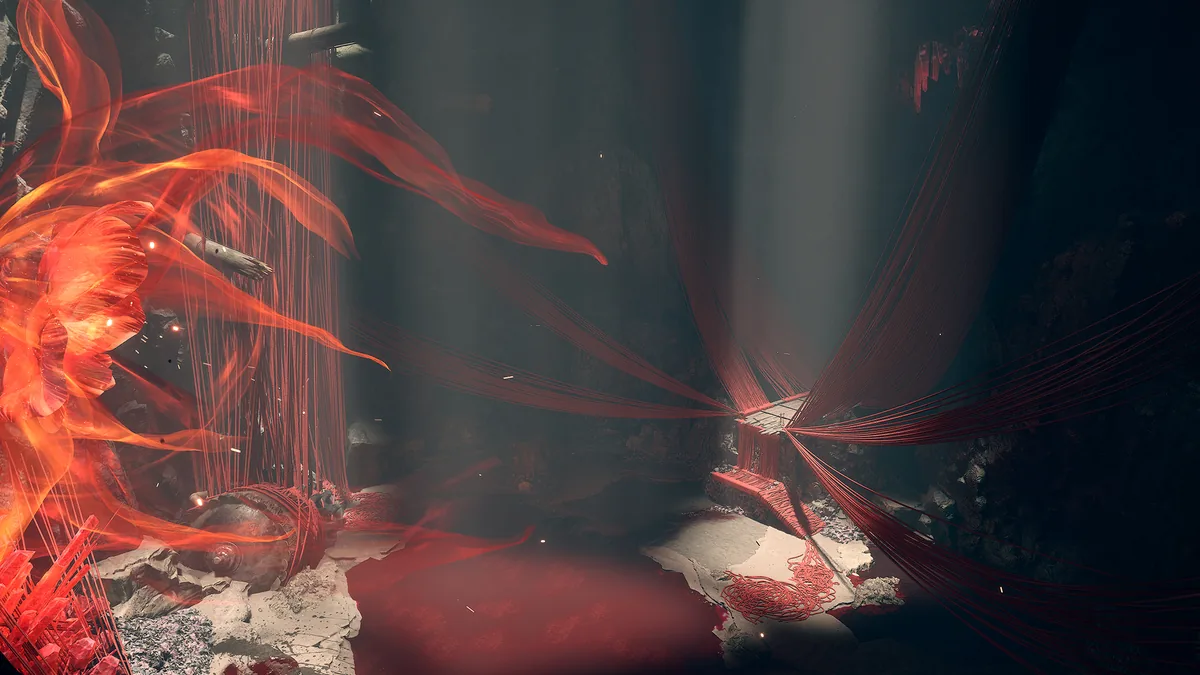
As an old player who has drifted through Chinese online games for over a decade — from early MMOs to naval warfare titles — I have seen plenty of works waving the “Chinese style” flag while going no deeper than surface-level symbol stacking. So when Phantom Blade Zero revealed this lion dance boss at the August 18 State of Play, I paused the stream almost immediately and went frame by frame over the lion head, the color, the light. What this performance showed me is that the lion dance is not just a “folklore prop” — it is a visual language that can unify deeply with ink-wash wuxia aesthetics. From an art editor’s perspective, here is my reading of this boss’s art and culture.
The Lion Dance: Not a Symbol, a Language#
Before the frame analysis, why this theme matters to me. In Chinese folk tradition the lion dance is inherently a “conveying spirit through form” performance art — it tells no stories in words; it carries emotion and rhythm through the head’s sway, the body’s footwork, the weight of the drumbeats. And that expressive mode is exactly where ink-wash wuxia aesthetics live.
| Dimension | Folk lion dance | Ink-wash wuxia |
|---|---|---|
| Expression | Spirit through form | Spirit through form |
| Core medium | Head, body, drums | Brushstroke, blank space, ink |
| Emotion carried | Festive, mighty, nimble | Stark, expressive, atmospheric |
| Shared aesthetic | Expressive, spirit-first | Expressive, spirit-first |
So the lion dance boss does not “cram lion elements into a fight” — it finds a shared expressive language where folk performance and wuxia art fuse under one visual logic. That is what makes it rare.
Color#
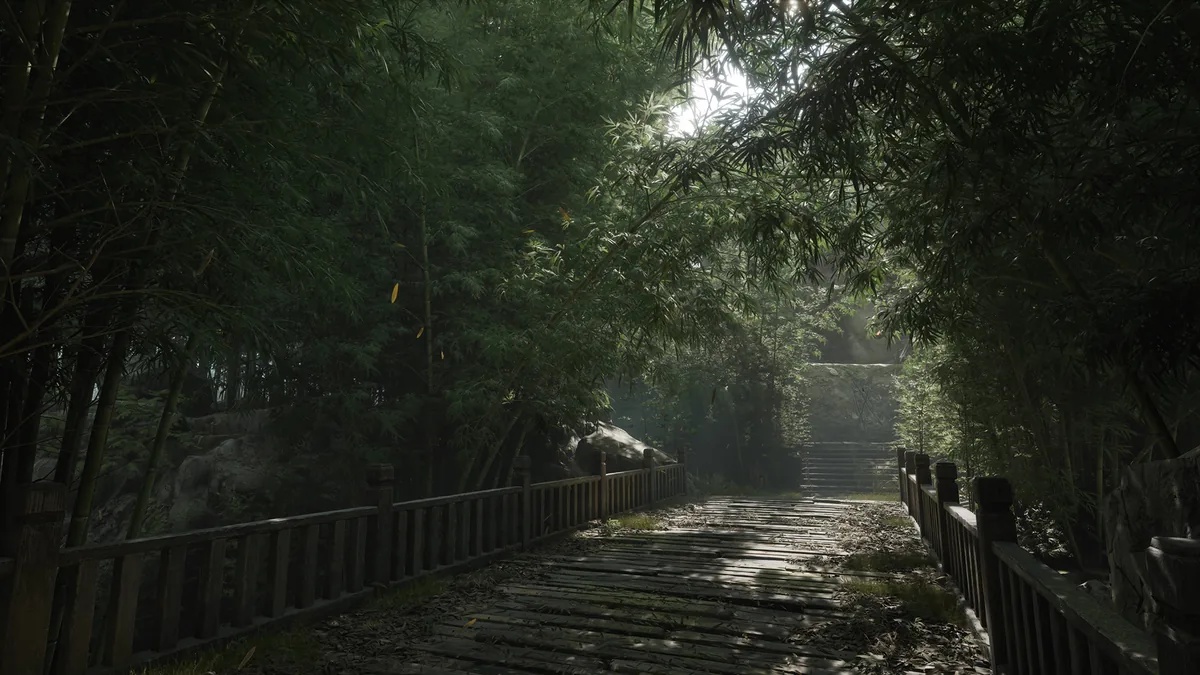
First, the palette. The lion boss’s color design finds a subtle balance point between “festive folklore” and “stark wuxia”.
The Head’s Dominant Colors#
The lion head is the fight’s core visual element, and its palette sets the whole performance’s tone. In the demo the head runs red and gold — red hot and striking, gold opulent — echoing the festive might of the traditional southern lion, and standing out sharply against the dark-toned arena.
| Color | Presentation | Function |
|---|---|---|
| Red | Hot, striking | Echoes festive folklore |
| Gold | Opulent, bright | Signals might and majesty |
| Scene darks | Low-saturation backdrop | Makes the head the protagonist |
Warm Against Cool#
The head’s warm red-gold contrasts hard against the scene’s low-saturation cool tones. That warm-cool contrast makes the head “pop” as the absolute visual focus — and amplifies both the boss’s menace and the ceremony around it.
| Tone | Presentation | Contrast function |
|---|---|---|
| Warm (the head) | Red-gold dominance | Visual focus |
| Cool (the scene) | Low saturation, cold-leaning | Sets off the warm |
| The effect | Strong | Subject and menace amplified |
The Restraint of Blank Space#
Unlike the “fuller is better” coloring of some works, the lion boss’s palette is restrained: it does not flood the frame with red-gold, but uses the scene’s darks and blank space to concentrate the head’s color and let it breathe — much closer to the blank-space spirit of ink-wash aesthetics.
| Color treatment | Presentation | Aesthetic aim |
|---|---|---|
| Concentrated color | Red-gold kept on the head | Highlights the subject |
| Dark blank space | Large dark scene areas | Lets the frame breathe |
| Restraint | Not flooded, not showing off | Ink-wash expressiveness |
Light#
Beyond color, light is what builds the atmosphere. The fight’s lighting balances the real and the expressive.
Highlight and Material on the Head#
Under the lighting the lion head shows fine material detail — the gold ornaments carry metallic reflections, the fur a soft scatter, the scales local light-and-shadow. This realistic lighting makes the head not an abstract folklore prop but a combat subject with weight and presence.
| Light detail | Presentation | Function |
|---|---|---|
| Gold reflections | Metallic highlights | Opulent texture |
| Fur scatter | Soft transitions | Fluffy layering |
| Scale shading | Local light-shadow | Solid detail |
Shadow and Atmosphere Light#
The scene’s shadows give the fight its atmosphere: against the dark backdrop, the head’s warm light and the scene’s cool light contrast, while the drumbeat rides the light’s rises and falls — ceremony and menace interwoven.
| Light element | Presentation | Atmosphere function |
|---|---|---|
| Shadow areas | Broad darkness | Builds menace |
| Atmosphere light | Warm head, cool scene | Ceremonial feel |
| Light-and-dark shifts | Rising with the drums | Sense of rhythm |
Ink-Wash Blur#
Some shots use depth-of-field blur with ink-bleed-like soft edges, giving the transition between the foreground head and the background a “ink meeting water” quality — deepening the expressive atmosphere.
| Light treatment | Presentation | Aesthetic aim |
|---|---|---|
| Depth blur | Soft background | Subject pops |
| Bleed transitions | Edges like ink bloom | Ink-wash expressiveness |
| Atmosphere | Real and blur mixed | Mood over detail |
Atmosphere: Where Folk and Wuxia Meet#
Color and light finally serve one thing — atmosphere. What moved me most is how the fight unifies two seemingly contradictory temperaments — festive folklore and stark wuxia — under one ink-wash wuxia aesthetic.
Balancing Festive and Stark#
Folk lion dance reads as festive and lively; wuxia aesthetics lean stark and expressive. Through the dark-toned scene, the fight’s high intensity and the urgent drums, this performance presses the lion’s festivity toward the “mighty” and the “majestic”, while keeping its nimbleness and expressiveness — a unique balance.
| Temperament | In folklore | The wuxia treatment |
|---|---|---|
| Festive | Lively, joyful | Pressed toward mighty, majestic |
| Nimble | Footwork, expression | Rhythm kept |
| Stark | Absent | Blended in via scene darks |
Rhythm Is the Picture#
One point I want to stress: in this performance the “rhythm” is itself part of the picture. The drums are not just music — they pull the attack landings and the light’s rises and falls, giving the frame a musical pulse. This “rhythm as picture” treatment is the fight’s most outstanding atmospheric achievement.
| Rhythm element | Picture effect | Atmosphere function |
|---|---|---|
| Drumbeat | Pulls attack landings | The frame gains pulse |
| Light shifts | Rising with the drums | Amplified atmosphere |
| Attack rhythm | On-beat pressure | Menace |
Its Place in the Chinese Wuxia Art Lineage#
Setting the lion boss inside the lineage of Chinese wuxia game art clarifies its value and inheritance.
From Realism to Expression#
Chinese wuxia game art has walked a road from realism toward expression. Early works favored realistic scenes and characters; recent works increasingly pursue ink-wash, blank space and bleed effects in actual gameplay footage. The lion boss fight is this lineage advancing again — this time in live combat choreography.
| Stage | Art tendency | Representative direction |
|---|---|---|
| Early | Realism-leaning | Scene and character fidelity |
| Middle | Real and expressive mixed | Texture improvements |
| Recent | Ink-wash expressiveness | Expressive in-game footage |
Reinterpreting Kung-Fu Punk#
Phantom Blade Zero’s aesthetic anchor is “Kung-Fu Punk” — martial arts fused with machinery. Within that frame the lion boss adds purer folk and ink-wash elements: a reinterpretation of the existing aesthetic that enriches the game’s visual layers.
| Aesthetic dimension | Kung-Fu Punk | The lion boss’s reinterpretation |
|---|---|---|
| Cultural root | Hong Kong action cinema | Folk lion dance tradition |
| Visual elements | Machinery, starkness | Head, drums, ink-wash |
| Temperament | Modern, hardcore | Traditional, expressive |
In the Wave of Chinese Single-Player Games#
Against the backdrop of the Chinese single-player wave that Black Myth: Wukong ignited, the lion dance boss is a representative attempt at “weaving folk expressiveness into live gameplay footage”. It refuses symbol-stacking and instead lets the folklore genuinely enter the combat’s visual language — a reference direction for Chinese games to come.
| Background | The lion boss’s contribution |
|---|---|
| The single-player wave | A model of folk-expressive integration |
| Kung-Fu Punk aesthetics | Reinterpreted, layers enriched |
| The ink-wash wuxia lineage | Live-gameplay expression advanced |
Against Black Myth: Wukong’s Art#
As a Chinese action game, the lion boss will inevitably be compared with Black Myth: Wukong’s art. From an art lover’s angle, the differences:
Myth Versus Folklore#
Black Myth: Wukong draws on the Journey to the West mythos — its art leans grand and divine. The lion boss draws on folk lion dance — festive and nimble. Both root in Eastern culture, but the temperaments clearly differ.
| Dimension | Black Myth: Wukong | The lion dance boss |
|---|---|---|
| Cultural source | Journey to the West mythos | Folk lion dance |
| Art temperament | Grand, divine | Festive, nimble |
| Expression mode | Mythic expressiveness | Folk expressiveness |
Different Roads, One Destination#
Despite different sources, both pursue “expressing Eastern aesthetics through form” — ink-wash, blank space and bleed in live footage, each through its own cultural carrier. That convergence is exactly the sign of Chinese action game art evolving as a whole.
| Expression dimension | Black Myth: Wukong | The lion dance boss |
|---|---|---|
| Ink-wash use | Mythic-scene expressiveness | Combat-atmosphere expressiveness |
| Blank space | Grand blank space | Restrained blank space |
| Aesthetic aim | Eastern expressiveness | Eastern expressiveness |
For more on Black Myth: Wukong’s art, see our wuxia art section, in particular the head-to-head art comparison.
Room to Grow#
From an art editor’s professional view, this performance is already striking — a few places where the shipped game could go further:
| Room to grow | Current state | Outlook |
|---|---|---|
| Head detail | Already fine-grained | Could be richer in the full game |
| Scene interaction | Mostly supportive | Interactive staging could grow |
| Dynamic lighting | Already drum-synced | Could be finer-grained |
| Ink-bleed effects | Present | Could be applied more boldly |
These outlooks rest on what the demo shows; the shipped game’s actual look defers to officials.
Where to Go Next#
After the art, the fight’s other faces:
- The demo’s frame-by-frame reading and rhythm analysis: frame-by-frame demo breakdown.
- The moves themselves and the counter windows: moveset and combo logic.
- The difficulty curve and forgiveness mechanics: difficulty design explained.
- The overall buying picture: purchase and platform guide.
Phantom Blade Zero Closing Note#
The lion dance boss is a lovely attempt at “weaving folk expressiveness into live gameplay footage” in Chinese wuxia game art: red-gold head against dark scene builds the menace, realistic light delivers the weight, ink-wash blur keeps the expressiveness — the folk lion’s festivity pressed toward the mighty and majestic, its nimbleness and drumbeat kept, all unified under Phantom Blade Zero’s Kung-Fu Punk ink-wash aesthetic. As an old player, I am rarely moved this far by a boss fight’s art — it showed me more of what Chinese wuxia game art can be. The game is out now; for more art talk, head back to the Phantom Blade Zero section.