Combat Philosophy: Non-Soulslike Fast Action#
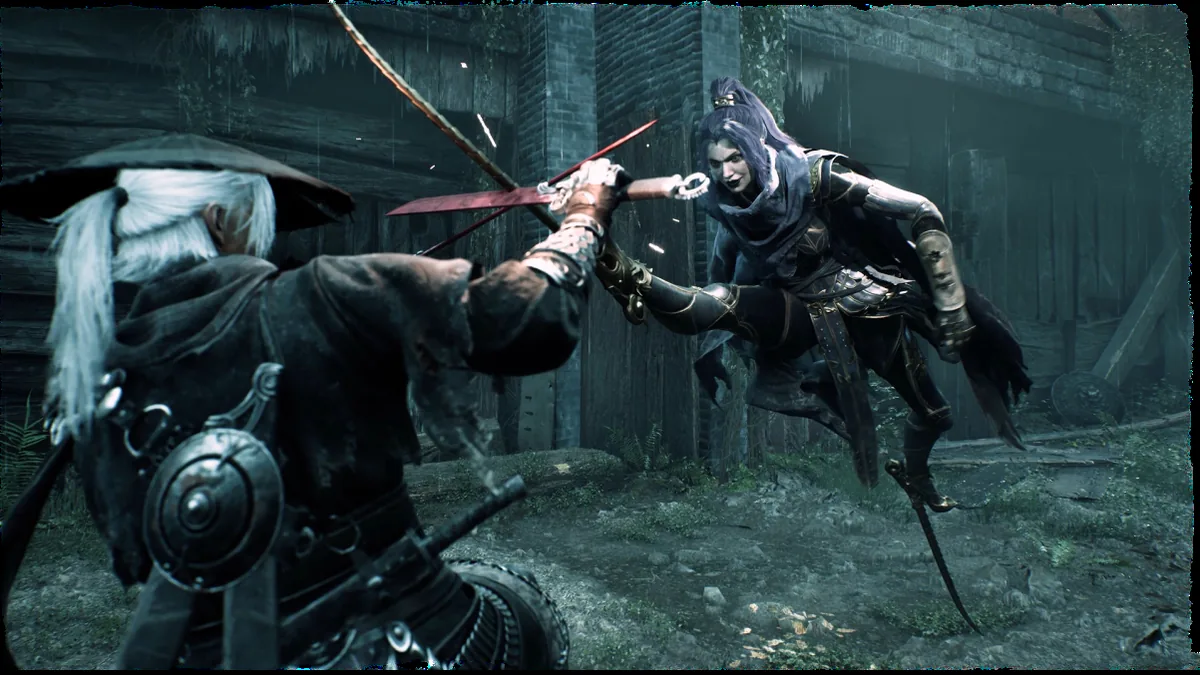
The easiest thing to misread about Phantom Blade Zero is its genre. Official materials and hands-on feedback both state it plainly: “like Black Myth: Wukong but not a soulslike” — faster tempo, freer combos. That small phrase hides the core of an entire combat philosophy. This article takes apart the design behind the fast, non-soulslike fighting.
First, Define “Non-Soulslike”#
What Soulslike Combat Looks Like#
Before defining the alternative, define the genre. Typical soulslike combat features:
| Soulslike trait | Description |
|---|---|
| Cautious tempo | Defense, observation, waiting for openings |
| Stamina management | Attacks and dodges budgeted by stamina |
| Reactive play | Counter over suppress |
| Single-loop play | Play orbits one core mechanic |
Where Phantom Blade Zero Diverges#
Against that template, PBZ walks a different road — it rejects the caution and stamina punishment, and emphasizes initiative, fast combos and freedom:
| Dimension | Soulslike | Phantom Blade Zero |
|---|---|---|
| Tempo | Slow | Fast |
| Play | Reactive | Suppressive |
| Combos | Restrained | Free |
| Resource | Stamina punishment | Offense converts to burst |
| Tolerance | Costly mistakes | Encourages pressing in |
Where the Speed Comes From#
Hong Kong Action-Film DNA#
The speed is not arbitrary. Its aesthetics and rhythm draw from Hong Kong action cinema’s golden age — stuntmen exchanging blows, every hit landing, moves flowing with tension between dense and sparse. That is the flavor the fast combat wants to recreate.
| HK choreography essence | Game translation |
|---|---|
| Flow | Combos without stutter |
| Sharpness | Fast, precise, decisive strikes |
| Rhythm | Alternating density with tension |
| Weight | Moves rooted in real martial arts |
The Skin of “Taking the Initiative”#
Editorially, the real core of “non-soulslike” is encouraging players to attack first. It does not want you waiting for the enemy to expose a weakness — it wants you seizing the initiative, suppressing with combos, owning the rhythm.
| Initiative | Payoff |
|---|---|
| First-strike suppression | Own the tempo |
| Combo linking | Perform routines |
| Resource conversion | Offense becomes burst |
| High emotion | Feels great, looks great |
Free Combos: The Core Selling Point#
What Combo Freedom Means#
“Freer” combos mean stringing moves, switching weapons and firing Phantom Edges with flexibility — not boxed in by strict punishment systems. The design centers on “creating” rather than “avoiding”.
| Freedom dimension | Description |
|---|---|
| Move stringing | Compose chains freely |
| Weapon switching | Change approach anytime |
| Skill mixing | Phantom Edges combined freely |
| Tempo control | You own the pace |
Free Combos and Error Tolerance#
Where soulslikes punish mistakes brutally, free combos give players room to experiment. That keeps the pickup barrier friendly and makes PBZ closer to “exhilarating action expression” than “grinding ascetic practice”.
| Comparison | Soulslike tolerance | PBZ tolerance |
|---|---|---|
| Mistake cost | High | Relatively low |
| Room to experiment | Small | Larger |
| Mindset | Walking on eggshells | Daring to press in |
| Fun | Overcoming suffering | Free expression |
The “Life-Gambling” Martial Aesthetic#
A Desperate Man’s Combat Philosophy#
The protagonist fights with 66 days of borrowed time — his combat philosophy naturally carries a life-gambling tint. With days numbered, why not fight every battle to the fullest? Character design and fast tempo form a beautiful interlock.
| Character design | Combat aesthetic mapping |
|---|---|
| Dying countdown | Output without counting the cost |
| Fighting wounded | Desperation suppression |
| Alone | Last-stand aura |
| Proving the way | The fight as self-expression |
The “Qi” Inside the Moves#
With Kung-Fu Punk aesthetics and real martial arts underneath, PBZ’s moves care about “qi” — openings with presence, chains with rhythm, finishes with aftertaste. Combat is not just efficient; it is martially beautiful.
| Move “qi” | Visual and feel |
|---|---|
| Wind-up | Power coiled to release |
| Chain | One unbroken breath |
| Pressure | No room to breathe |
| Finish | Clean and decisive |
Challenges a Fast System May Face#
Objectively, fast free combos carry risks. The editors list them for a clear-eyed view:
| Potential challenge | Description |
|---|---|
| High ceiling, hard to master | Big gap between novices and veterans |
| Tempo fatigue | Sustained speed can tire |
| Suppression imbalance | Pure suppression could break difficulty |
| Read difficulty | Fast enemies are hard to read |
Final form awaits the shipped game; these are preview-level expectations.
Move Origins: Real Martial Arts#
A widely reported piece of intel: the moves “derive from real martial arts”, paired with top-tier motion capture. That gives the fast combat a credible foundation — not invented air-combos but real techniques with fighting logic.
| Move source | Meaning |
|---|---|
| Real martial arts | Moves carry fighting logic |
| Motion capture | Natural, realistic motion |
| HK fight choreographers | Cinematic rhythm |
| Kung-Fu Punk | Mechanical sharpness fused in |
Balancing Realism and Fun#
Turning real martial arts into game moves is genuinely hard — too realistic slows the tempo; too exaggerated loses credibility. From current gameplay demos, PBZ finds a good balance between “real” and “satisfying”.
| Balance point | Handling |
|---|---|
| Realistic base | Moves with fighting logic |
| Satisfaction boost | Combos and VFX amplify impact |
| Rhythm design | Dense-sparse choreography |
| Watchability | Clean, decisive motion |
Encounter Design Philosophy#
Fast tempo is not just the protagonist’s style — it should shape enemy design. Different enemy types will force different responses at speed:
| Enemy type | Forced response |
|---|---|
| Swift assassins | Speed and reflex duels |
| Heavy-armored masters | Find the guard-break timing |
| Mechanical constructs | Use spacing and counters |
| Boss elites | Test combos and judgment |
Fast and Slow in Contrast#
A good action game is not mindlessly fast throughout. It alternates tempo to create tension — high-speed exchanges punctuated by a few breath-held elite standoffs, forming a breathing rhythm.
| Tempo | Use scenario |
|---|---|
| Fast | Trash-mob suppression and combos |
| Slow | Reading elites and winding up |
| Frantic | Escaping danger |
| Measured | Opening distance, observing |
Can This Satisfy Hardcore Players?#
Some worry that non-soulslike speed softens the hardcore challenge. In fact fast combat can be very hardcore — it moves difficulty from “cautious survival” to “execution ceiling” and “combo composition”, testing handspeed, memory and decisions.
| Hardcore dimension | Expressed in |
|---|---|
| Execution ceiling | Deeper combos, harder mastery |
| Control precision | Accurate combat judgment |
| Style composition | Building the optimal routine |
| Reaction speed | Adapting at speed |
Long-Lived Replay Space#
Free combos and many weapons naturally create enormous replay space. The same boss fought with different weapons, different Phantom Edges, different tempos is a different experience — lifting playability and lifespan enormously.
| Replay dimension | Repeat value |
|---|---|
| Different weapons | Completely different play |
| Different skills | Distinct burst compositions |
| Different tempo | Shifting strategies |
| Different schools | Diverse combat styles |
Closing Note: Back to First Principles#
In the end, what Phantom Blade Zero wants is a wuxia action experience that makes the blood race and lingers after. It chooses a road closer to Hong Kong action cinema’s spirit — proactive, free, fast. For players who love wuxia, love exhilarating action, and want out of the soulslike mold, this combat philosophy is precisely what the pre-release trailers promised.
| Keyword | Note |
|---|---|
| Proactive | Step in and suppress |
| Free | Combo expression |
| Sharp | HK-style choreography |
| Life-gambling | Dying-clock brawling |
| Exhilarating | The joy of the fight |
FAQ#
| Question | Answer |
|---|---|
| Why “non-soulslike”? | Official and hands-on consensus |
| Is fast tempo too hard? | Free combos are relatively friendly |
| Is there a stamina bar? | Design leans away from punishment; official word prevails |
| How free are combos? | Moves, weapons and skills all combine |
| Versus Black Myth Wukong? | More free-combo and suppression emphasis |
| Is there hardcore difficulty? | Fast tempo has a high ceiling — a real gate |
| How satisfying is combat? | Suppression and combos are the core thrill |
| Are moves realistic? | Rooted in real martial arts with motion capture |
Closing#
Phantom Blade Zero’s fast combat philosophy boils down to one line: attack first, express yourself freely. It refuses the soulslike’s caution and endurance, carrying HK action sharpness and real-martial-arts qi, encouraging every player to turn combat into their own martial school. If soulslike asceticism has worn you down and you want a faster, freer, more wuxia-flavored fight, this non-soulslike philosophy is worth savoring in the released game.