Phantom Blade Zero Kungfupunk Aesthetics Explained#
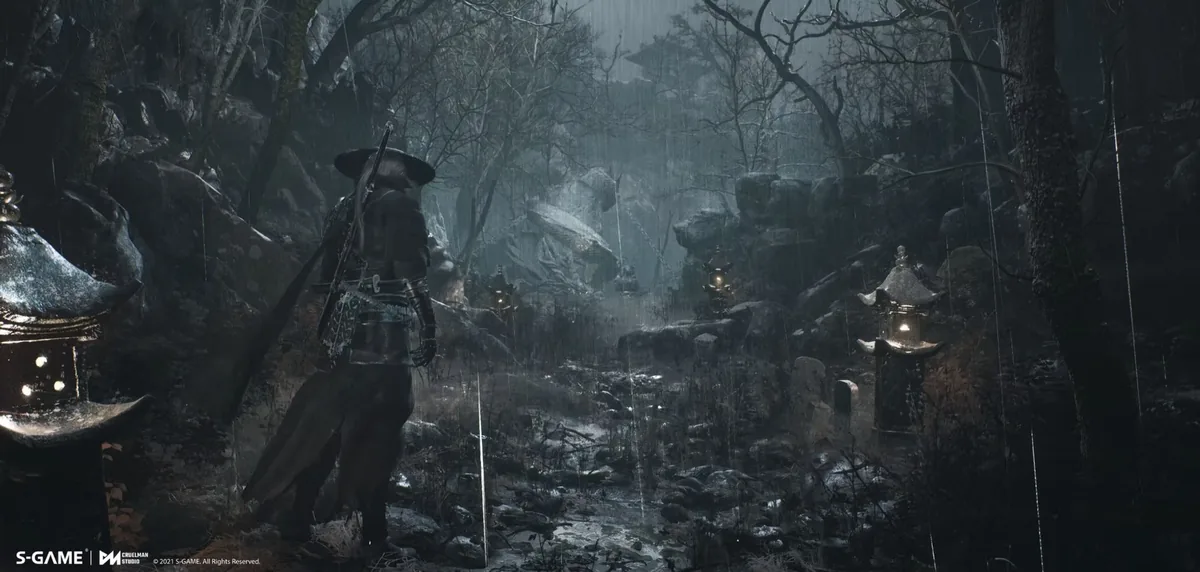
Hi, I’m Zhanlan Yingren. “Kungfupunk” is the game officials’ own definition of their aesthetic — and the recipe I most wanted to take apart as art editor. The bones of wuxia, the flesh of machinery, the soul of Hong Kong action: how do they blend without fighting each other? This article unpacks that recipe piece by piece.
What Kungfupunk Is#
A Name You Cannot Avoid#
“Kung fu” is the root of wuxia; “punk” is the air of machinery and rebellion. Kungfupunk pours cold, sharp machinery into an ancient, weathered wuxia world, colliding into a dark texture rarely seen before.
| Ingredient | Meaning |
|---|---|
| Kung fu | Martial arts, jianghu, chivalry |
| Punk | Machinery, devices, rebellion |
| Kungfupunk | Wuxia and machinery in collision |
| The look | Sharpness inside desolation |
Why Not Pure Classical Style#
Most wuxia games prefer the realism and grace of pure classical style, but Phantom Blade Zero takes a step forward — refusing to lie down inside gufeng tropes and boldly importing mechanisms to reset the genre’s visual defaults. That step is the ambition of Kungfupunk.
| Pure classical wuxia | Kungfupunk |
|---|---|
| Weathered realism | Mechanical sharpness |
| Grace above all | Darkness above all |
| Blades center stage | Blades and devices coexist |
| Historical feel | Strong fantasy flavor |
Where Martial Arts and Machinery Merge#
Devices Are Not Bolt-Ons — They Are “Martial Arts”#
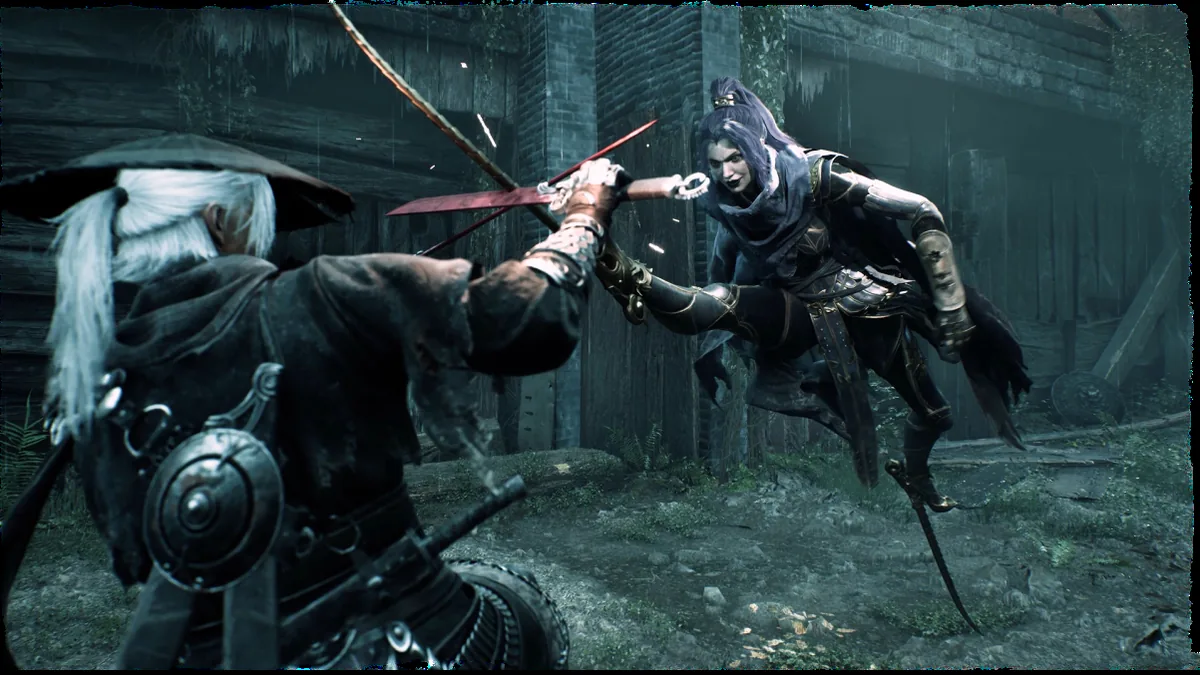
The cleverest part of Kungfupunk is that machinery is never treated as a foreign object but as “mechanism martial arts” that can merge into the fighting system. Hidden caches, mechanical devices, turning gears — all can become part of a move, a scene, a conspiracy.
| Fusion point | Expression |
|---|---|
| Mechanism arts | Devices become moves |
| Machine constructs | Devices become enemies |
| Mechanism scenes | Machinery fills space |
| Gear shadows | Murder lurking out of sight |
Every Art Has Its Mechanism, Every Mechanism Its Art#
In Phantom Blade Zero’s world, martial arts and mechanisms are two faces of one thing. Masters strike with the precision of turning gears; devices lash out with the ferocity of swordplay. This two-way design is the soul of Kungfupunk.
| Two faces | Notes |
|---|---|
| Arts into mechanisms | Moves precise as clockwork |
| Mechanisms into arts | Devices fierce as strikes |
| The merge | One seamless power |
| Identity set | Kungfupunk’s recognizability |
The Hong Kong Action Base Layer#
For Kungfupunk’s spirit, I always think first of golden-age Hong Kong action cinema — that bone-deep contact, crossing bodies, blade-flash and blood. Its rhythm of real impact is exactly what this aesthetic wants to restore.
| HK element | Kungfupunk’s echo |
|---|---|
| Close combat | Fast combo chains |
| Blood-tinted light | Blood-soaked visuals |
| Sharp tempo | Rhythm in the action |
| Urban night | Mechanism-dense atmosphere |
From Old Cinema to a New Jianghu#
Kungfupunk does not photocopy Hong Kong cinema; it extracts that “ruthlessness and edge” and injects it into a mechanized wuxia world — a new expression grown on old bloodlines. HK flavor is the rhyme; Kungfupunk is the form.
| Heritage and change | Notes |
|---|---|
| The rhyme of HK | Combat’s ruth and speed |
| The form of wuxia, changed | Machinery woven in |
| Dark register set | Cold, sharp base tone |
| A beauty of its own | A school of its own |
The Texture of Devices and Metal#
How to Paint Metal#
Kungfupunk’s machinery is not set dressing; it demands real texture. The mottle of rust, the meshing of gears, the depth of a mechanism — art must draw these with the finest strokes before metal “lives” and radiates chill.
| Metal texture | Artistic expression |
|---|---|
| Mottled rust | The marks of age |
| Meshing gears | Precise power |
| Deep mechanisms | Unknown menace |
| Cold metal light | A chill of killing intent |
Devices Blend into the Environment#
In Phantom Blade Zero, mechanisms fuse with their environment rather than appearing as pasted-on decals. Hidden switches, wall-climbing pedals, movable blade-wheels — all belong to the scene, so exploration keeps meeting these Kungfupunk devices.
| Device in place | Gameplay meaning |
|---|---|
| Hidden switches | Trigger secret passages |
| Wall pedals | Vertical movement |
| Blade-wheels | Combat traps |
| Gear mechanisms | Puzzle targets |
Darkness Carried Throughout#
One Unified Dark Register#
Kungfupunk’s darkness is the keynote of the whole work. Palette, light, mood — all obey the rule of “dark, cold, ruthless,” soaking the jianghu in blood-rain and killing wind.
| Dark element | Expression |
|---|---|
| Overall palette | Cold ink black |
| Lighting | Dim and cold |
| Mood | Blood-rain and storm |
| Spirit | Lone and ruthless |
Dark but Never Stuffy#
Truly great darkness is not dead black — details live inside it, light leaks through it. Kungfupunk spots blood-red and cold metal gleam into its darkness, keeping frames layered and breathing. That is the color discipline at work.
| Dark philosophy | Notes |
|---|---|
| Detail in darkness | Layered, never flat |
| Light through black | Blood-glow and metal sheen |
| Restrained saturation | Sharper impact |
| Dark but breathable | The whole frame breathes |
The Promise and the Risk#
As art editor, I love the boldness — and I can see the gamble:
| Upside | Risk |
|---|---|
| High recognition | May jar with pure-classical tastes |
| Vivid style | Overdone, it could turn garish |
| Room for imagination | Demands careful texture work |
| Distinct memory | Everything rides on detail control |
Freshness Cuts Both Ways#
The freshness is a double-edged sword: it makes the game unmistakable at a glance, and it naturally filters out some players who prefer traditional gufeng. To me, that willingness to be different is precisely the most precious quality.
| Two edges | Notes |
|---|---|
| Pro | Distinct and memorable |
| Con | Splits from traditional taste |
| Editor’s view | Daring to differ is precious |
| Advice | Judge on the shipped game |
One Sentence for Art Lovers#
Kungfupunk is the strange, fascinating calling card Phantom Blade Zero hands the world. It may not be beauty you accept at first glance, but it is beauty you will remember once you understand it. To me, that is exactly the attempt Chinese wuxia art should be making.
| One sentence | Reading |
|---|---|
| Strange yet fascinating | Unseen before, unforgettable after |
| Not instant | Rewards slow savoring |
| Understood, remembered | Grows on you |
| The attempt we needed | Courage to break the mold |
Kungfupunk’s Eastern Roots#
One last emphasis: the “punk” in Kungfupunk is not a photocopy of Western cyberpunk’s neon nights. Its machinery roots firmly in Eastern wuxia soil — from the hidden caches of qimen mechanisms to the wit of spring-loaded hidden weapons, treasures traditional Chinese wuxia always had and modern games too often forgot.
| Eastern element | Kungfupunk transformation |
|---|---|
| Qimen mechanisms | Scenes and puzzles |
| Spring hidden weapons | Weapons and moves |
| Wooden machinery | Enemies and devices |
| Craftsman tradition | Aesthetic and narrative |
Recovering the Forgotten “Craft”#
Many think wuxia art is only blade-light and sword-shadows, but the genre also holds a long-ignored “craft” — the tradition of mechanism-makers, weapon-forgers, and secret-vault builders. Kungfupunk’s charm is picking that craft spirit back up, letting machinery and martial arts coexist.
| Craft tradition | What it means here |
|---|---|
| Mechanism smiths | Design the puzzles |
| Weapon smiths | Forge the arsenal |
| Mechanism arts | Enter the movesets |
| Craftsman narrative | Undercurrents of the jianghu |
From Craft to Chivalry#
When the craftsman’s mechanisms meet the swordsman’s arts, Kungfupunk rises from “machinery added on” to “devices and the sword-way as one” — the deep aesthetic that separates it from mere machine-stacking. Mechanisms stop being cold foreign objects; they become the blade extended in a hero’s hand, the road raised under his feet.
| The sublimation | Notes |
|---|---|
| Craft builds | Mechanisms finely made |
| Hero wields | Devices in fists and footwork |
| Tool and hero one | Mechanism as martial art |
| A school established | Kungfupunk stands apart |
Editorial: Witnessing an Aesthetic Being Born#
As an old player who watched it all arrive, I feel lucky to witness the birth of a brand-new wuxia aesthetic like Kungfupunk. It reminds us that wuxia need not stay parked in gufeng — it can stride forward and take new blood. Even imperfect, the courage to break the mold deserves applause.
| Witness | Feeling |
|---|---|
| Breaking the mold | Not trapped in tradition |
| New blood | Machinery refreshes wuxia |
| A school of its own | A recognizable aesthetic |
| If it lands | A new road opens |
FAQ#
| Question | Answer |
|---|---|
| What is Kungfupunk | A dark aesthetic fusing wuxia and machinery |
| Pure classical style? | No — mechanisms woven in |
| Hong Kong cinema flavor? | Yes — sharp, contact-heavy combat |
| Dark base tone? | Yes — overall dark, cold, ruthless |
| Is machinery gameplay? | Yes — devices are scenes and puzzles too |
| Too garish? | Depends on texture craft; the shipped game decides |
| Worth anticipation? | For art lovers, absolutely |
| Is it cyberpunk? | No — rooted in Eastern mechanisms and wuxia |
Closing Thoughts#
Kungfupunk, this aesthetic twisted from “kung fu” and “punk,” is Phantom Blade Zero’s boldest visual declaration. It neither panders to gufeng nor shows off glow; it forges a dark jianghu of its own from the bones of wuxia, the flesh of machinery, and the soul of Hong Kong action. To this art editor, that willingness to be different alone made the October 29, 2026 release worth every bit of anticipation.