Phantom Blade Zero vs Black Myth: Wukong Art#
Hi, I’m Zhanlan Yingren. The most satisfying thing of these past two years as art editor has been watching Chinese action games deliver one visual stunner after another. The two works in question today — Black Myth: Wukong and Phantom Blade Zero — happen to sit at two typical poles of Chinese action art. This article compares their visual languages across four dimensions: color, scenes, character design, and hit feedback.
Why Compare These Two#
One Soil, Two Roads#
Black Myth: Wukong and Phantom Blade Zero grew from the same soil of Chinese action’s awakening, both carrying players’ high hopes — yet their art took utterly different roads: one toward extreme realist Eastern fantasy, one toward stylized Kungfupunk. This “same source, different streams” contrast best reveals the range of artistic choice.
| Shared | Different |
|---|---|
| Chinese action blockbusters | Art routes diverge |
| Eastern subjects | Journey myth vs dark wuxia |
| Both on UE5 | Realist fantasy vs Kungfupunk |
| High player expectations | Utterly different visual styles |
The Value of Comparing#
For art lovers, the point is not ranking but seeing how rich Chinese action art can be — Eastern subjects can paint exuberant myth or cold-blooded wuxia, and both roads are glorious.
| Purpose | Notes |
|---|---|
| Not a ranking | Each has its beauty |
| See the direction | Recognize the paths |
| Savor difference | Understand each trade-off |
| Enjoy the range | Good news for the genre |
Color: Mythic Warmth vs Wuxia Cold#
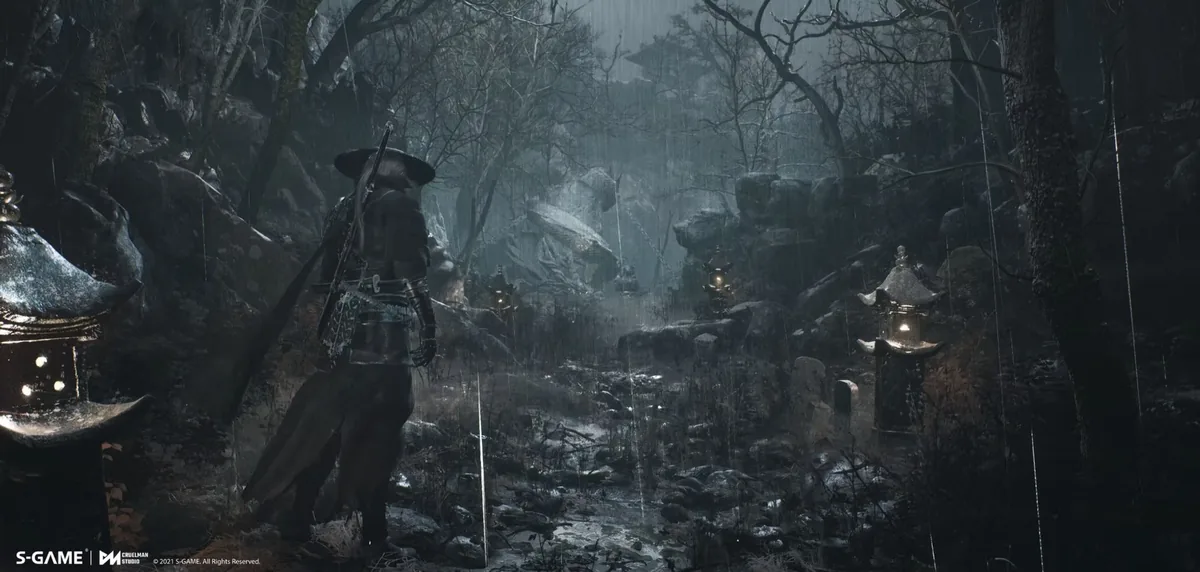
Color is the most immediate difference. Black Myth: Wukong favors many-hued, myth-saturated palettes — Wukong’s gold, the red of firelight, lush scene colors — building mythic splendor. Phantom Blade Zero leans on cold ink, pitch black, and low saturation, spotted with blood red and cold metal light, building wuxia’s chill.
| Dimension | Black Myth: Wukong | Phantom Blade Zero |
|---|---|---|
| Overall tone | Many-hued, resplendent | Cold ink, dark |
| Key colors | Gold, red, warm | Black, blood red |
| Emotion | Mythic glory | Wuxia’s killing quiet |
| Texture | Fantastical opulence | Cold and sharp |
Two Palettes, Two Worlds#
Look deeper and the colors themselves write each worldview: Wukong’s warmth answers the legend and sweep of the Journey myth; Phantom Blade Zero’s cold mirrors dark wuxia’s blood-rain and solitude. Color is not decoration — it is each world’s ground.
| Color as worldview | Notes |
|---|---|
| Warm = myth | Legend, sweep, vitality |
| Cold = wuxia | Chill, solitude, lethality |
| The discerning eye | Color is worldview |
| How to look | Read the world from its color |
Scenes: Mythic Scrolls vs Mechanism Mazes#
In scenes, Black Myth: Wukong often unrolls vast Eastern fantasy scrolls — mist-wreathed peaks, immortal grottos, scenery shifting at every step. Phantom Blade Zero prefers cramped wuxia space — ruined alleys, mechanisms, dark rooms, rainy nights — storing tension inside confinement.
| Dimension | Black Myth: Wukong | Phantom Blade Zero |
|---|---|---|
| Space | Broad and open | Narrow and enclosed |
| Mood | Fantastical desolation | Dark oppression |
| Landmarks | Immortal mountains, grottos | Mechanism towers |
| Feeling | A traveling scroll | Survival in peril |
What Open vs Enclosed Space Narrates#
Open space grants grandeur, suiting mythic epic; enclosed space concentrates tension, suiting wuxia’s pressure and conspiracy. Phantom Blade Zero’s confinement matches its “fleeing through blood-rain” premise precisely.
| Space narrative | Matching theme |
|---|---|
| Open | Epic, sweep, legend |
| Enclosed | Pressure, peril, plot |
| The choice | Each serves its theme |
| How to look | Watch space narrate |
Character Design: The Divine Wukong vs the Wounded Swordsman#
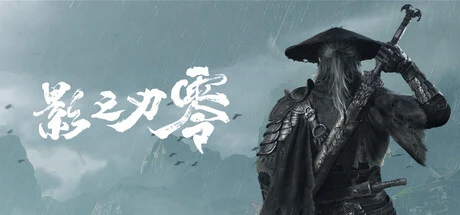
In design, Black Myth: Wukong’s Destined One carries divine swagger — flamboyant and radiant. Phantom Blade Zero’s protagonist is a wounded swordsman: exhausted, cold, trailing the air of a dead-end road.
| Dimension | Black Myth: Wukong | PBZ protagonist |
|---|---|---|
| Temperament | Divine radiance | Exhausted coldness |
| Posture | Swaggering grace | Enduring, wounded |
| Attire | Battle garb + fur | Swordsman + mechanical gear |
| Spirit | Facing fate head-on | Self-proof at the brink |
Two Protagonists, Two Aesthetics#
Design is character made visible. Wukong’s swaggering form builds the Destined One who marches at fate; PBZ’s wounded cold builds the lone swordsman gambling his life to find his heart. Two designs, two lives, two aesthetics.
| Design as persona | Aesthetic expression |
|---|---|
| Swagger = confrontation | Divine, proactive, grand |
| Wounded = survival | Tragic, restrained, lone-courage |
| Visual is narrative | Design tells the story |
| Both compelling | Each classic in its form |
Hit Feedback: Mythic VFX vs Martial Realism#
Hit feedback shows the action aesthetics most sharply. Black Myth: Wukong often carries gorgeous mythic effects and bursting light; Phantom Blade Zero stays closer to Hong Kong action “realism” — every blow lands, sharp and continuous.
| Dimension | Black Myth: Wukong | Phantom Blade Zero |
|---|---|---|
| Effects | Gorgeous myth | Plain and sharp |
| Feel | Charging staff blows | Fast combo chains |
| Rhythm | Tension and release | High-speed pressure |
| Temper | Fantastical awe | HK-cinema realism |
Both Splendor and Realism Are Beautiful#
Mythic spectacle gives Wukong its “miracle” awe; grounded combat gives Phantom Blade Zero its heart-skip impact. Two hit-feedback aesthetics, answering two different cravings for “Chinese action.”
| Hit aesthetic | Craving satisfied |
|---|---|
| Mythic VFX | Miracles, awe, spectacle |
| Wuxia realism | Edge, presence, catharsis |
| Side by side | Every player finds a favorite |
| Complementary | Chinese action grows richer |
My Personal Reading#
As the art editor who has watched both, candidly: Black Myth: Wukong is a gorgeous mythic scroll you look up at; Phantom Blade Zero is a cold wuxia that strikes into your chest. One makes you gasp; the other makes your heart go tight. Both reached the extreme — in different directions.
| Reading | Phrase |
|---|---|
| Black Myth | Gorgeous myth, looked up to |
| Phantom Blade Zero | Cold wuxia, struck into the heart |
| The echo | One gasp, one shiver |
| In common | Both carry Chinese ambition |
No Need to Force a Ranking#
Players argue “A looks better than B,” but these two arts went different directions, each irreplaceable. Rather than debate which is superior, be grateful that Chinese action finally has visual language this plural and this good.
| View | Notes |
|---|---|
| No ranking | Different aims |
| Each excels | Both brilliant |
| See the range | Good for Chinese art |
| With appreciation | Quietly enjoy both |
Motion and Moves: The Art of Fighting#
Turning to concrete fight animation: Wukong’s staff arts carry charging, stilled time, miracle-grade heavy blows — ornate and ceremonial. Phantom Blade Zero’s combos are faster, denser, sharper — one unbroken chain, “real” and unsettling.
| Motion | Black Myth: Wukong | Phantom Blade Zero |
|---|---|---|
| Move manner | Divine, charging | Fast, dense, sharp |
| Impact | Weighty awe | Swift and unsettling |
| Rhythm | Charge and release | High-speed pressure |
| Presentation | Bursting light | Blood-real impact |
One Slow, One Fast — A Division of Beauty#
One game is “the slow-charging weight of divine force,” the other “the life-or-death speed of blade-light” — together they hold up two utterly different aesthetics of Chinese action. One moves mountains; one is a flash of steel. Each sharp in its own way.
| Division | Impression |
|---|---|
| Mountain-moving | Black Myth’s weighty blows |
| Steel-flash | PBZ’s swiftness |
| Parallel paths | The range of Chinese action |
| The pleasure | Both styles move you |
Light and Mood Compared#
Both games master light, with different aims. Black Myth: Wukong uses grand, magnificent light for mythic sublimity; Phantom Blade Zero prefers blade-glints and blood color inside darkness, building wuxia’s menace and chill.
| Light | Black Myth: Wukong | Phantom Blade Zero |
|---|---|---|
| Grandeur | Mythic radiance, often | Rare |
| Menace | Occasional eeriness | The main register |
| Blood color | Sparse | Abundant, spotted red |
| Base tone | Fantastical sublimity | Cold and oppressive |
Light Serves Each Emotion#
Light is never showing off; it carries emotion. Wukong’s grand light lifts the myth’s sublimity; PBZ’s dark blood-color sketches the wuxia’s peril and solitude. Read the light and you have read the emotion.
| Light-emotion | Match |
|---|---|
| Grand = sublime | Black Myth’s mythic feel |
| Dark = menace | PBZ’s wuxia feel |
| Blood = lethality | The jianghu’s danger |
| Each complete | Emotion as base color |
Music and Art Together#
One more note from the art desk: how music joins art decides the “mood completion” of the frame. Black Myth: Wukong’s score is grand and weighty, matching the mythic imagery; Phantom Blade Zero’s sharp, machinery-cold score against its Kungfupunk frames completes the same union from the other side.
| Score orientation | Fit with art |
|---|---|
| Black Myth | Grand weight for myth |
| Phantom Blade Zero | Sharp coldness for wuxia |
| The effect | Sound and image as one |
| How to judge | Audio-visual unity |
The shipped game is the word on Phantom Blade Zero’s actual score.
FAQ#
| Question | Answer |
|---|---|
| Which art is better | Different aims; each excels |
| Color difference | Black Myth many-hued; PBZ cold |
| Scene difference | Black Myth open; PBZ enclosed |
| Hit-feedback difference | Black Myth weighty; PBZ swift |
| Why so different | Each serves its subject and theme |
| An editor’s verdict | Both carry Chinese ambition and range |
| Worth comparing side by side | Absolutely — you’ll taste more |
Closing: Two Pages of One Guofeng Book#
What I hope you take away: this comparison is not about winning but about seeing how far and how wide Chinese action art has come. Mythic splendor and wuxia coldness each keep their own house, each brilliant in its own right.
| Closing | Phrase |
|---|---|
| Mythic scroll | Black Myth’s splendor |
| Wuxia torn page | PBZ’s coldness |
| Both guofeng | Plural and proud |
| The release | The ink has since been spilled |
As art editor, I feel lucky to have witnessed both aesthetics. One page of mythic scroll, one page of wuxia torn edge — both the pride of Chinese style. And with the game out since October 29, 2026, that second page of guofeng painting has long since unfolded for everyone’s eyes.