Bookshop Décor Guide: Themes, Budgets & ROI#

How Décor Fits the Business Loop#
In Bookshop Simulator, the décor and gallery system is how you turn a functional store into a destination. Wall colors, furniture, lighting and themed displays all feed the same two meters that drive revenue: reputation, which decides whether first-time visitors become regulars, and spending comfort, which decides how much a browsing customer actually checks out. Décor is therefore not cosmetic spending — it is the multiplier on every other system in this guide series, from the store layout to the farming loop.
The gallery interface groups everything you can place into five categories. Each has a different cost-to-impact profile, so the order you invest in them matters more than any single purchase.
| Décor category | What it drives | Prestige impact | Spending impact | Complexity |
|---|---|---|---|---|
| Wall décor | First visual impression | ★★★★☆ | ★★★☆☆ | ★★☆☆☆ |
| Furniture | Space use and flow | ★★★★☆ | ★★★★☆ | ★★★★☆ |
| Lighting | Shopping atmosphere | ★★★★☆ | ★★★★★ | ★★★☆☆ |
| Themed displays | Brand identity | ★★★★★ | ★★★★☆ | ★★★★☆ |
| Seasonal décor | Holiday freshness | ★★★☆☆ | ★★★☆☆ | ★★☆☆☆ |
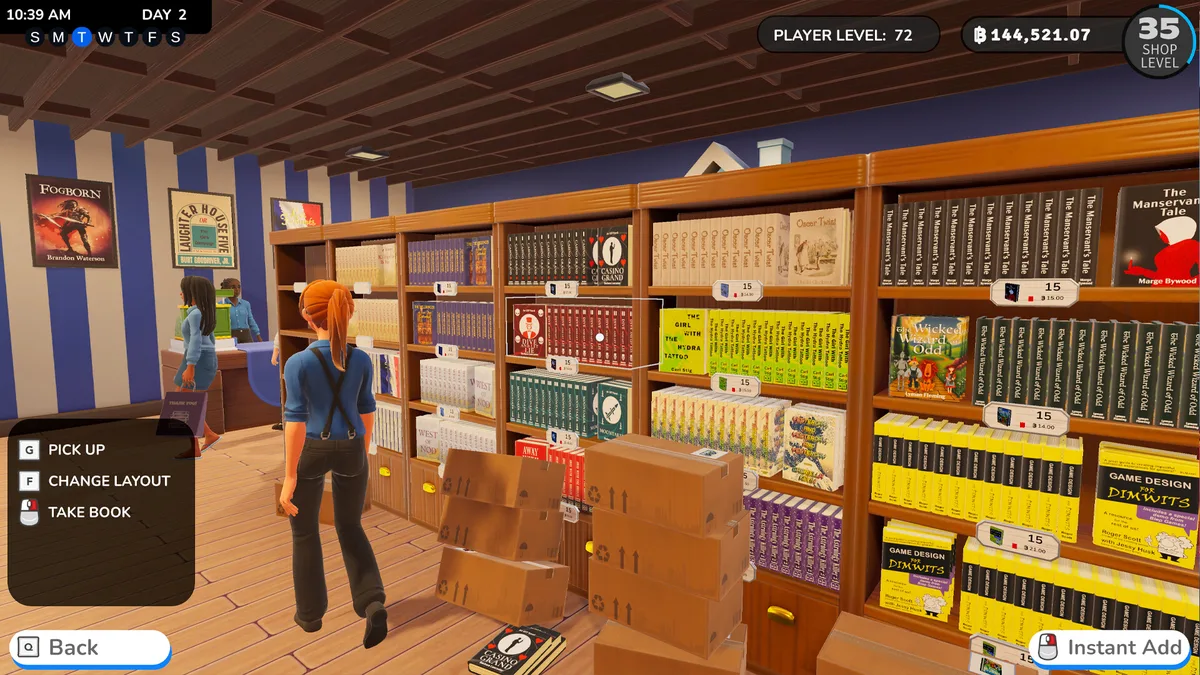
Wall Décor#
Walls are the first thing a customer sees from the door, and they are the cheapest prestige per yuan in the game.
| Type | Effect | Prestige bonus | Cost | Best for |
|---|---|---|---|---|
| Art prints | Elegant gallery feel | +8-15 | ¥200-800 | Any store |
| Literary quote wall | Strong cultural tone | +10-20 | ¥300-1,200 | Classics-focused shops |
| Full bookshelf wall | Dense “wall of books” look | +12-25 | ¥500-2,000 | Large stores |
| Historical photo wall | Nostalgic depth | +10-18 | ¥200-600 | Retro-themed shops |
| Author signature wall | Exclusive collection value | +15-30 | ¥500-3,000 | Premium stores |
| Local artist collab | Community tie-in | +8-15 | ¥300-1,000 | Neighborhood shops |
Three placement rules worth hard-coding into your routine:
- Put the most eye-catching piece on the wall visible from the entrance.
- Walls behind a category shelf should match that category’s style — mystery shelves under moody art, children’s shelves under bright prints.
- The café-area wall affects comfort the most; treat it as furniture budget, not decoration budget.
Furniture Placement#
Furniture decides both beauty and operating efficiency. A beautiful store that forces customers to detour around a sofa is losing money.
| Furniture | Function | Space | Beauty | Comfort |
|---|---|---|---|---|
| Main bookshelves | Core stock display | Medium | ★★★★☆ | ★★★☆☆ |
| Lounge seating | Reader comfort | Small | ★★★☆☆ | ★★★★★ |
| Reading tables | Reading plus social | Medium | ★★★☆☆ | ★★★★☆ |
| Display tables | Featured titles | Small | ★★★★★ | ★★☆☆☆ |
| Checkout counter | Transactions | Medium | ★★★☆☆ | ★★★☆☆ |
| Café bar | Drinks and service | Large | ★★★★☆ | ★★★★☆ |
| Event tables and chairs | Community events | Large | ★★★★☆ | ★★★★☆ |
Placement principles:
- Keep walkways wide — congestion kills browsing time.
- Bestseller shelves go near the entrance; let impulse traffic hit them first.
- Lounge seating belongs deep in the store, past the shelves, so the walk exposes customers to stock.
- The checkout counter is the last stop on the natural path to the exit.
Lighting Design#
Lighting is the atmosphere multiplier. The same shelf reads completely different under warm yellow versus cool white.
| Lighting | Effect | Best zone | Atmosphere | Power draw |
|---|---|---|---|---|
| Warm yellow | Cozy and inviting | Lounge / café area | ★★★★★ | Low |
| Cool white | Clear and bright | Shelves / checkout | ★★★★☆ | Medium |
| Spotlights | Focus and emphasis | Display tables | ★★★★★ | High |
| LED strips | Modern accent glow | Shelf edges / ceiling | ★★★★☆ | Low |
| Reading lamps | Personal pool of light | Reading nooks | ★★★☆☆ | Low |
| Floor lamps | Soft corner fill | Corner seating | ★★★★☆ | Medium |
The pairing rule: warm light where customers linger (café, lounge), cool light where they inspect goods (shelves, checkout). Mixing them up makes the café feel clinical and the shelves feel dingy.
Themed Décor Packages#
A full theme is stronger than the sum of its parts because prestige bonuses stack across walls, lighting, furniture and accents.
Classic Literature Theme#
For stores focused on classics and traditional titles. Dark wood, brass, leather.
| Element | Design | Palette | Budget | Prestige |
|---|---|---|---|---|
| Walls | Dark wood wainscoting | Brown + gold | ¥3,000-5,000 | +25-40 |
| Lighting | Vintage brass lamps | Warm yellow | ¥1,500-3,000 | +15-25 |
| Furniture | Solid wood shelves + leather seats | Deep brown | ¥5,000-8,000 | +20-35 |
| Accents | Classic frames + plants | Deep green + bronze | ¥1,000-2,000 | +10-20 |
| Total | — | — | ¥10,500-18,000 | +70-120 |
Modern Minimalist Theme#
For young readers and contemporary fiction. White, gray, clean lines.
| Element | Design | Palette | Budget | Prestige |
|---|---|---|---|---|
| Walls | Pure white / light gray | White + gray | ¥2,000-3,500 | +15-25 |
| Lighting | Minimal LED strips | Cool white | ¥1,000-2,000 | +10-20 |
| Furniture | Metal shelves + white tables | White + black | ¥3,000-5,000 | +15-25 |
| Accents | Geometric art | Black + white + color | ¥800-1,500 | +8-15 |
| Total | — | — | ¥6,800-12,000 | +48-85 |
Cozy Community Theme#
For family-oriented neighborhood stores. Warm paint, soft edges.
| Element | Design | Palette | Budget | Prestige |
|---|---|---|---|---|
| Walls | Warm paint + playful prints | Warm yellow + pink | ¥2,500-4,000 | +15-25 |
| Lighting | Warm pendants + night lights | Warm orange | ¥1,200-2,500 | +12-20 |
| Furniture | Rounded wood + cushions | Natural wood | ¥4,000-6,000 | +18-30 |
| Accents | Plants + handwoven pieces | Green + multicolor | ¥1,000-2,000 | +10-20 |
| Total | — | — | ¥8,700-14,500 | +55-95 |
Book-Café Fusion Theme#
For combined bookstore and café spaces. Industrial brick, metal, coffee culture.
| Element | Design | Palette | Budget | Prestige |
|---|---|---|---|---|
| Walls | Brick + coffee-culture art | Brick red + deep brown | ¥2,500-4,000 | +15-25 |
| Lighting | Industrial pendants | Warm yellow + metal | ¥1,500-3,000 | +15-25 |
| Furniture | Retro wood tables + metal chairs | Wood + iron gray | ¥4,000-7,000 | +18-30 |
| Accents | Coffee bean sacks + brew gear | Deep brown + copper | ¥1,000-2,000 | +10-20 |
| Total | — | — | ¥9,000-16,000 | +58-100 |
Seasonal Décor#
Seasonal rotation is the cheapest freshness boost in the game — low cost, small prestige bump, and it resets customer novelty.
| Season | Key moves | Palette | Cost | Prestige |
|---|---|---|---|---|
| Spring | Flowers at windows/entrance, swap wall prints, open up the floor | Pink + green + white | ¥800-1,800 | +18-35 |
| Summer | Blue-and-white palette, AC signage, outdoor seating with parasols | Sky blue + white | ¥1,600-3,200 | +20-35 |
| Autumn | Warm palette return, harvest accents, cozy reading corner | Orange + gold + deep red | ¥1,200-2,200 | +19-37 |
| Winter | Holiday lights, plush rugs, heavy curtains, festive window display | Gold + red + green | ¥1,900-3,700 | +28-50 |
If you only rotate once a year, do it for winter — the holiday display carries the single biggest seasonal revenue window in the events calendar.
Décor ROI#
Payback by Investment Level#
| Investment level | Short-term prestige | Long-term brand | Payback window |
|---|---|---|---|
| Minimal (deep clean and tidy-up) | +5-15 | ★★☆☆☆ | 1-2 months |
| Low (light restyling) | +10-25 | ★★★☆☆ | 3-5 months |
| Medium (full theme) | +20-50 | ★★★★☆ | 5-8 months |
| High (whole-store makeover) | +40-80 | ★★★★★ | 8-15 months |
| Premium (luxury custom) | +60-120 | ★★★★★ | 12-24 months |
Measured Business Impact#
| Décor tier | Basket size | Dwell time | Repeat rate | Member conversion |
|---|---|---|---|---|
| Undecorated | +0% | +0% | +0% | +0% |
| Basic tidy-up | +5% | +10% | +3% | +2% |
| Styled | +12% | +25% | +8% | +5% |
| Themed | +20% | +40% | +15% | +10% |
| Luxury | +35% | +60% | +25% | +18% |
The takeaway: themed level is the efficiency sweet spot. Luxury décor keeps improving the meters, but the payback window stretches past a year — worth it in Endless Mode, usually wasteful inside a 30-day challenge window (see the challenges guide for constrained-budget play).
Budget Allocation#
| Share | Goes to | Items | Priority |
|---|---|---|---|
| 40% | Furniture | Shelves + tables + checkout | P0 — highest |
| 25% | Lighting | Fixtures + wiring + controllers | P1 |
| 15% | Walls | Paint + wallpaper + prints | P1 |
| 10% | Accents | Plants + ornaments + seasonal | P2 |
| 10% | Contingency | Adjustments + repairs | P2 |
Recommended Order of Operations#
- Pick the theme first — every later purchase either reinforces it or wastes money.
- Walls as the base coat — cheapest prestige, sets the tone.
- Big furniture in place — position before you decorate around it.
- Lighting last-but-critical — it re-colors everything you just placed.
- Small accents — the final 10% that makes it feel finished.
- Seasonal swaps — replaceable layers on top of a stable base.
Deep Dive: Five Advanced Décor Topics#
| # | Topic | Key points | Difficulty |
|---|---|---|---|
| 1 | Décor psychology | Color temperature, lighting intensity and spatial depth measurably change dwell time and spending — warm pools of light near seating, bright task light at shelves | ★★★★★ |
| 2 | Theme consistency | Every element from signage to wall art should reinforce one brand theme; inconsistency dilutes the prestige bonus rather than adding to it | ★★★★☆ |
| 3 | Seasonal swap system | Build a rotation kit — stored seasonal items, a swap checklist and a fixed calendar week — so freshness costs hours, not yuan | ★★★☆☆ |
| 4 | Size-adapted décor | Small stores want vertical visual expansion (tall shelves, light colors); large stores want intimate zones created by rugs, lamps and dividers | ★★★★☆ |
| 5 | Décor-genre synergy | Match theme to stock: warm wood for classics, moody lighting for mystery, bright palettes for children’s — the pairing deepens immersion and sales together | ★★★★☆ |
Related Guides#
- Bookshop Layout Guide — plan the floor before you decorate it
- Events & Seasonal Calendar — time your seasonal décor to the event calendar
- Bookshop Simulator hub — all guides in this section
FAQ#
Should I decorate before or after stocking? Stock first. Décor multiplies traffic you already convert; it does not replace a working buy-stock-display loop.
Is one mixed theme acceptable? Early game, yes — mismatch costs some prestige efficiency but keeps cash free for stock. Re-theme cleanly once you can afford a full package.
What is the single best first décor purchase? Entrance-wall art prints. Lowest cost, immediate first-impression gain, works with every theme.