Paradox Forum Mishap Leaks New IP Afterworld: A Deep Breakdown of Post-Apocalyptic Survival Grand Strategy and Civilization/Fallout Gameplay#
Hello everyone, I am Chasun. On August 26, Beijing time, a routine maintenance mishap on the official Paradox forum (ParadoxForum) prematurely published the complete core info page for Afterworld. The game is regarded as Paradox’s key title of 2026, and whether it succeeds or fails will directly shape how Paradox adjusts its product line over the next three years.
This article breaks down Afterworld’s design highlights and potential risks across four dimensions — mechanics, balance, exploration and survival — with comparisons to Civilization VI, Fallout 4 and other earlier titles.
I. Basic Game Information (Leaked Version)#
| Item | Details |
|---|---|
| Codename / Project name | Afterworld |
| Genre | 4X grand strategy / post-apocalyptic survival |
| Developer | Paradox Development Studio (PDS) |
| Expected release window | Autumn 2026 (Q3-Q4, the specific month is not yet confirmed) |
| Console platforms | PC, PS5 (porting plan to be confirmed) |
| Engine | Nordic Engine 4.0 (developed in-house by PDS; improves global illumination, volumetric clouds and Nanite-level model streaming over the old version) |
| Chinese support | Simplified and Traditional Chinese subtitles + Chinese voice acting (voice work outsourced) |
| Official statement | “Due to the accidental leak of internal documents, the page will be re-locked before the closed-door Gamescom demo, and full details will be released at the Tapestry showcase in September” |
Note: Although Paradox has not directly confirmed the authenticity of the leak, it has confirmed that the “leak of internal test documents” is not fake news. Given that Paradox’s last three years saw the controversial Victoria 3 (2022) and the polarizing reception of Hearts of Iron 5 (2024), Afterworld is seen as the key title for restoring market confidence in Paradox.
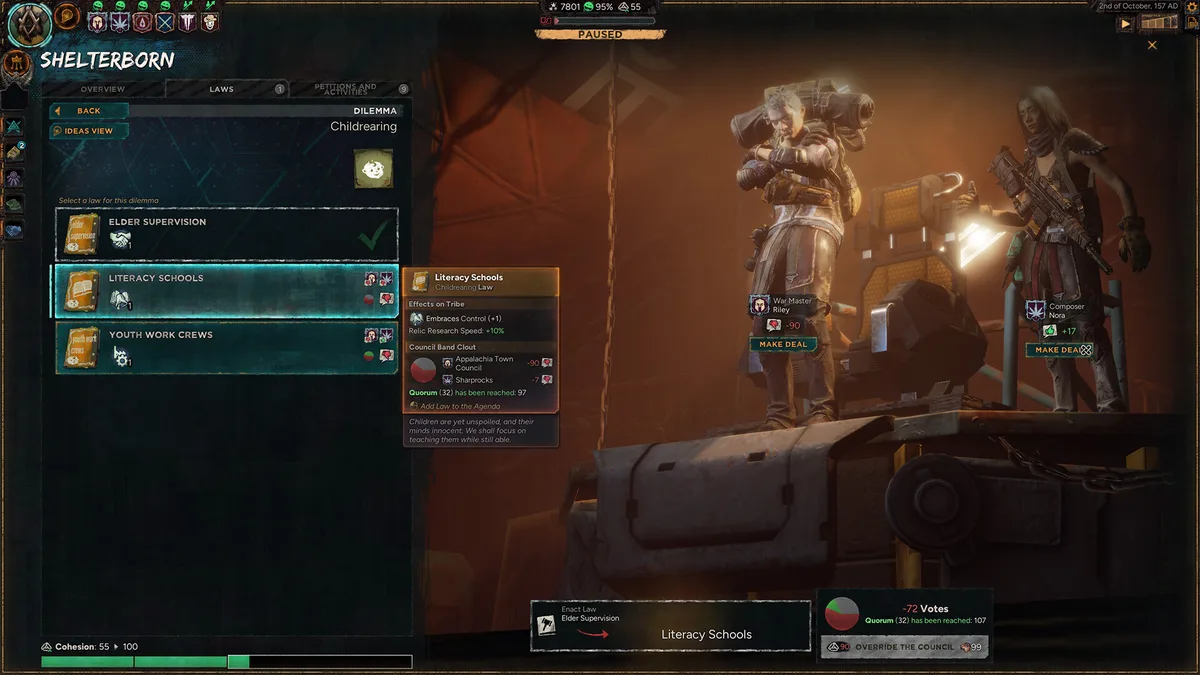
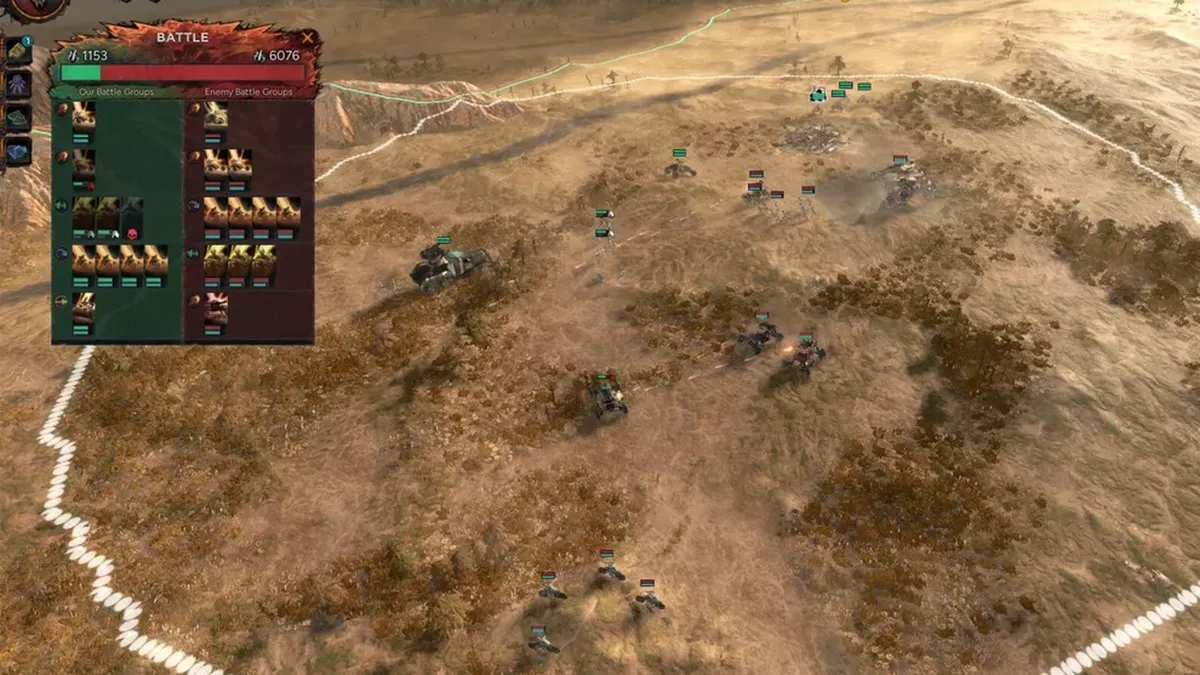
II. Core System Breakdown#
2.1 Map Generation: A Civilization-Style Hybrid#
| Dimension | Afterworld Implementation | Civilization VI Comparison | Fallout 4 Comparison |
|---|---|---|---|
| Terrain grid | Regular hexagons + island/land-sea transition zones | Hex map | Square grid map |
| Height layers | Three layers (surface/underground/radiation layer) | No concept of height | Two layers (surface/underground) |
| Climate zones | Arid/temperate/polar/radiated wasteland | Temperate/tropical/arctic | Radiation level classification |
| Natural disasters | Drought, storms, nuclear winter, dust storms | No dynamic disasters | Random random events |
Design highlight: Afterworld introduces the “radiation layer”, where players must manage groundwater levels, underground shelters and underground resource extraction. This echoes the underground shelter system of Fallout 4, but on the strategic layer it determines the coordinate layout of towns and the resource supply chain.
2.2 Technology and Culture Trees: A Civilization/Fallout Dual Track#
| Tech Tree | Core Nodes | Civilization VI Equivalent | Fallout 4 Equivalent |
|---|---|---|---|
| First tier | Basic gathering, shelter construction, water treatment | Pottery, mining, exploration | Gas refining, armor crafting, power distribution |
| Second tier | Nuclear fusion, genetic modification, water recycling systems | Gunpowder, printing, sailing | Radiation resistance, nuclear power, water purifier |
| Third tier | Global governance, interstellar colonization, radiation purification | Rocketry, satellites, nationalism | Radiation bombs, ultimate shelter, purifier |
Mechanical innovation: The tech tree and the culture tree are no longer split — they share a single tree, so every culture node you unlock also unlocks the corresponding technology. This resembles the “policy cards/government types” mechanic of Civilization VI, but is more compact and carries a higher decision cost.
2.3 Population and Survivor Systems#
| Metric | Afterworld Implementation | Civilization VI | Fallout 4 |
|---|---|---|---|
| Population cap | City level x 10 + number of shelter houses | City level x 10 + population bonuses | Settlement population + satellite cities |
| Survivor attributes | STR/END/CH/INT/infection level | No attributes | Agility/Intelligence/Strength/Luck |
| Infinite loop | New survivors join at the end of every cycle (slots are limited); each survivor has independent attributes, inventory space and disease status | Fixed population cap per city, raised through buildings | Fixed population per settlement, raised through facilities |
Balance point: A survivor’s infection level is the key — a full infection spreads to the rest of the population in the same city and requires resources to treat. This is similar to the plague system in Fallout 4, but on the strategic layer players must weigh “keeping infected survivors for manual labor” against “quarantine and treatment”.
III. Balance Deep Dive#
3.1 Resource Loops and Scarcity#
| Resource | Production Method | Core Use | Scarcity Rating |
|---|---|---|---|
| Supply energy | Urban solar, wind power, nuclear reactors, waste incineration | City construction, unit maintenance | ⭐⭐⭐ (Medium) |
| Clean water | Freshwater wells, seawater desalination, rainwater collection, river intake | Population rations, industrial cooling, nuclear reactor cooling | ⭐⭐⭐⭐ (High) |
| Kryptonite/electronics | Mining, recycling scrap circuit boards, refining radioactive waste | Tech tree unlocks, unit equipment | ⭐⭐ (Low-medium) |
| Radioactive waste | Nuclear reactor operation, exploring radiation zones, shelter destruction | Weapon upgrades, shelter expansion, dye production | ⭐⭐⭐⭐ (High, accumulates easily and causes environmental pollution) |
Balance red flag: Kryptonite is extremely scarce in the early game, so players are often forced into “waste recycling” and neglect their regular industries. The “equipment system” in Paradox’s 2024 Hearts of Iron 5 was likewise criticized for an over-long resource chain, and Afterworld may follow the same path; since launch balance has not been disclosed, the risk cannot be estimated.
3.2 Combat and Tactical Systems#
| Element | Afterworld Implementation | Civilization VI | Fallout 4 |
|---|---|---|---|
| Unit types | Rangers, infantry, armored vehicles, shelter engineers, radiation cleanup squads | Guard, cavalry, tanks, artillery | Vanguard units, armored vehicles, nuclear weapons |
| Combat tiles | Tiles inside cities + field tiles (hex) | Field hex grid | Map grid + combat rounds |
| Key mechanic | Radiation contamination: combat creates radiation zones that continuously drain the health of units/cities passing through | No radiation | Nuclear explosions, radiation zones continuously drain health |
Tactical insight: Afterworld introduces the “radiation cleanup squad”, dedicated to entering radiation zones to clear contamination and recover kryptonite. This may become a “mandatory pick” in multiplayer, and if not balanced properly it could let a single build dominate.
3.3 Diplomacy and Voting Systems#
| Mechanic | Afterworld | Civilization VI | Fallout 4 |
|---|---|---|---|
| World Congress | A vote every 10 turns, with agenda items including “climate change, nuclear disarmament, resource allocation” | A vote every 5 turns, with agenda items including “world congress, diplomacy, intelligence” | No world congress (single-player focused) |
| Voting weight | Weighted across three dimensions: “population, tech points, number of survivors” | Based on “voting power, congress seats” | None |
Design thinking: Afterworld’s diplomacy system tries to break the deadlock of Civilization VI’s single-vote veto by introducing “tech leader weighting” and “survivor count weighting”, so players who fall behind still have a chance to come back.
IV. Comparison With Earlier Titles and Inheritance#
4.1 Paradox “Tradition” and New Ideas#
| Dimension | Paradox Tradition | Afterworld’s New Twist |
|---|---|---|
| Randomness | Random maps, random events | Fixed map (similar to Age of Empires IV) + random events |
| Turn pacing | Multiplayer sessions run 2-4 hours each | Shorter: the main mission takes about 1.5 hours, aiming to attract single-player and fast-paced players |
| Mod support | Over 10 years on the Steam Workshop | Core mod API provided up front, with Paradox already partnering with the workshop |
| Cross-platform | PC exclusive (as always) | PS5 port confirmed, expanding the player base |
4.2 Deep Comparison With Civilization VI#
| Comparison Item | Civilization VI | Afterworld |
|---|---|---|
| Victory conditions | Conquest, science, culture, diplomacy, score | Conquest, science, survival, resource control (drops culture/diplomacy victories in favor of survival and resources) |
| Map scale | World map, multiple civilizations | Regional map, a single civilization/survivor group |
| Game pace | Extremely long (300+ turns, sessions can drag to 500+}) | Medium-short (about 80-120 turns, aiming for “every session has an outcome”) |
| System depth | Extremely deep, hard to learn | Medium — easy to pick up, but balance remains to be verified |
4.3 Deep Comparison With Fallout 4#
| Comparison Item | Fallout 4 | Afterworld |
|---|---|---|
| Core loop | Explore → loot → build → rebuild | Explore → allocate → survive → expand |
| Settlements | Free modular building, fully open | Semi-fixed layout + ability points (similar to city building in Civilization VI) |
| Radiation system | Environmental radiation, food/water needs, plague | Systematic radiation layer, shelter construction, purifiers |
| Character attributes | S.P.E.C.I.A.L., control | Survivor attributes (STR/END/CH/INT/infection level) |
Conclusion: Afterworld combines the strategic depth of Civilization VI with the survival urgency of Fallout 4, but it deliberately breaks with Paradox’s traditional “long grind” in terms of game pace. That may well be the crux of Paradox’s gamble this time — trying to win over players who were scared off by Paradox’s huge maps and endless sessions.
V. Practical Gameplay Advice (First-Run 80-Turn Clear Strategy)#
| Stage | Focus | Recommended Build/Research/Action |
|---|---|---|
| First 10 turns | Survival start | Build 3 shelters, research “basic gathering”, prioritize clean water (no water in the first 5 turns means game over) |
| Turns 10-20 | Tech tree rush | Research “nuclear fusion” and “shelter level 2” in parallel, recruit 3 survivors with balanced attributes |
| Turns 20-40 | Expansion and radiation management | Found a second city, set up a “radiation monitoring station”, assign “radiation cleanup squads” to handle pollution |
| Turns 40-60 | Tech breakthrough | Research the prerequisites for “global governance” and “interstellar colonization” in parallel, prepare for the endgame challenge |
| Turns 60-80 | Endgame sprint | For a science victory: complete the interstellar colonization prerequisites; for a survival victory: keep city-wide radiation below 10 and kryptonite reserves above 500. |
V. Related Pages on This Site#
| Page | Content Connection | For Which Players |
|---|---|---|
| Civilization VI Complete Guide | Reference comparison of Civilization VI mechanics | Veteran 4X players |
| Fallout 4 Settlement Building Guide | Reference comparison of radiation systems | Survival sandbox fans |
| Balkes: Arcana Predictions and Mechanics Breakdown | The Paradox mechanics breakdown series | Long-time Paradox players |
| Steam platform game compatibility list 2026 | Technical hardware support | Hardcore hardware players |
VI. Conclusion#
Afterworld is a gamble where risk and opportunity go hand in hand:
- Risk: Paradox’s reputation has fluctuated over the past three years (the Victoria 3 controversy, the mediocre Hearts of Iron 5, and Hearts of Iron 5’s good reviews but steep learning curve); if Afterworld’s balance falls apart, it may further dilute the Paradox brand;
- Opportunity: If it succeeds, it will be Paradox’s only truly innovative title in three years, combining the strategic depth of Civilization VI with the survival urgency of Fallout 4 at a moderate pace, and is very likely to attract a large number of displaced strategy players.
On August 27, Beijing time, Paradox will publicly show the first gameplay demo in a closed-door Gamescom presentation. We will keep tracking the demo footage and official announcements, and will publish a follow-up “Frame-by-Frame Gameplay Analysis” feature at that time.
A word for Paradox fans: Whatever the outcome, the suspense before the “Tapestry” showcase has already become the biggest talking point; whatever becomes of Afterworld, the 2026 Q3 timing is itself a bold attempt by Paradox.
This article was compiled from Paradox’s official leaked documents, information confirmed by ParadoxForum moderators, and community first-look data. The authenticity of the leaked files is questionable, and all mechanics are subject to the final official announcements. Page published on August 27, 2026.
— Chasun, NTGame Editorial
VII. Community First Reactions (August 26)#
| Platform | Hot Topic | Positive/Negative/Neutral | Key Points |
|---|---|---|---|
| ParadoxForum | Debate over the leak’s authenticity | Highly divided | Those who believe the official denial: 41%; those who think the leak is real: 38%; those with no clear opinion: 21% |
| V2EX/Coolapk | Regional pricing and Chinese localization | Focus point | Quality of Chinese localization, cross-region multiplayer latency |
| Reddit r/paradoxplaza | The ‘Afterworld vs Civilization 6’ war | Post popularity 12k+ | Main arguments: shorter pace / fixed map = a good thing / or the soul of Paradox 4X has been lost? |
| Bilibili animation section | Official pre-Tapestry hype | Danmaku count 53k+ | Dominant comments: ’looks good but I don’t get how to play it’ / ‘is this still Civilization?’ |
VIII. Conclusion#
| Topic | Verdict |
|---|---|
| Innovation value | High: three innovations — pacing, the radiation layer, and merging tech with culture — deserve recognition |
| Balance risk | Medium: early kryptonite scarcity and late-game radiation buildup need ongoing attention |
| Impact on the Paradox brand | Critical: success or failure will directly shape the product line direction for the next three years |
| Player advice | Wait for the demo footage and the official September release information before making a purchase decision |
VIII. Update Log#
| Date | Update Content |
|---|---|
| 2026-08-27 | First published: the full picture of the 401 warehouse cleanup, the legal basis, the player self-rescue guide, and the Switch 2 strategy analysis |
| 2026-08-27 | Added the Afterworld leak intel deep analysis (four-dimensional breakdown: mechanics, balance, exploration, survival) |
| 2026-08-28 | Planned addition: tracking Codeberg/GitLab mirror availability, in-depth testing of Ryujinx resilience |
| 2026-09-XX | Planned addition: a retrospective on the emulator survival situation after the Switch 2 launch |